

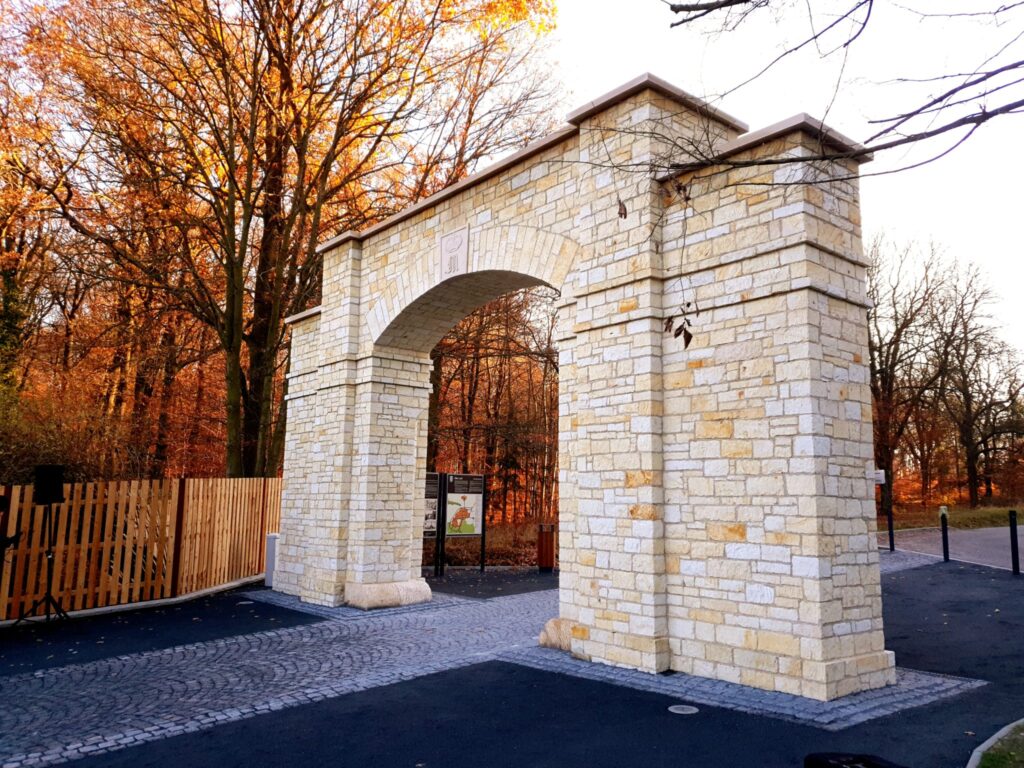
The original gate to the Lány Game Reserve was demolished in 1959. A new stone gate was later reconstructed using the original architectural documentation, with marlstone as the main material and sandstone used for selected elements. Each stone was individually shaped by hand to fit its specific position in the structure.
| Project type | Reconstruction of a historic stone gate |
| Location | Lány Game Reserve |
| Original gate | Demolished in 1959 |
| Basis for reconstruction | Original architectural documentation |
| Main material | Marlstone (opuka) |
| Additional stone | Sandstone |
| Craftsmanship | Individual stones shaped by hand to the required dimensions |
The Original Gate to the Lány Game Reserve
The gate formed part of the wall surrounding the game reserve and originally belonged to a system of arched gateways separating the former Fürstenberg estate of Křivoklát from the Martinic estate of Smečno.
According to the original project documentation, the gate was also used by notable figures, including the first President of Czechoslovakia, T. G. Masaryk.
The original structure no longer survives. It was demolished in 1959, making the surviving architectural documentation particularly important when the gate was later reconstructed.
Reconstructing the Gate from Original Architectural Documentation
The new stone gate was built according to surviving architectural records. The intention was therefore not to design a contemporary entrance structure, but to recreate a gate based on the form and construction principles of the original.
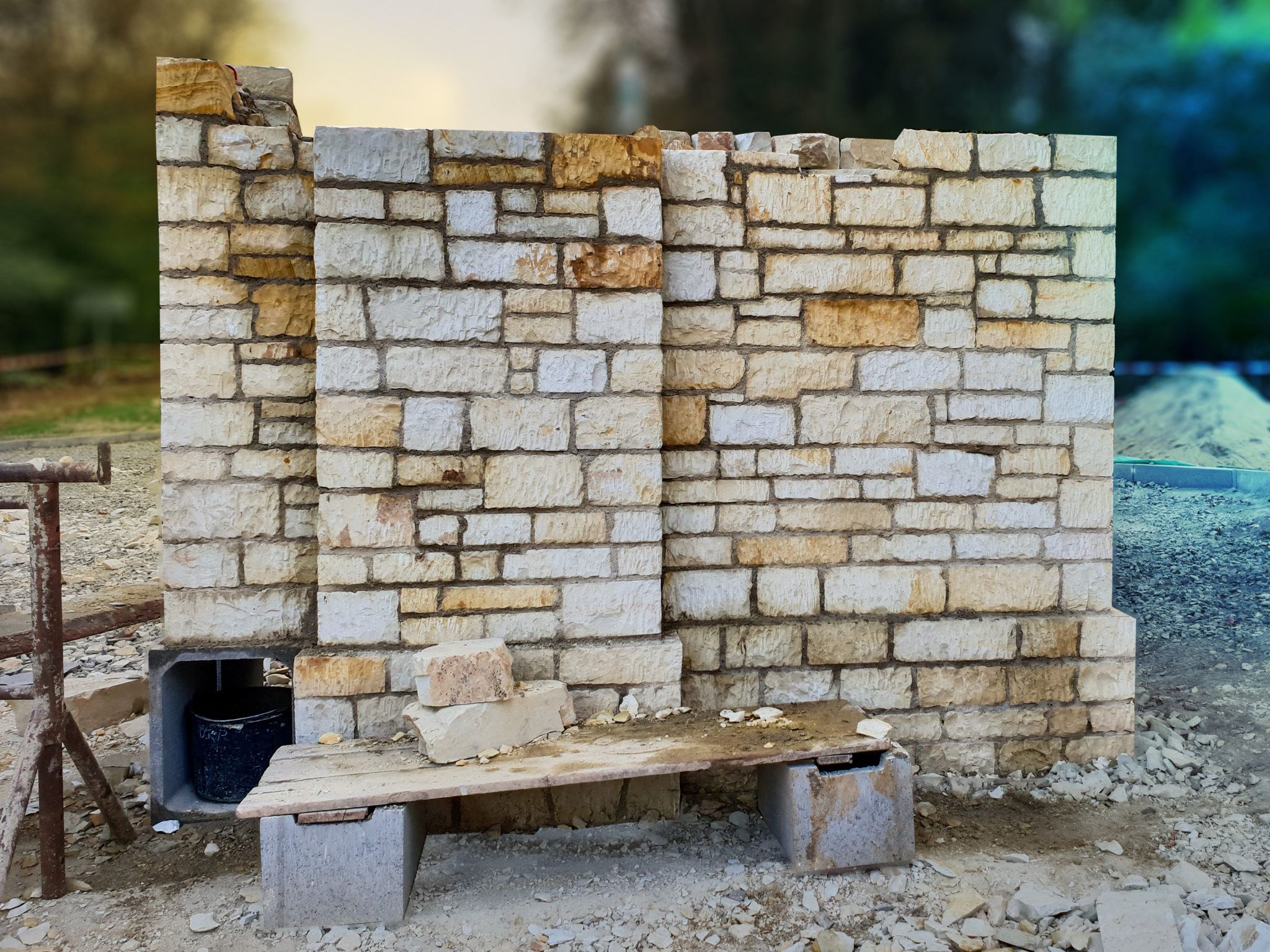
The project relied on traditional work with natural stone. Unlike construction using standardised prefabricated elements, the masonry had to be assembled from individually selected and prepared stones.
Each stone was considered in relation to its exact position within the structure. The final geometry therefore depended on a combination of material selection, hand shaping, accurate placement and finishing directly on site.
Why Marlstone Was Used for the Gate
The main building material was marlstone, locally known as opuka. According to the original project information, one of the reasons for using this stone was its workability, which allowed individual pieces to be shaped to the required dimensions.
This was essential for a structure containing defined edges, an arch and other elements where the shape of the masonry could not simply follow the irregular form of untreated stone.
Each stone used in the project was therefore prepared by hand according to its intended position. The craft did not begin when the stone was placed in the wall – it began with selecting and shaping the individual piece.
The Stone Arch
One of the most distinctive structural features of the gate is its stone arch. According to the original documentation, the arch was assembled from large stones that had to be prepared for their specific positions within the curve.
An arch works very differently from an ordinary flat section of masonry. The individual stones must combine to create a defined geometry and transfer loads through the curved structure.
This makes stone selection and shaping especially important. A stone that may work perfectly well in a straight wall may not be suitable for a particular position within an arch.

Sandstone Elements within the Gate
Marlstone was not the only natural stone used in the reconstruction. Several structural and visible elements were made from sandstone.
- sandstone wheel guards extended down into the foundation of the gate,
- sandstone coping slabs were cut precisely to match the dimensions of the structure,
- some stone elements received their final shaping only after they had been installed in their permanent position.
The last point is particularly representative of traditional stone craftsmanship. Not every detail can necessarily be completed in advance at ground level. Some elements only reveal the exact amount of finishing required once they are already positioned within the masonry.


Every Stone Was Shaped by Hand
One of the defining characteristics of this project was the amount of manual stonework involved. According to the original project records, each stone was prepared and shaped to the dimensions required for its specific position.
This is a significant difference from masonry where stone is used largely in its natural form. In a structure such as this gate, the overall architectural form depends directly on the accuracy of the individual components.
The finished structure is therefore the result of several separate skills working together:
- selecting a suitable piece of stone,
- understanding its grain, shape and usable faces,
- shaping it to the required dimensions,
- placing it accurately within the masonry,
- and, where necessary, completing the final details after installation.
The Completed Historic Stone Gate
The completed gate recreates the character of the former historic structure using a combination of marlstone masonry, sandstone details and a prominent stone arch.
Rather than attempting to imitate the appearance of an old gate using modern cladding or decorative stonework, the project depended on the actual construction of a substantial natural-stone structure based on historic documentation.


Video from the Construction of the Stone Gate
What This Project Shows about Traditional Stonework
The reconstruction of the Lány Game Reserve gate demonstrates several principles that are characteristic of traditional stone construction:
- a historic stone structure can be reconstructed using surviving architectural documentation,
- different parts of a single structure may require different types of natural stone,
- marlstone was used where accurate shaping of individual pieces was required,
- sandstone was used for selected elements including wheel guards and coping slabs,
- each stone was prepared according to its individual position in the masonry,
- some final shaping was carried out only after installation,
- the stone arch formed a separate and technically demanding structural element.
Learning the Principles behind Stone Arches
The same basic principles visible in this project – selecting suitable stone, understanding how individual pieces interact and creating a stable curved structure – also form part of practical stonework training.
If you are interested in learning traditional stonework through hands-on practice, you can view our practical stonework courses and available dates.
Frequently Asked Questions about the Lány Game Reserve Stone Gate
What happened to the original gate to the Lány Game Reserve?
According to the project documentation, the original gate was demolished in 1959. A new stone gate was later reconstructed using the original architectural documentation.
What type of stone was used to build the gate?
The main material was marlstone, known locally as opuka. Selected elements, including wheel guards and coping slabs, were made from sandstone.
Were the stones shaped by hand?
Yes. According to the original project records, each stone was individually prepared by hand to the required dimensions. Some elements received their final finishing after they had already been installed in the structure.
How was the stone arch constructed?
The arch was assembled from large stones prepared for specific positions within the curved structure. The geometry and fit of the individual stones were therefore essential to the finished form of the arch.
Why was marlstone used?
The original project information identifies the workability of marlstone as one of the reasons for its use. It allowed individual stones to be shaped accurately for their intended positions within the structure.
Can traditional stone arch construction be learned through practical training?
Yes. The basic principles of selecting, shaping and positioning natural stone in arched structures can be learned through hands-on practice. Our practical stonework courses take place in Novosedly, South Moravia, Czech Republic.
Who Is Behind This Article