Build Your Own Gabion Fence and Avoid Mistakes That Are Difficult to Fix Once the Baskets Are Full
A gabion fence can look deceptively simple: assemble a wire basket and fill it with stone. But once you are dealing with several metres of fencing and tonnes of material, the details begin to matter. How should the base be prepared? How accurately should the baskets be aligned? Where should the bracing ties be positioned? How do you keep the visible face straight? And which stones need to be laid by hand?
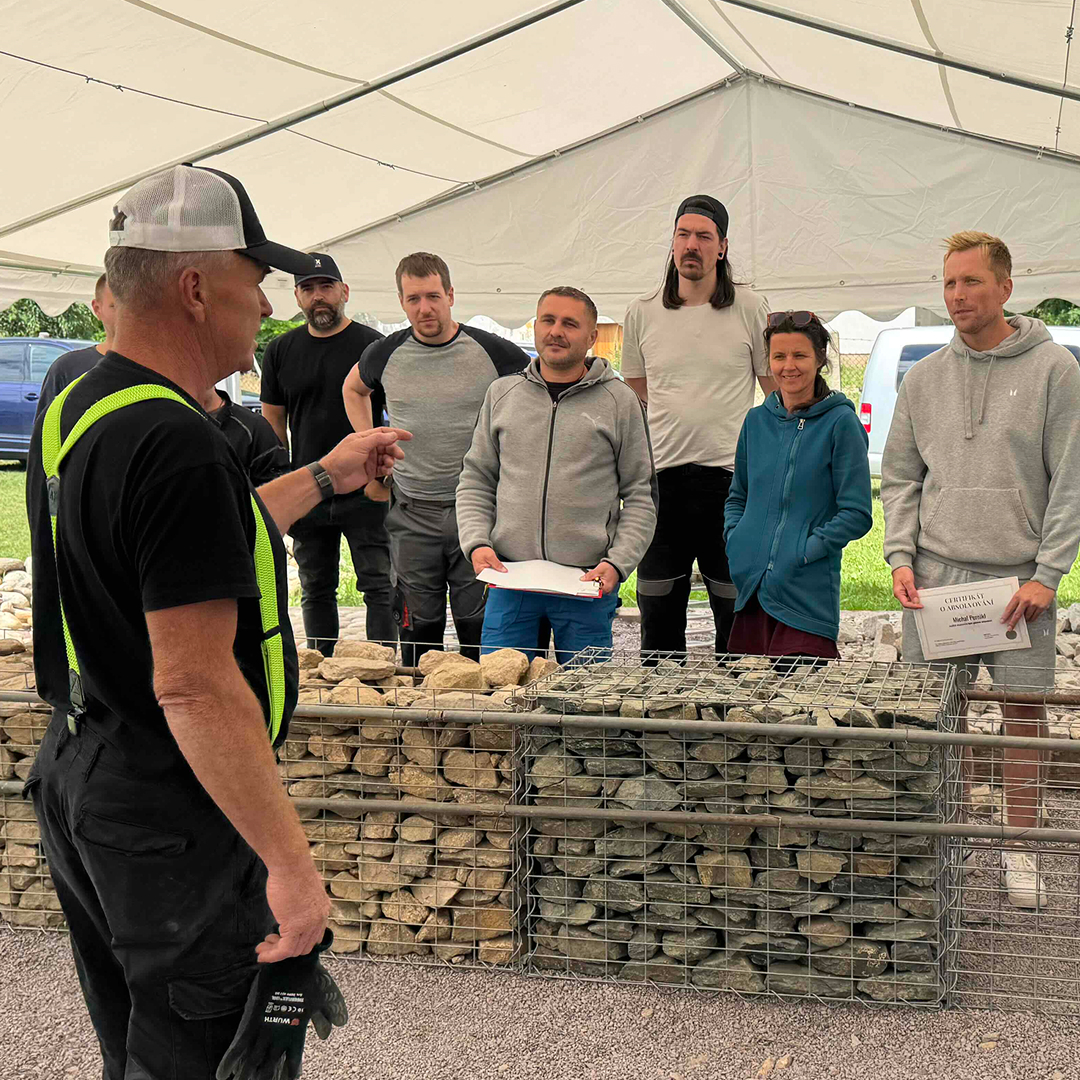
On this practical course in Novosedly, South Moravia, Czech Republic, you will work through the complete process yourself – from assembling and positioning the gabion basket to filling it and building the visible stone face.
You will not leave with theory alone. You will leave with practical experience that can help you make better decisions when building your own gabion fence.
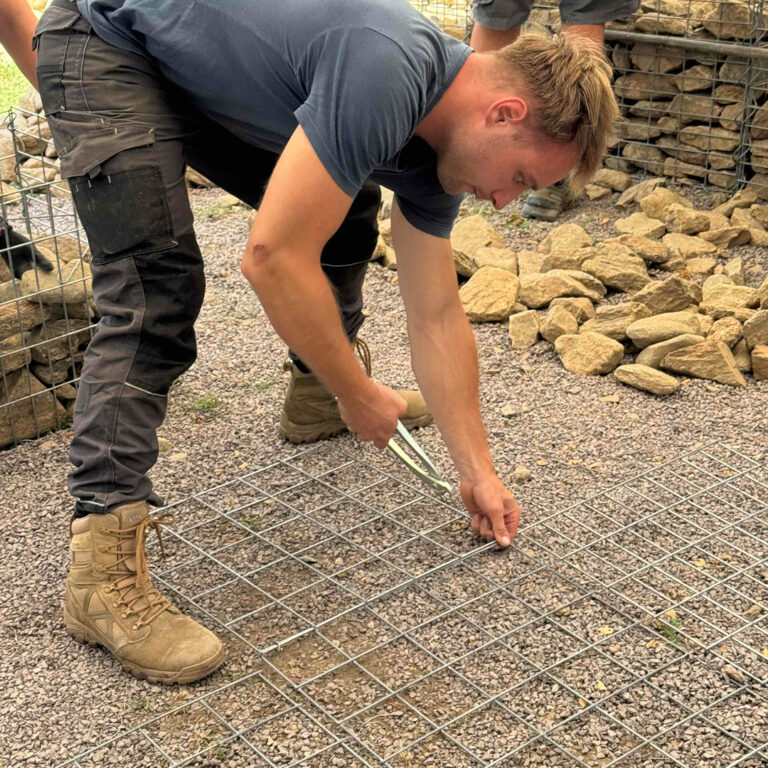
- Learn how to assemble and align gabion baskets correctly.
- Practise basket connections, internal bracing and maintaining the geometry during filling.
- Understand why the visible face should not simply be filled by pouring stone into the basket.
- Learn how to work with selected facing stone and the internal basket fill.
- See the construction while it is being built, not only the finished result.
- Bring your own project and discuss it during the course.
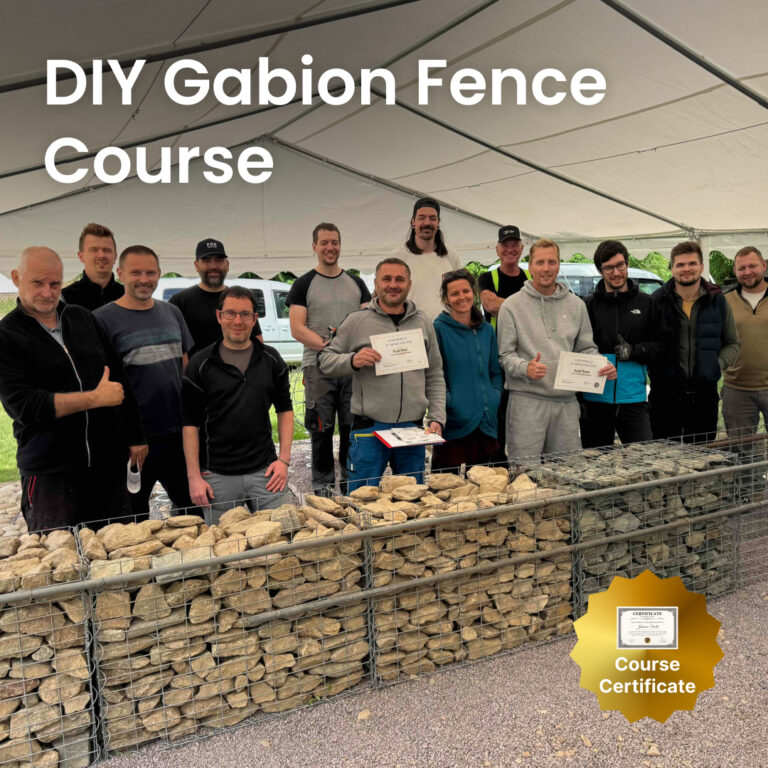
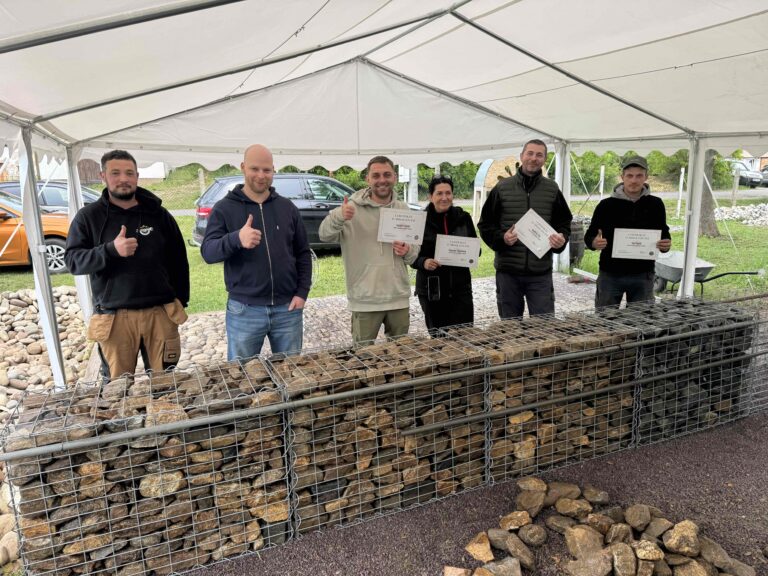
- Receive a course completion certificate.
Who Is This Course For?
The course is primarily for people planning a gabion fence, privacy screen, smaller garden wall or another straightforward gabion feature around their home and wanting to carry out the work themselves.
You do not need previous experience with gabion construction. That is exactly why the course exists. You first practise the process with real baskets and stone before beginning your own project.
The course can also be useful for tradespeople, landscapers and smaller construction companies that want to begin offering gabion work and need to understand the system through hands-on experience.
International course dates include professional English interpretation throughout the practical training, so previous knowledge of Czech is not required.
Already planning your own gabion?
Bring photographs, dimensions, a simple sketch or project documentation. You can discuss the actual fence or structure you intend to build after the course.
Build the Basket Correctly before Adding the First Stone
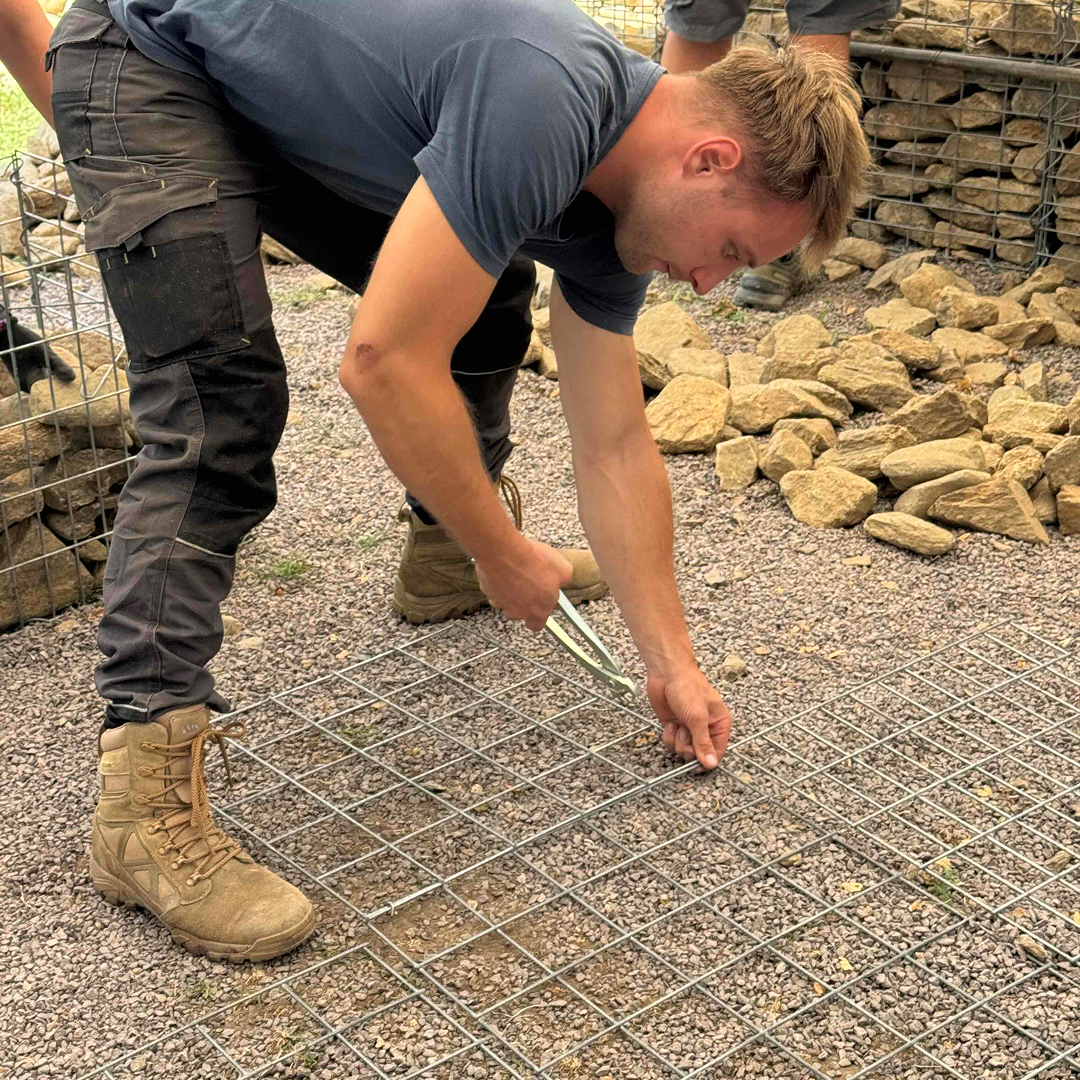
Once a gabion is full, every correction means additional work. We therefore begin with everything that needs to be right before the first stone goes in: assembly, connections, positioning and accurate alignment of the baskets.
You will learn how the individual panels are joined, how adjacent baskets should relate to one another and what should be checked before the structure is loaded with a large quantity of stone.
You will also work with bracing ties and temporary reinforcement used to help keep opposing basket faces controlled during filling.
The aim is to understand the basket system before ordering material for your own project, so you can make better decisions about the dimensions, layout and construction you actually need.
Building a Gabion Fence Step by Step
You do not need to memorise dozens of isolated rules. You need to understand the correct sequence of work and what should be checked at each stage.
-
Base Preparation
We discuss preparation of the site, levelling and the basic principles behind a stable foundation. Even a well-assembled gabion cannot compensate for a base that later settles or moves.
-
Basket Assembly
You learn how to connect the individual panels and prepare the baskets so neighbouring sections align and maintain the intended shape.
-
Alignment and Bracing
We work with internal bracing ties, geometry checks and temporary reinforcement before significant stone pressure is introduced.
-
Visible Stone Face
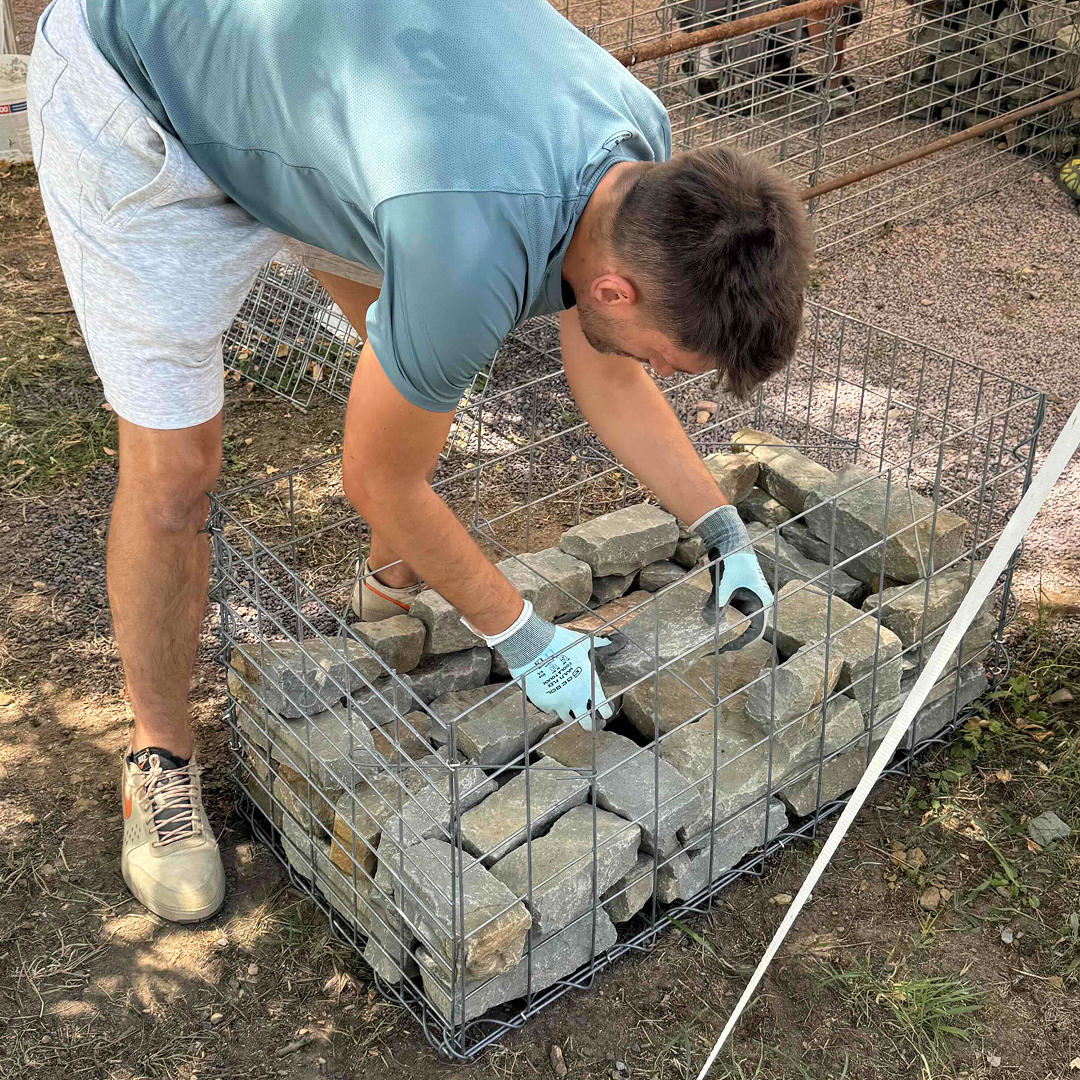
You learn how to select, turn and hand-lay suitable stones so the front does not look like random material poured behind wire mesh.
-
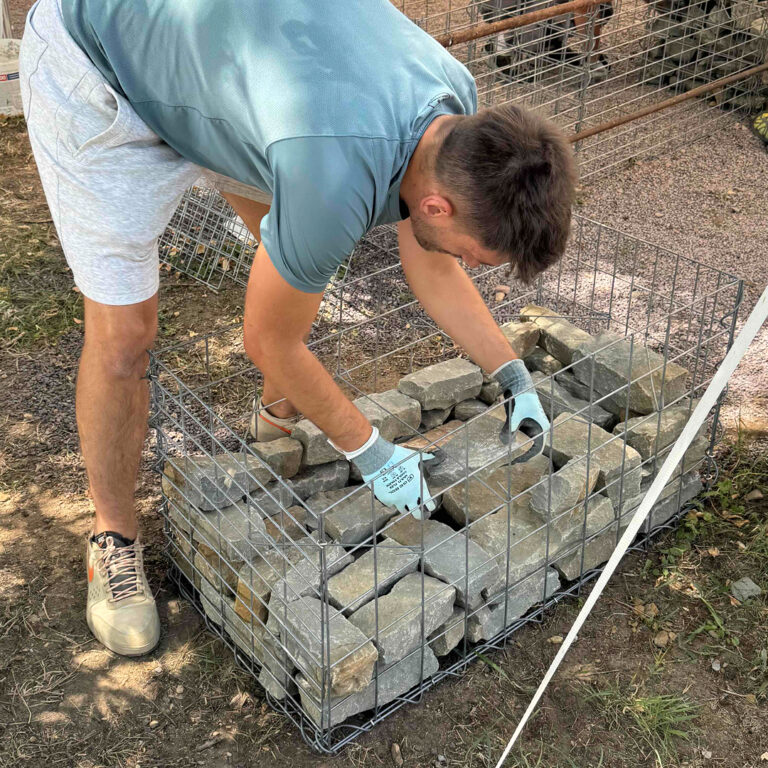
Internal Filling
We show how to progressively fill the inside, reduce large unwanted voids and avoid unnecessarily pushing the visible face outward.
-
Continuous Geometry Checks
Shape and alignment are not checked only after the basket is full. You learn to recognise problems while they are still easy to correct.
The Visible Stone Face Is Laid, Not Simply Poured
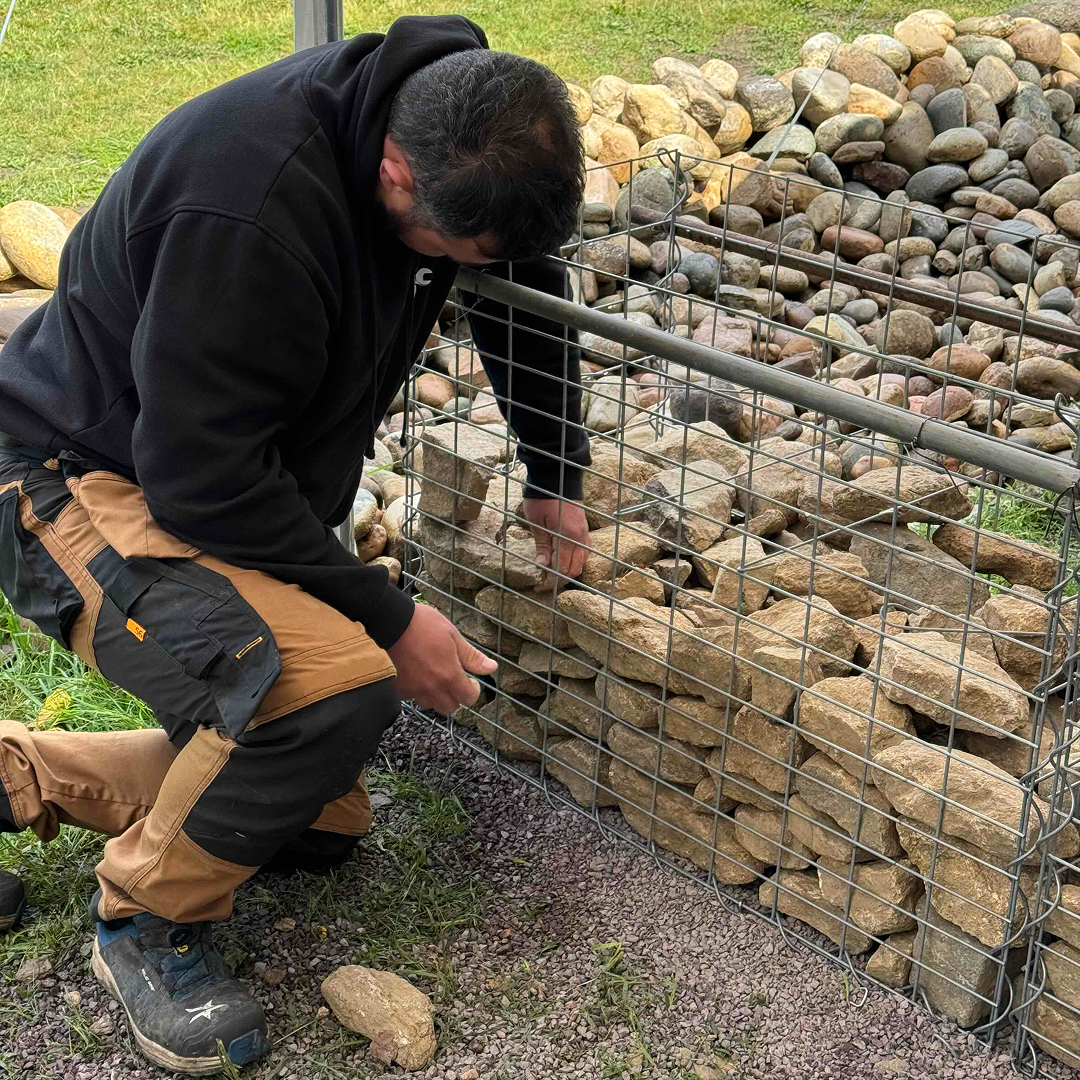
This is one of the biggest differences between a gabion that looks like a purely technical barrier and one that can become a well-integrated part of a house and garden.
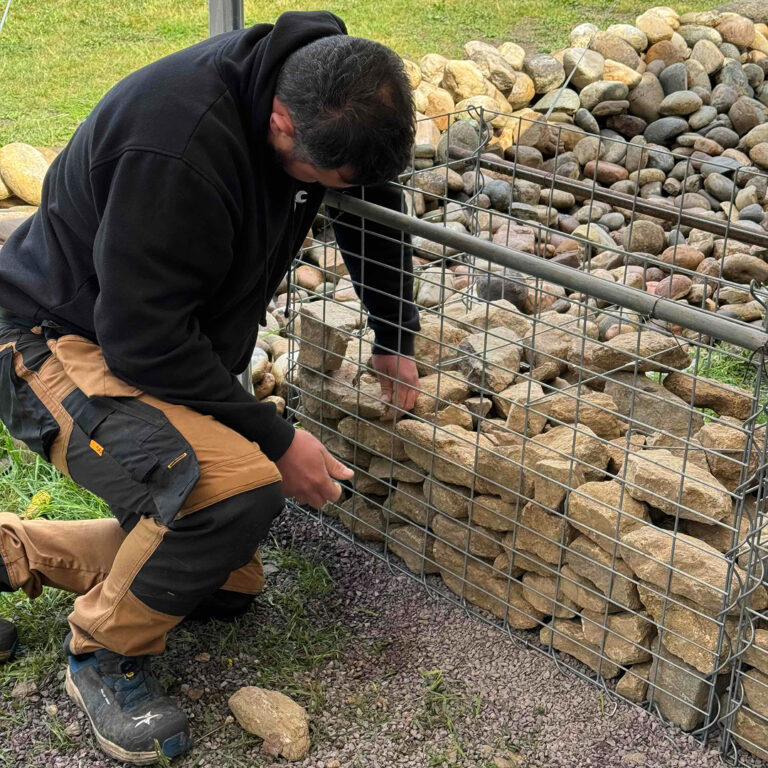
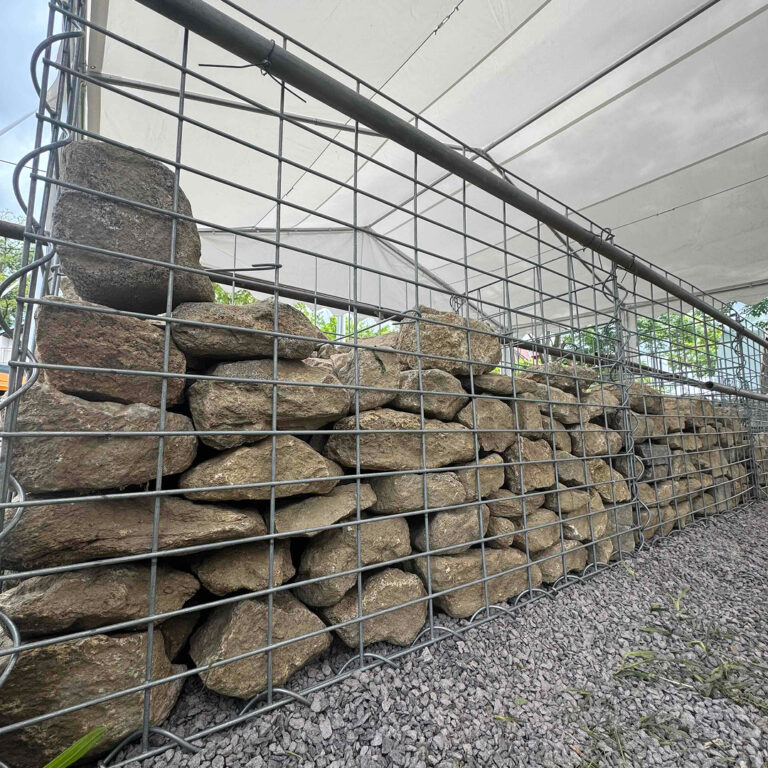
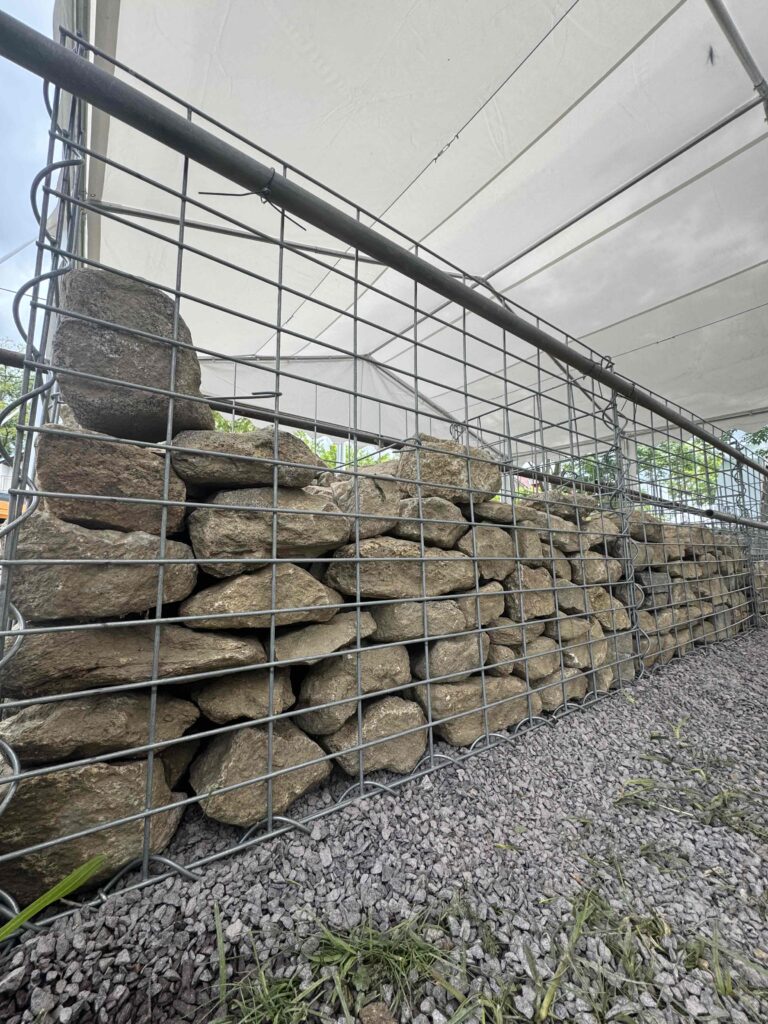
At the visible face, you will select, turn and position stones by hand. You learn to use their natural shapes to create a controlled stone surface while ensuring the individual pieces remain properly supported.
You will also understand the difference between stone selected for the visible face and material used within the interior of the basket.
The final appearance is not determined only by the type of stone. A large part of the result comes from the way the stone is positioned.
How to Prevent a Gabion Basket from Bulging during Filling
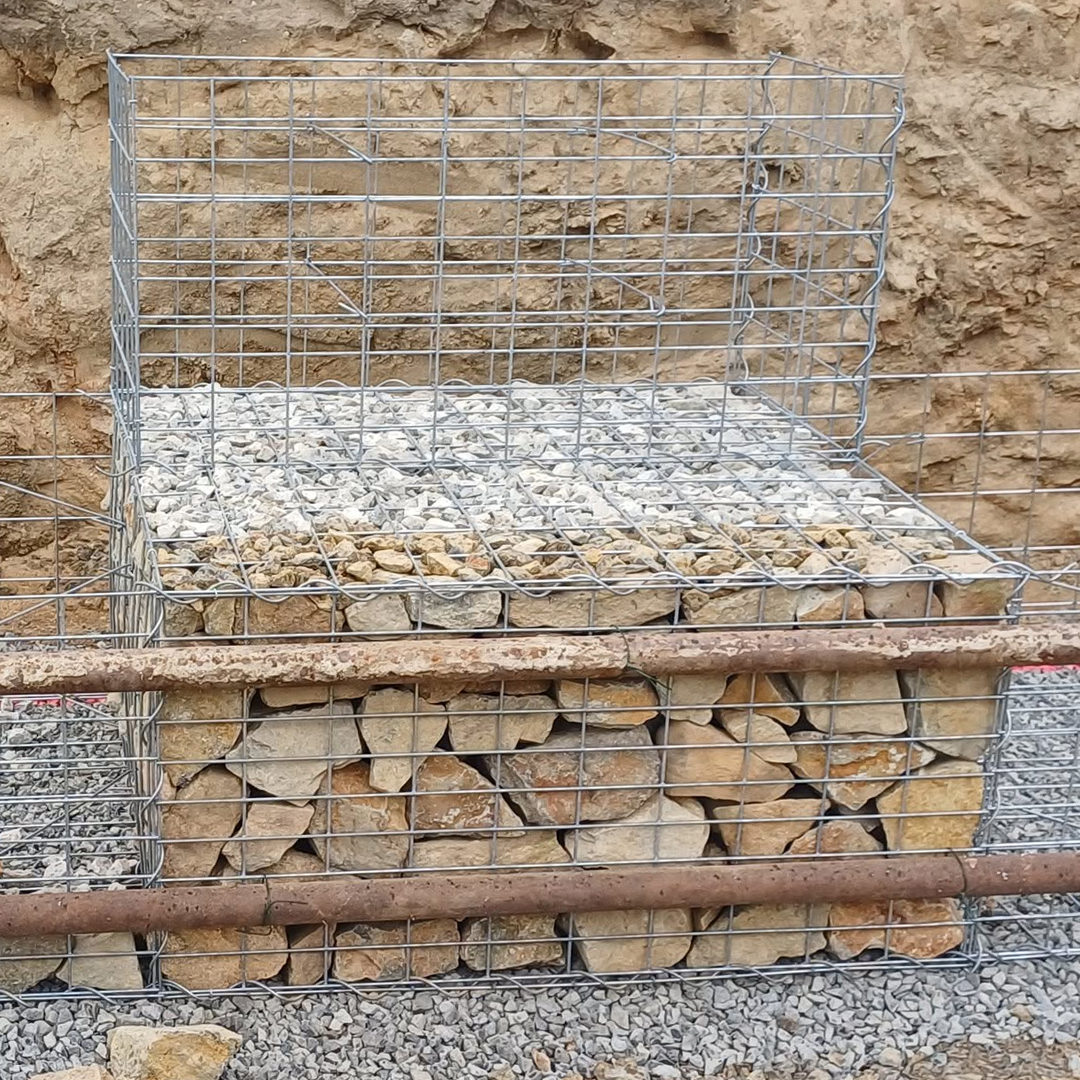
As stone is added, increasing pressure acts on the walls of the gabion basket. A small problem that is barely noticeable when the basket is empty can become very obvious once it is full.
The basket therefore needs to be braced and checked progressively as the stone level rises.
You will practise the placement of internal bracing elements and see how temporary external support can help maintain a straight visible face during the filling process.
On a fence several metres long, this is not merely a cosmetic detail. Significant bulging will remain visible throughout the finished structure.
See What Is Hidden inside a Finished Gabion
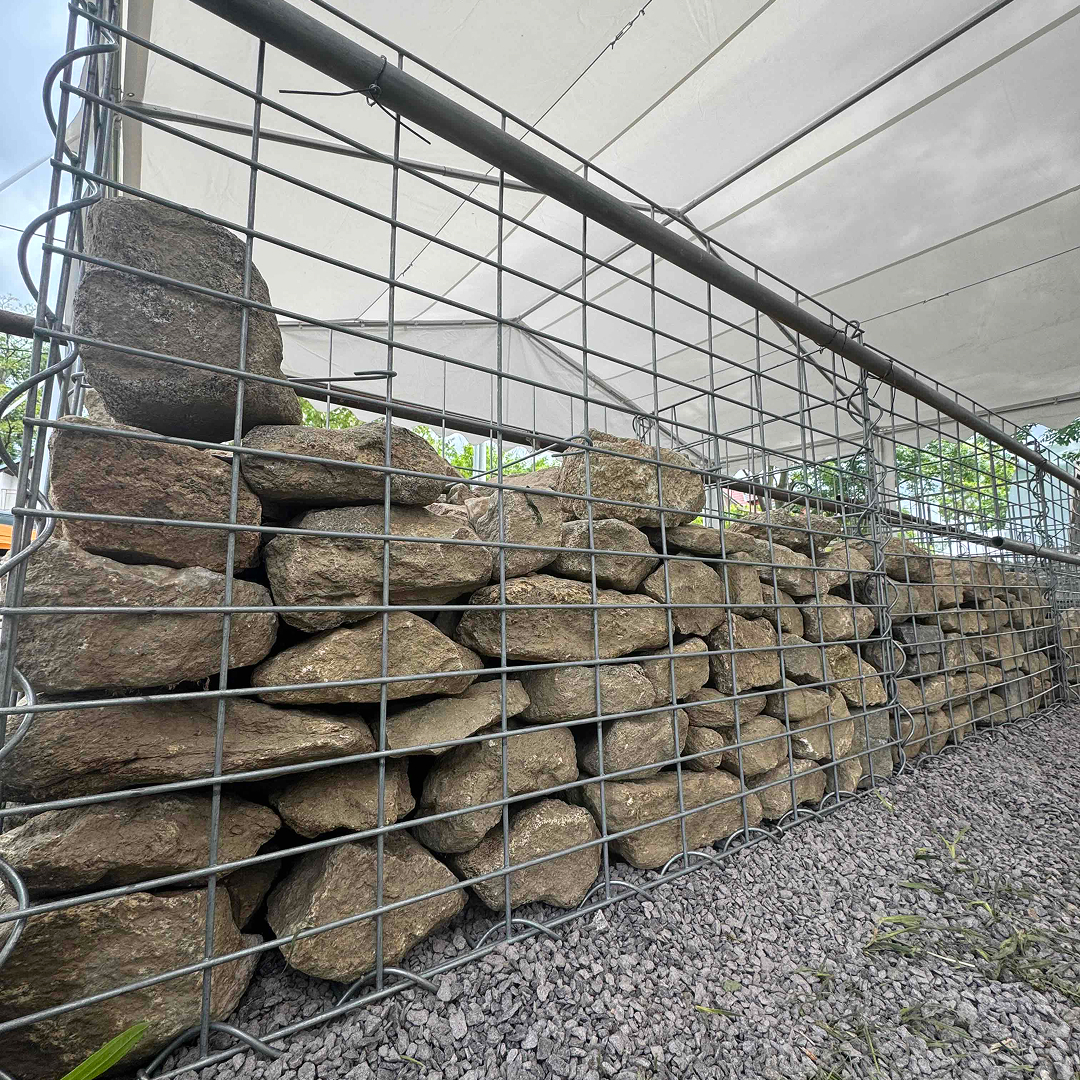
A completed gabion shows you the result. A gabion under construction shows you why the result holds its shape.
During filling, you can see the relationship between the visible stones, internal fill, bracing ties and the geometry of the basket itself.
You will see how the structure changes as additional weight is introduced and at which stage it is still easy to adjust a stone, redistribute the filling or correct the plane of the visible face.
This is difficult to understand fully from a photograph of a completed fence or a short online video.
Before Ordering Several Baskets and Tonnes of Stone
A larger gabion fence quickly becomes more than a few pieces of material. You may be ordering multiple baskets and several tonnes of stone – materials that are difficult to improvise with once they have been delivered to your property.
The course therefore does not focus only on filling the baskets. We also discuss what should be considered before material is ordered and how to prepare the sequence of your own project.
Understand the system first. Buy the material second.
Changing a plan before placing an order is much easier than changing it after several tonnes of stone have arrived.
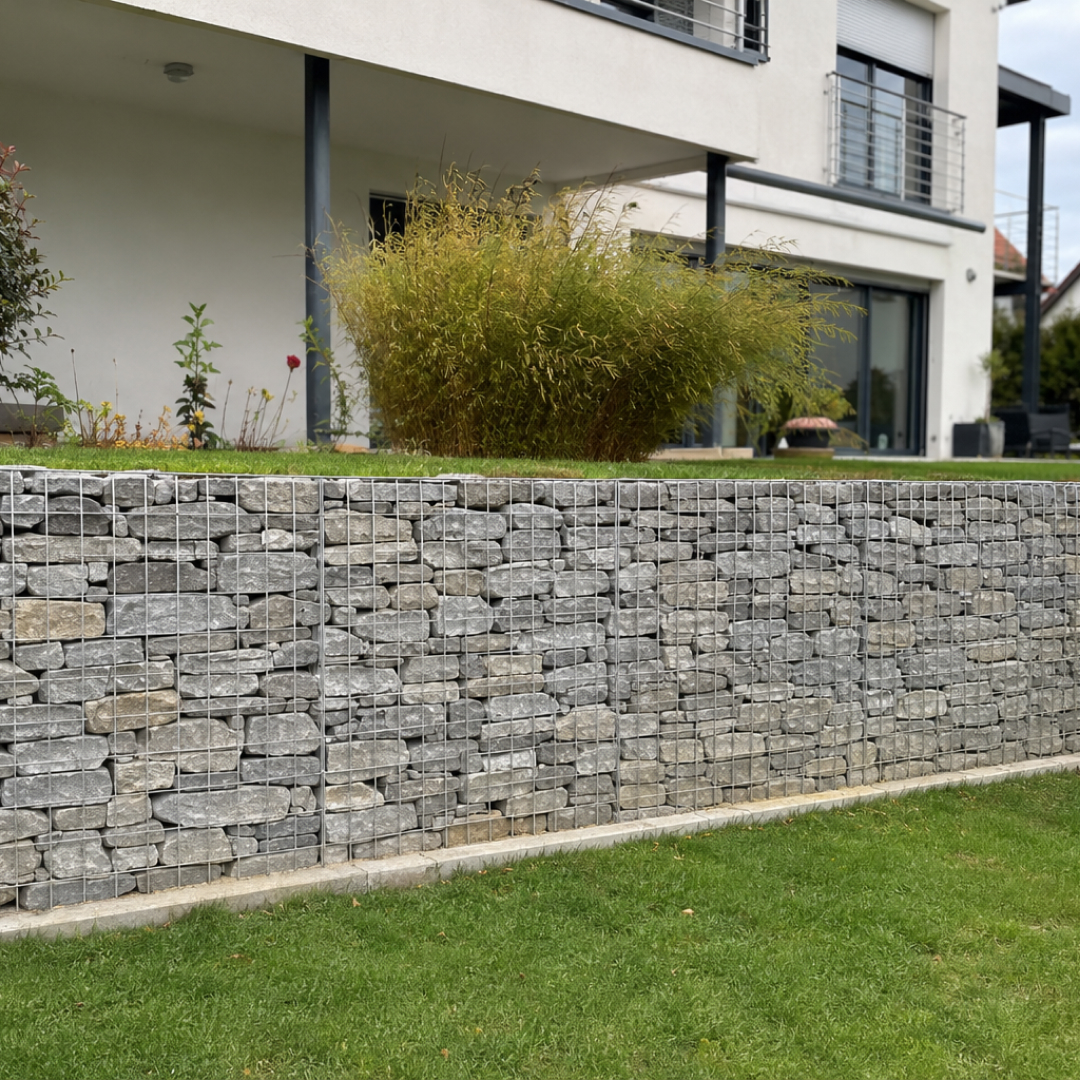
A Gabion Does Not Have to Look like a Wire Barrier
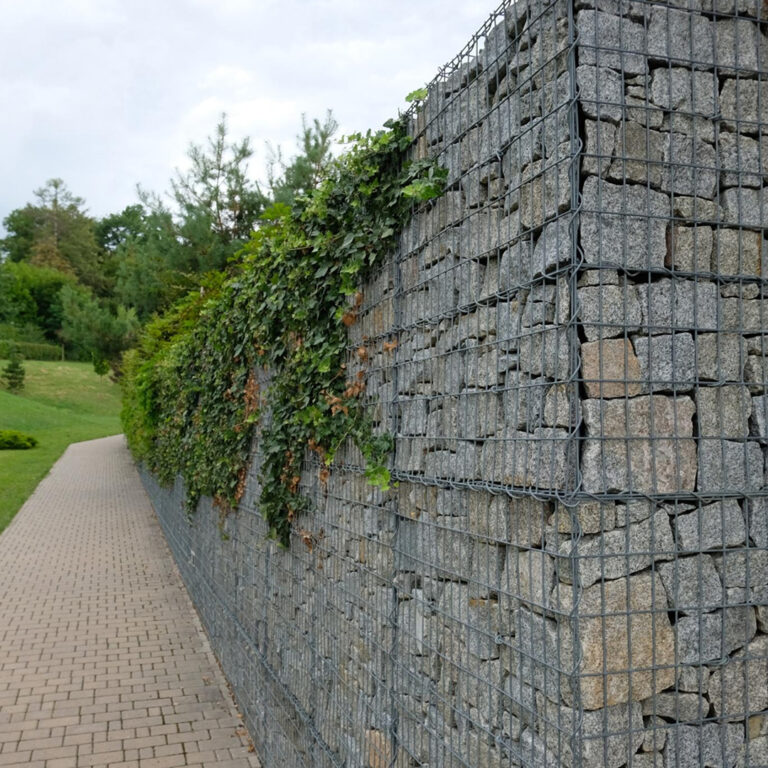
A well-built gabion can work as a fence, privacy screen or a distinctive element within a garden.
The appearance depends not only on the stone but also on the alignment of the construction, consistency between baskets, quality of the visible face and the relationship with the surrounding space.
For this reason, the course is not only about making the wire basket stay together. We also look at the visual result.
If the gabion stands directly beside your house or garden, you may look at it every day. The visual quality then becomes almost as important as the basic function.
The Longer the Fence, the More the First Metre Matters
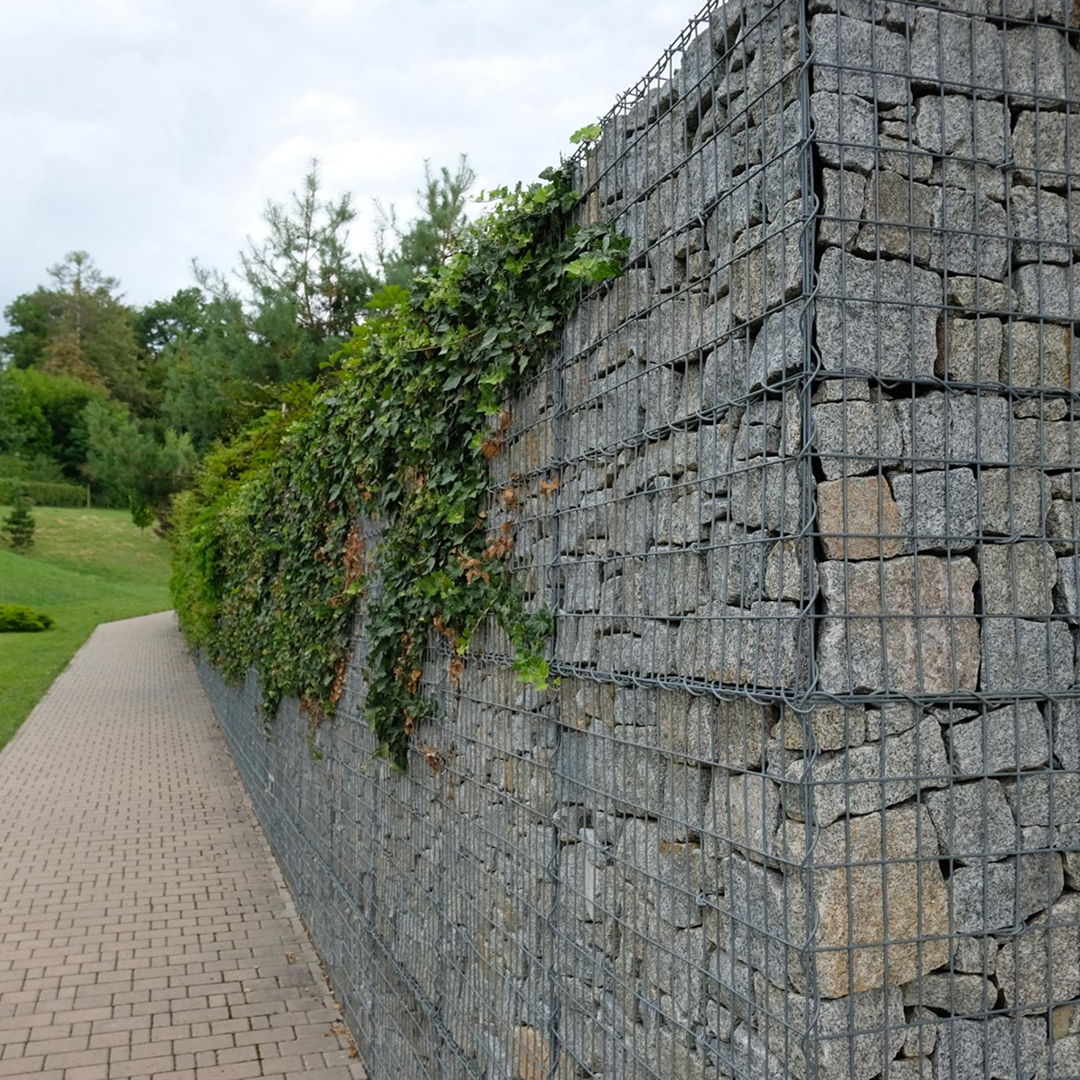
A small inaccuracy in one short basket may appear insignificant. Over a longer fence, however, errors can repeat and accumulate.
If neighbouring baskets begin to move out of alignment, individual faces bulge differently or the complete line starts to drift, those problems become difficult to hide in the finished structure.
The purpose of the course is to learn the correct principle on a manageable section and then apply the same logic repeatedly on your own project.
Higher, retaining or otherwise heavily loaded gabion structures require project-specific consideration and may need input from a designer or structural engineer.
How the Course Works
The course takes place in Novosedly, South Moravia, Czech Republic. We normally begin at approximately 9:00 and finish around 15:00.
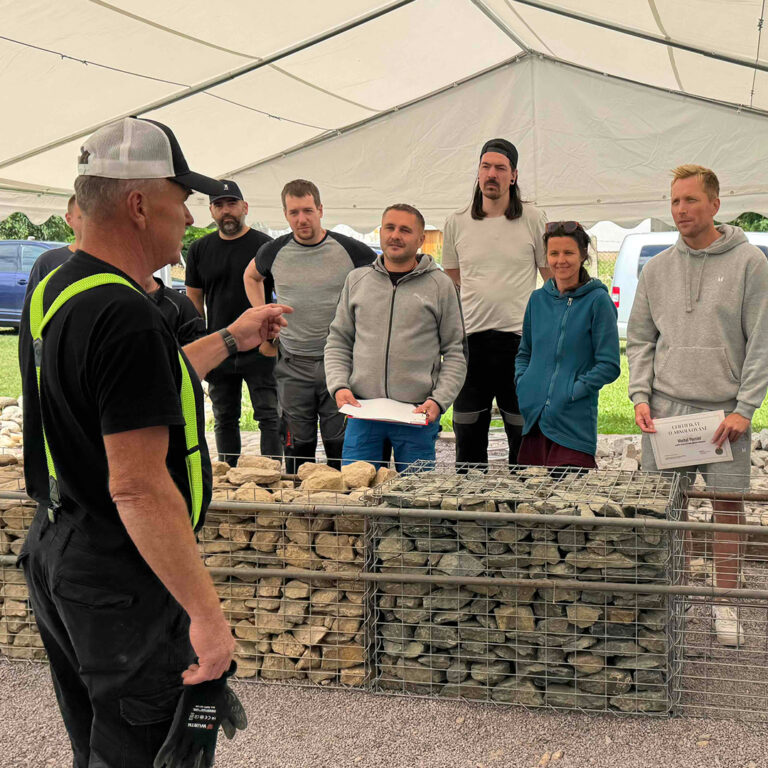
You will not spend several hours sitting through presentations. We explain the principle and then apply it directly during practical work.
- assembly and connection of a gabion basket,
- alignment and preparation of the structure,
- internal bracing and temporary reinforcement,
- selection of stone for the visible face,
- hand-laying the visible stone frontage,
- progressive filling of the basket interior,
- checking geometry and shape throughout the work,
- discussion of participants’ own gabion projects.
Most of the day is practical. You work directly with the baskets, stone and tools.
International course dates include professional English interpretation throughout the day.
Bring Your Own Project and Discuss What You Are Actually Planning to Build
If you are already preparing your own gabion fence, you do not need to limit the discussion to the example being built during the course.
Bring photographs of the site, a simple sketch, dimensions or project documentation. We can discuss topics such as:
- dimensions and division of the planned fence,
- basket type and size,
- base preparation,
- selection of suitable stone,
- visible stone facing and internal fill,
- organisation of the work,
- the practical sequence of construction.
You therefore leave not only with a general principle but with a clearer idea of how to approach your own project.
What Is Included in the Course?
- a full day of practical training,
- gabion baskets and stone used during the practical exercises,
- tools and working equipment available on site,
- time for questions throughout the day,
- discussion of your own project,
- facilities, water, coffee, soft drinks and refreshments,
- a full meal during the day,
- professional English interpretation on international course dates,
- course completion certificate.
You only need suitable work clothing and sturdy work footwear. You do not need to buy your own specialist tools before the course.
Why Attend before Building Your Own Gabion Fence?
A gabion fence can involve multiple baskets and several tonnes of stone. If you only discover a problem once everything is full, correcting it may mean reopening the basket, removing stone and repeating part of the work.
The expensive part is not one day of training. The expensive part is doing the same work twice.
There is also the question of time and confidence. When you understand the sequence of work, what needs to be prepared and what should be monitored during filling, you do not have to search for every answer while construction is already under way.
One day will not make you a designer of every type of gabion structure. It will, however, give you a practical foundation for a typical gabion fence and a better understanding of when a project becomes technically more demanding.
Interested in Other Uses for Gabions?
The main focus of the course is the gabion fence and the principles behind building it correctly. Gabion baskets can, however, also be used for other simple garden features.
If you are interested in another straightforward application, you can ask about it during the course. One participant, for example, attended because she wanted to understand the principle behind gabion seating.
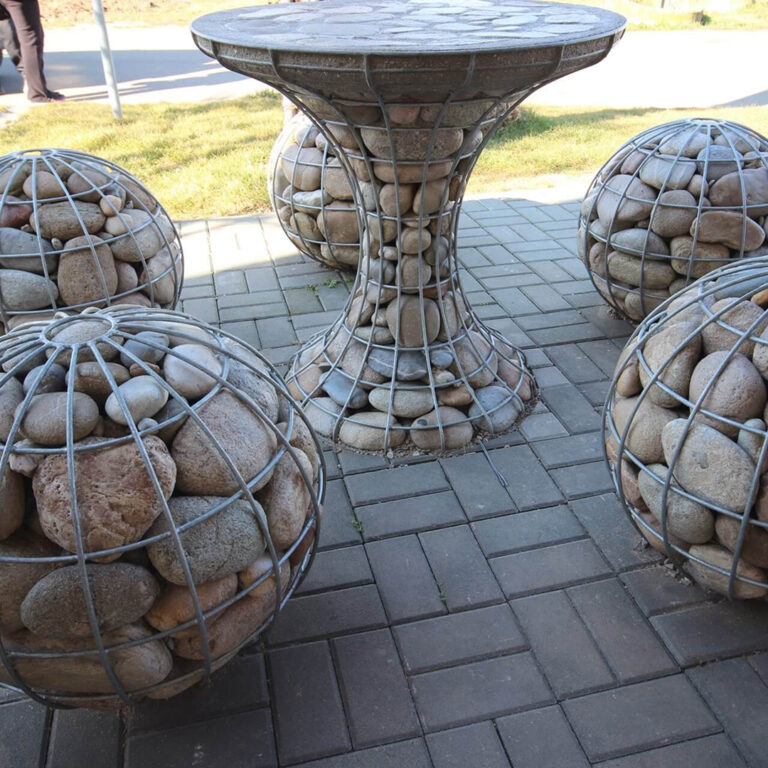
Additional Example: Gabion Seating
This is not the main focus of the course. It is simply an example of another way gabion baskets can be used once the basic construction principles are understood.
Travelling from Abroad
The course takes place in Novosedly, South Moravia, Czech Republic, in the wine-growing region near Mikulov and close to the Austrian border.
Accommodation is available in and around Novosedly, with further options in the wider Mikulov area.
International course dates include professional English interpretation, so you can follow the explanation and practical work throughout the day without speaking Czech.
If you are travelling from another country, we recommend arranging accommodation and transport in advance.
What Happens after Booking?
Once your order has been completed and paid, your place on the course is reserved.
Approximately one week before the course, we send the exact location, schedule, arrival information and recommendations about what to bring.
The course takes place outdoors. Working facilities, toilet, refreshments, materials, stone and the tools required for the training are prepared on site.
Before Filling Your First Basket, Go through the Complete Process Once
The basic idea of a gabion is easy to understand: stone goes into a wire basket.
The real difference is in how accurately the basket is assembled, how it is aligned and braced, how its shape is controlled during filling and how the visible stones are positioned.
These are the parts of gabion construction that you will actually practise during the course.
If you are planning your own gabion fence, the course is most useful before you order a large quantity of baskets and stone.