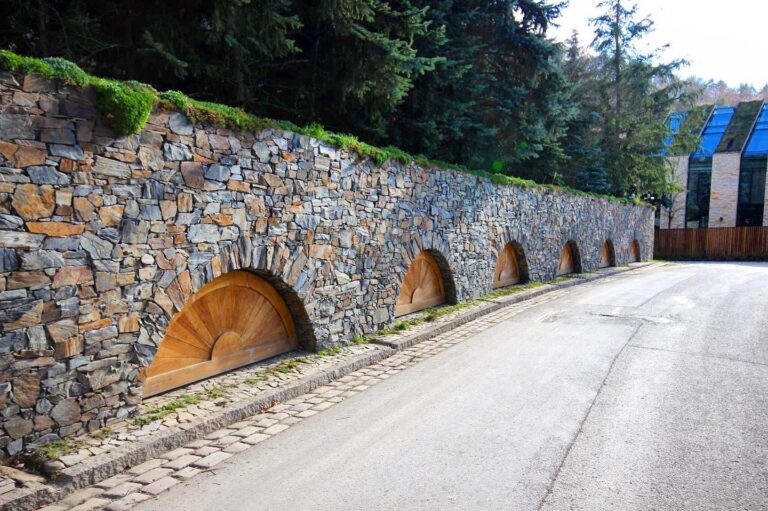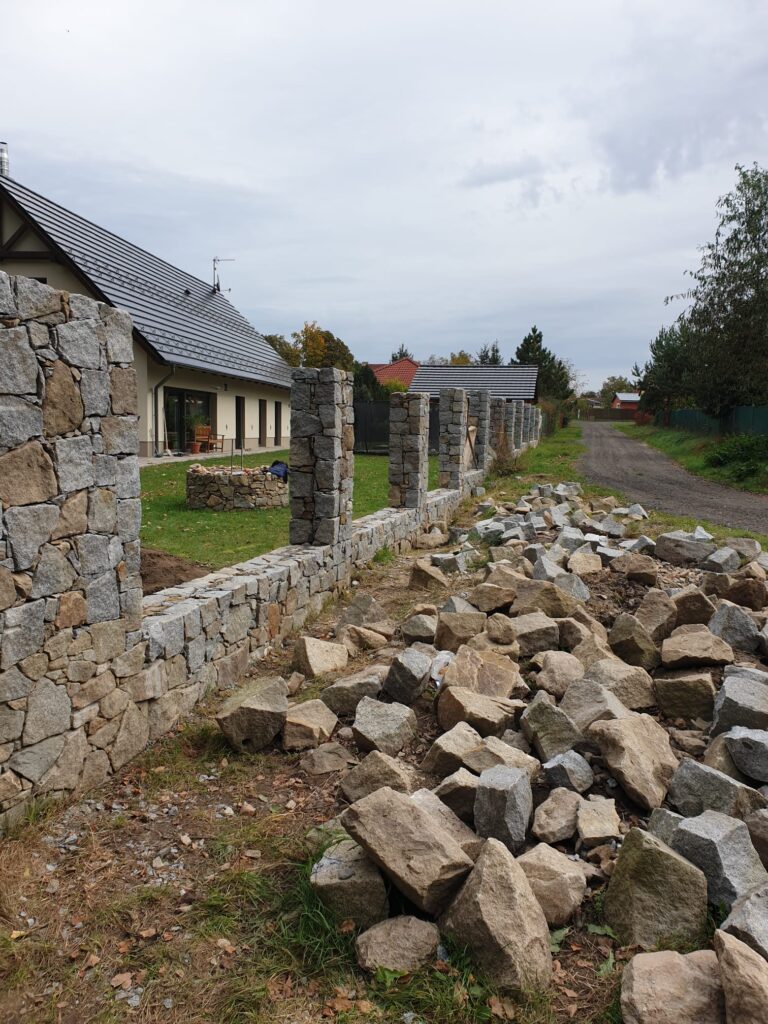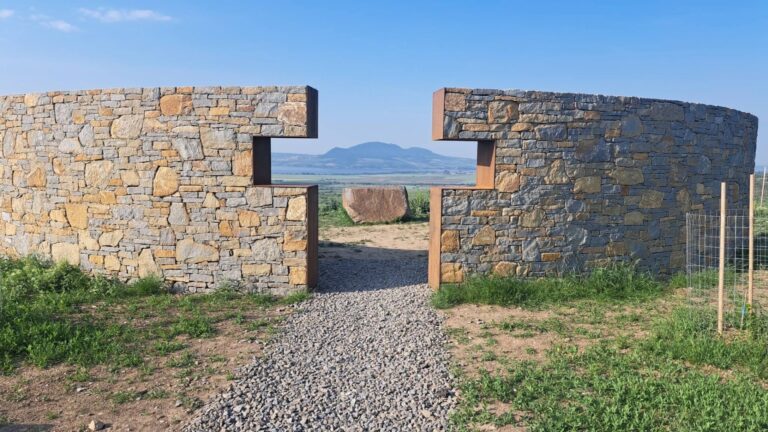


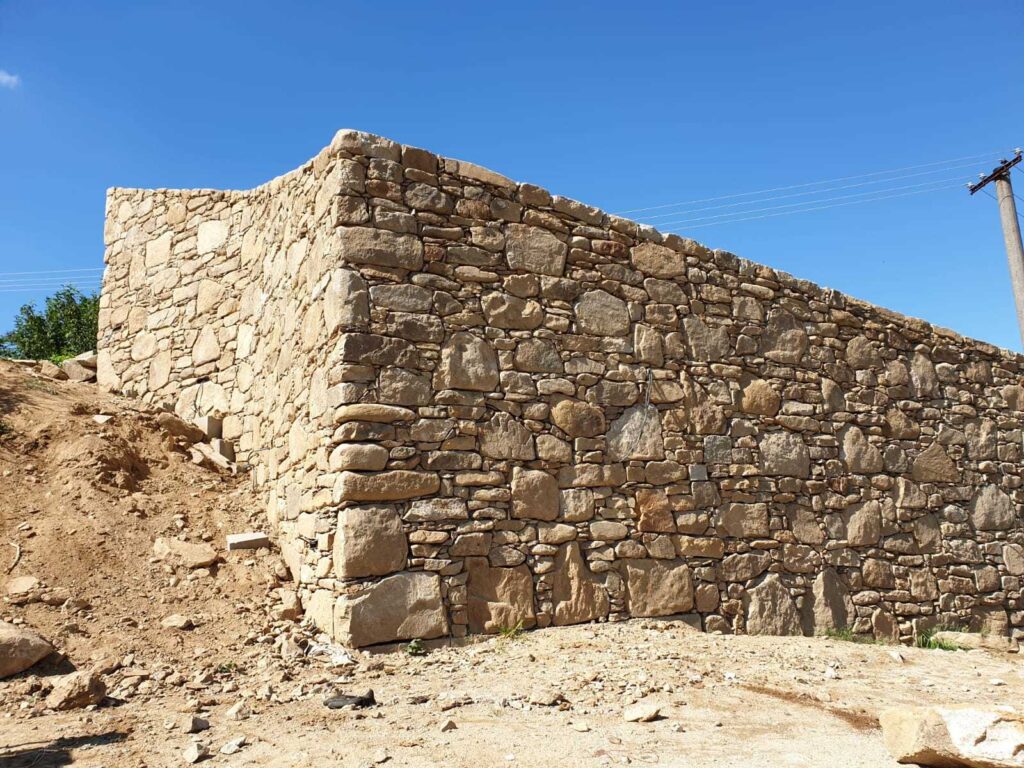
This project in Jihlava, Czech Republic, combined several types of natural-stone construction in one site. The main element was an above-ground stone cellar accompanied by stone walls, stairs and other connected stone features.
| Location | Jihlava, Czech Republic |
| Main structure | Above-ground stone cellar |
| Additional elements | Stone walls, stairs and other natural-stone structures |
| Project character | Several different stone constructions integrated within one project |
A Stone Cellar as Part of a Larger Project
The project was not limited to the cellar itself. Stone walls, stairs and other elements were also constructed around it, creating a group of structures connected both materially and visually.
This is a good example of how working with natural stone rarely means applying one construction method everywhere. The same material can be used for walls, stairs, vaulted elements and other structural features, but each requires a different approach to selecting, shaping and positioning the individual stones.


How an Above-Ground Stone Cellar Can Be Built
An above-ground stone cellar does not have to follow one single structural solution. It can be constructed with a traditional stone vault, but natural stone can also be combined with other building systems depending on the design and requirements of the particular structure.
A stone vault is therefore not the only possible solution. It is, however, one of the traditional ways of creating the roof or ceiling structure of a cellar while maintaining the strong visual and material character of natural stone.
With a stone cellar, the visible masonry is only one part of the project. The structure has to be designed as a whole according to the site, foundations, structural system and intended use of the building.
Stone Vaults as Structural Masonry
A stone vault clearly demonstrates the structural principles behind working with natural stone. The individual stones do not simply create a visible surface – their shape, position and relationship to neighbouring stones all contribute to the behaviour of the complete structure.
Building a vault is therefore different from constructing an ordinary straight stone wall. The builder must understand the geometry of the vault, the placement of individual stones and how the structure develops during construction.
Stone Walls and Stairs around the Cellar
The Jihlava project also included stone walls and stairs. The cellar was therefore not treated as an isolated building but as one part of a wider group of natural-stone structures.
Every piece of natural stone differs in shape, size and structure. During construction, stones therefore have to be selected continuously according to where they will be placed and what role they will perform within the finished structure.
A stone suitable for a visible wall face may not be the right choice for a stair, corner or structural position elsewhere. Learning to recognise those differences is a fundamental part of traditional stonework.


What This Stone Cellar Project Demonstrates
The Jihlava project demonstrates several practical principles of building with natural stone:
- a stone cellar can be integrated with other stone structures on the same site,
- natural stone can be used for masonry, stairs and other functional building elements,
- an above-ground cellar may use a traditional stone vault or a different structural solution,
- irregular stone requires continuous selection and adaptation according to its exact position in the structure,
- different types of stone construction require different working techniques even when they are part of the same project.
Learning the Principles of Stone Walls and Vaults
The principles visible in this project – selecting stone, understanding its position within a structure and working with walls or curved masonry – can also be learned through hands-on practice.
Our practical stonework courses take place in Novosedly, South Moravia, Czech Republic. Participants work directly with natural stone and learn the construction principles by building real structures rather than relying on theory alone.
See our practical stonework courses and available dates.
Frequently Asked Questions about Stone Cellars
Where is this stone cellar located?
The project is located in Jihlava, Czech Republic. It included an above-ground stone cellar, stone walls, stairs and other connected natural-stone elements.
Does an above-ground stone cellar need a stone vault?
No. An above-ground stone cellar can be designed with a traditional stone vault or with a combination of natural stone and other structural systems. The appropriate solution depends on the design of the particular building.
What other stone elements can be built around a cellar?
In this Jihlava project, the cellar was accompanied by stone walls, stairs and other natural-stone structures, allowing the individual elements to form one coordinated project.
How does building a stone vault differ from building a straight wall?
In a vault, the individual stones form part of a curved structural system. Their shape and placement must work together to create the required geometry, making the construction process different from ordinary straight stone masonry.
Can stone vault construction be learned through practical training?
Yes. The fundamental principles of selecting, positioning and working with stone in walls and vaulted structures can be learned through hands-on construction under experienced guidance.
View our current practical stonework courses.
Who Is Behind This Article