

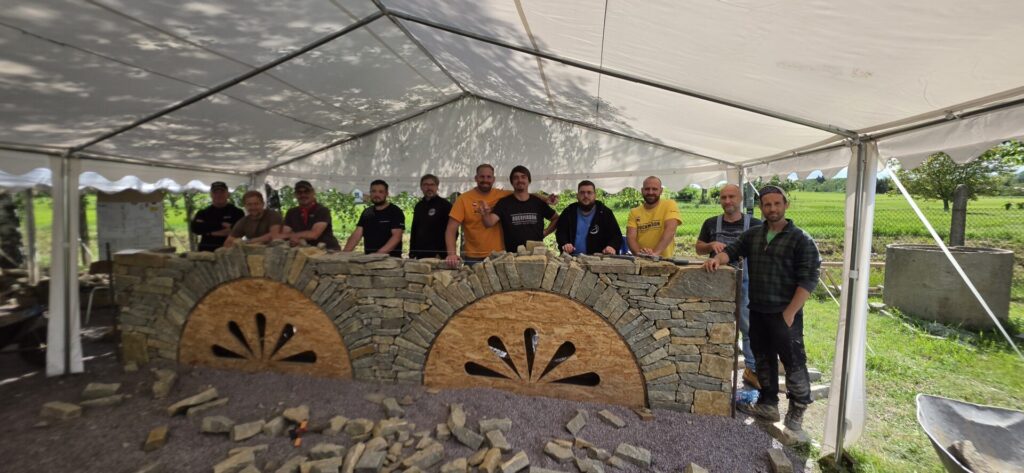
On Monday, 18 May 2026, we held a practical stone arch building course in Novosedly, South Moravia, Czech Republic. The group included a four-person company looking to expand its range of services, complete beginners planning a stone passage at home, and a participant exploring which area of stonework might eventually become his own trade.
Their reasons for attending were very different, but the goal was the same: to understand how a stone arch actually works as a structure, rather than simply how it looks in a finished photograph.
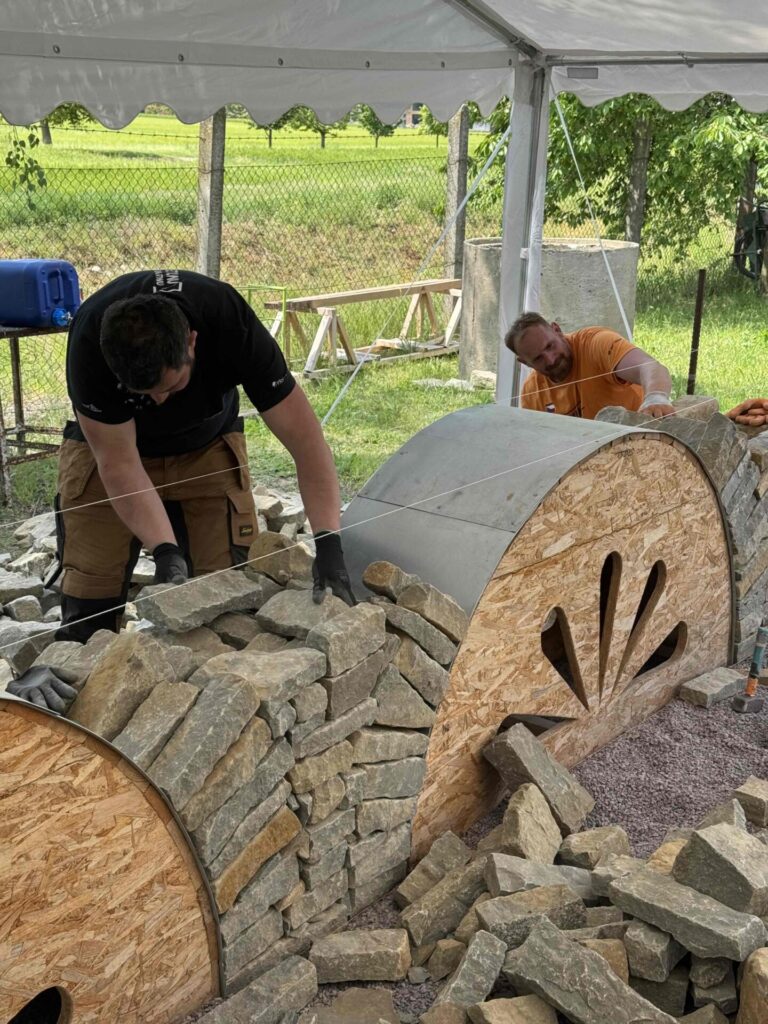
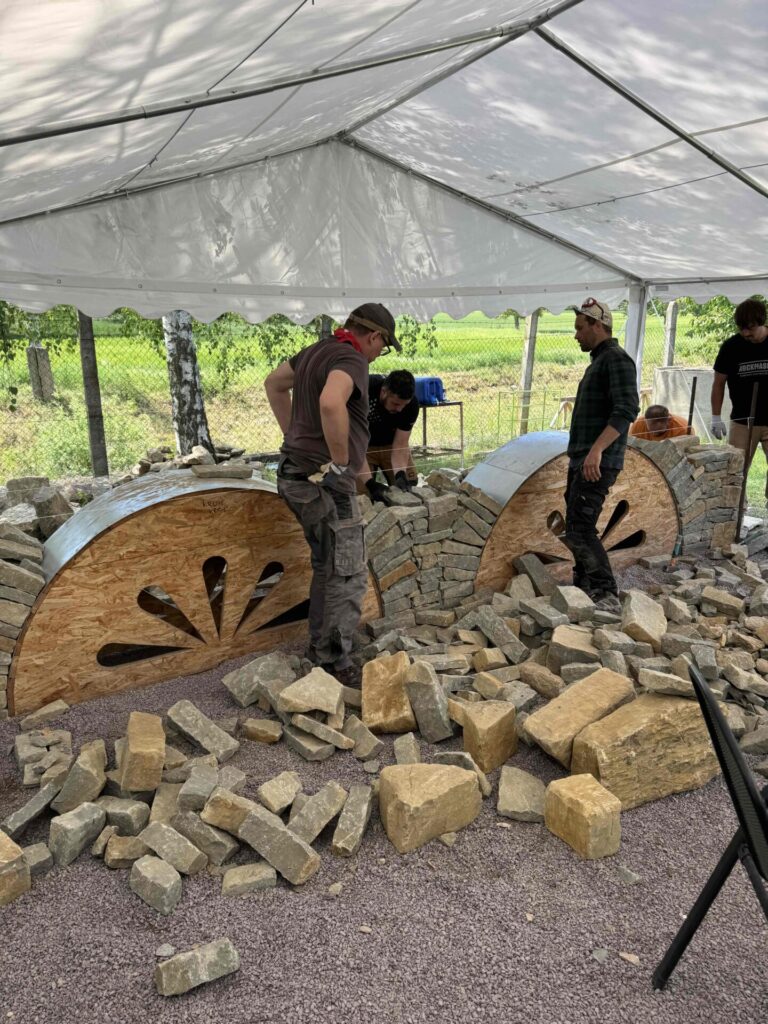
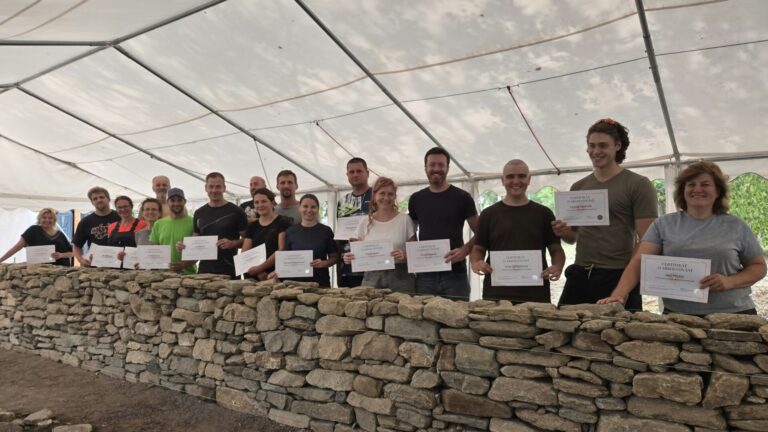
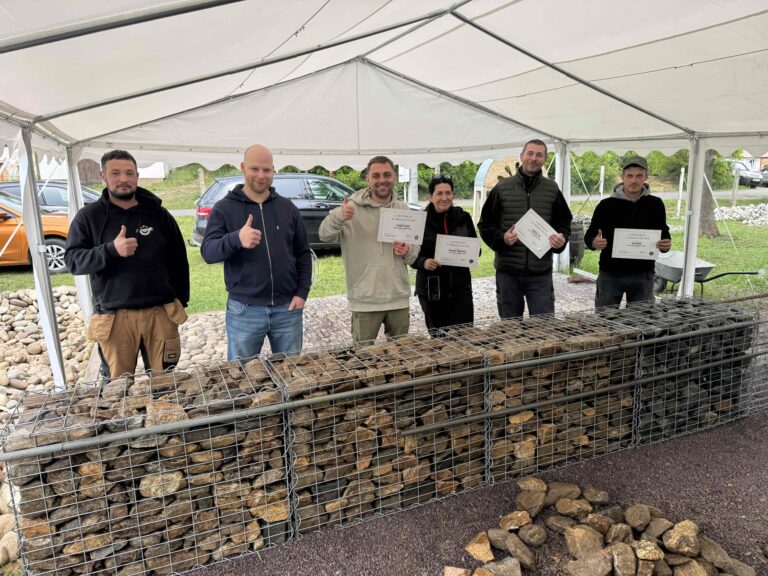
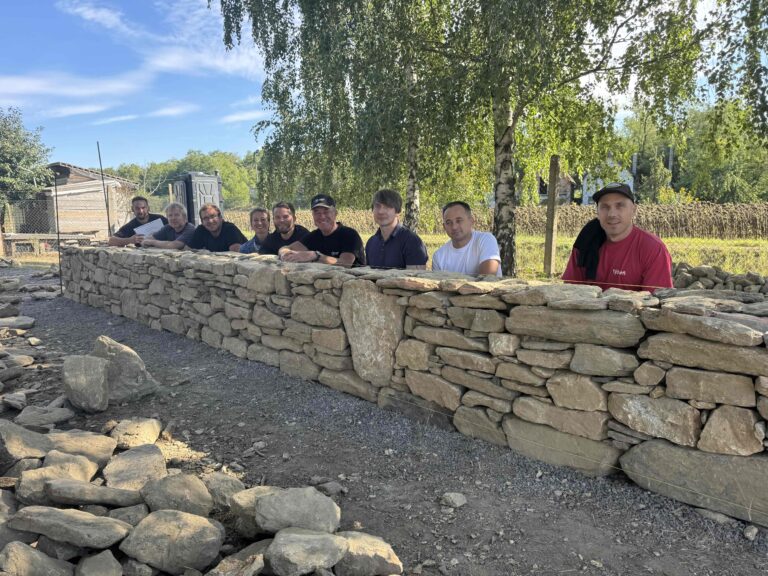
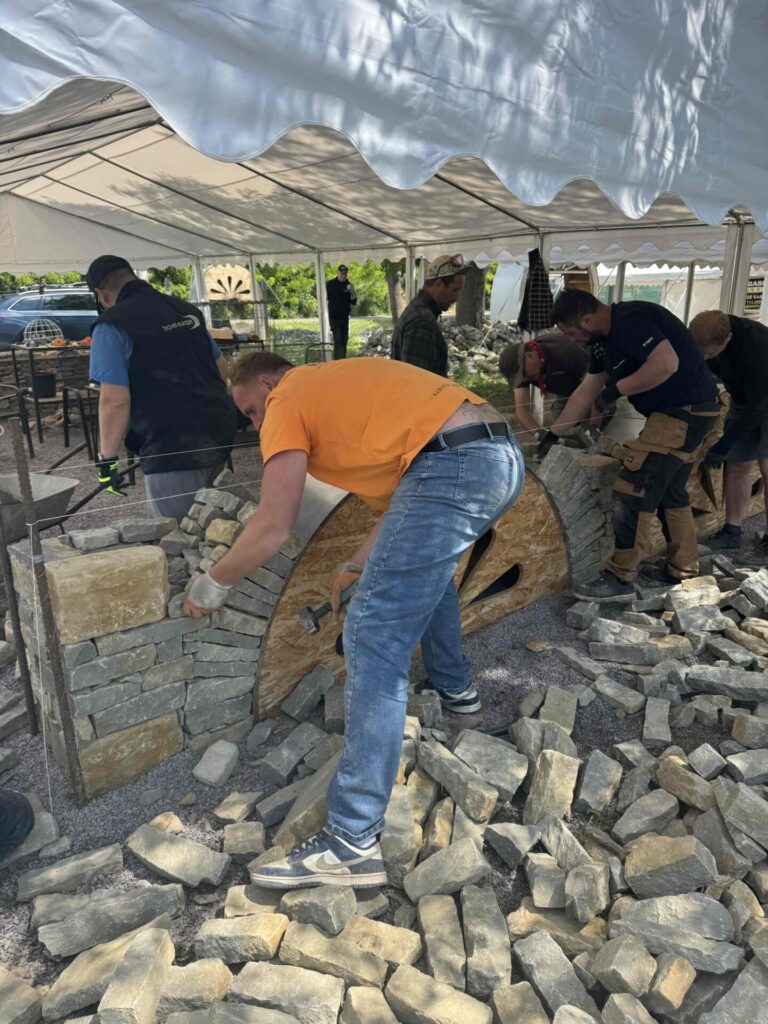
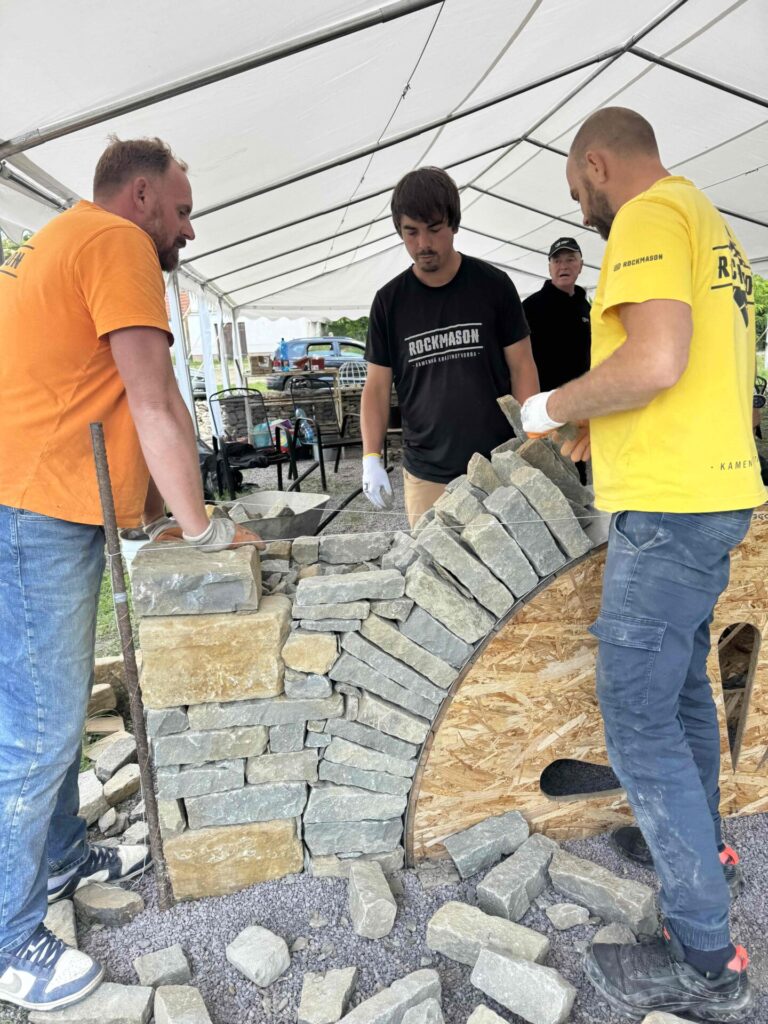
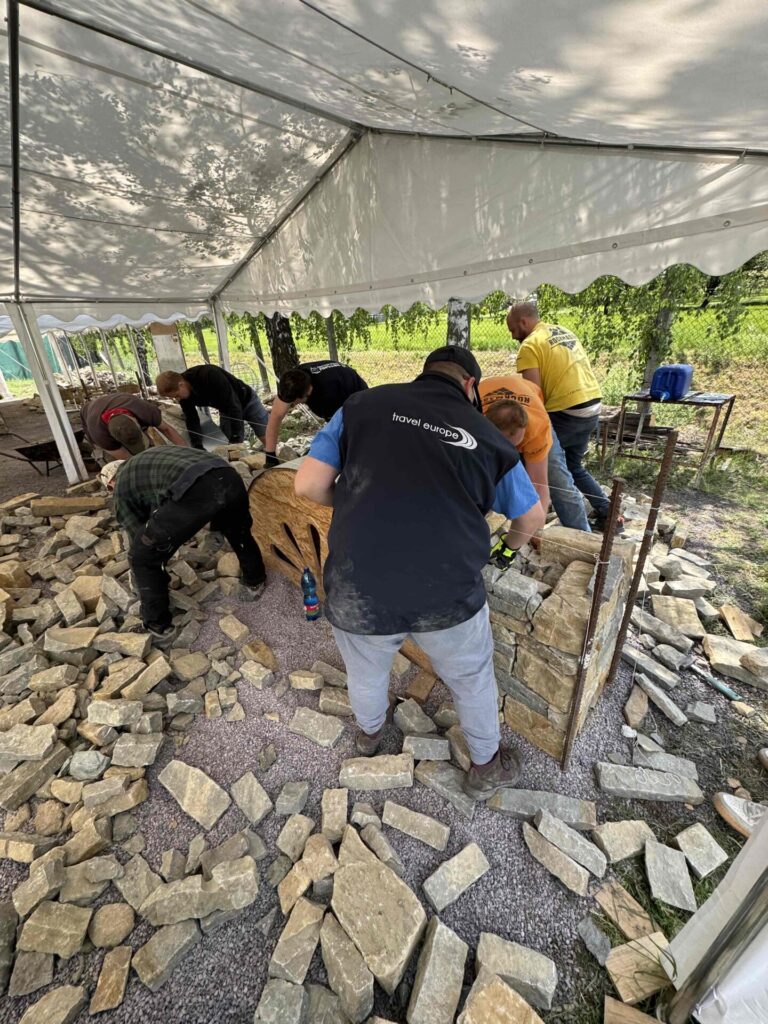
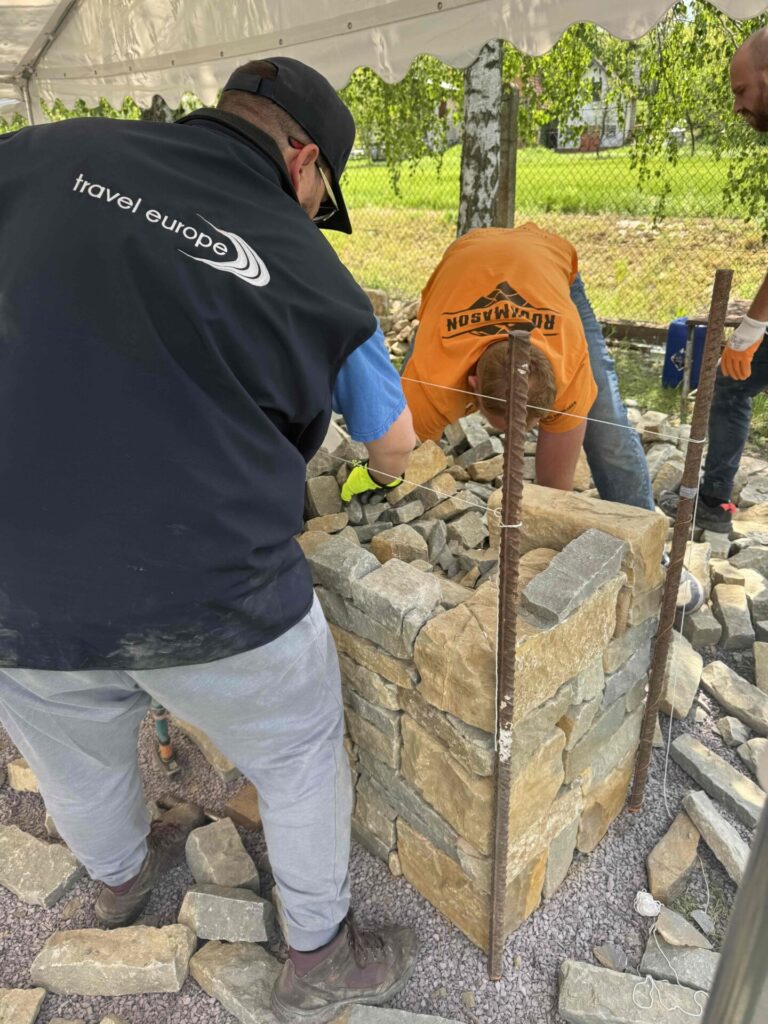
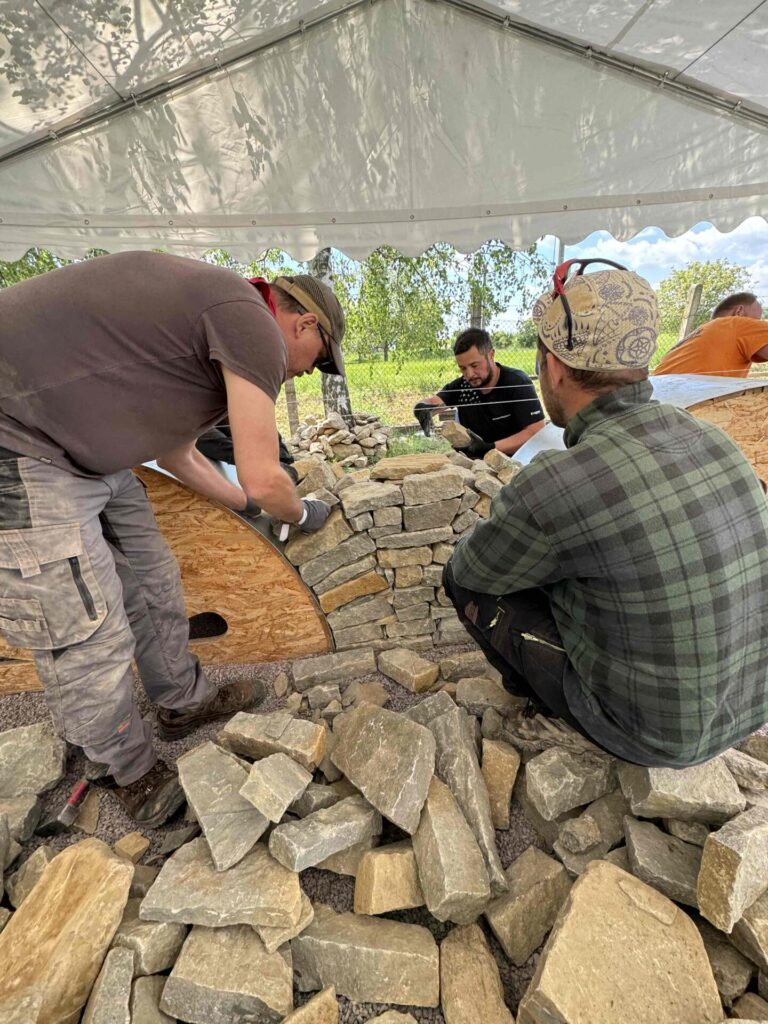
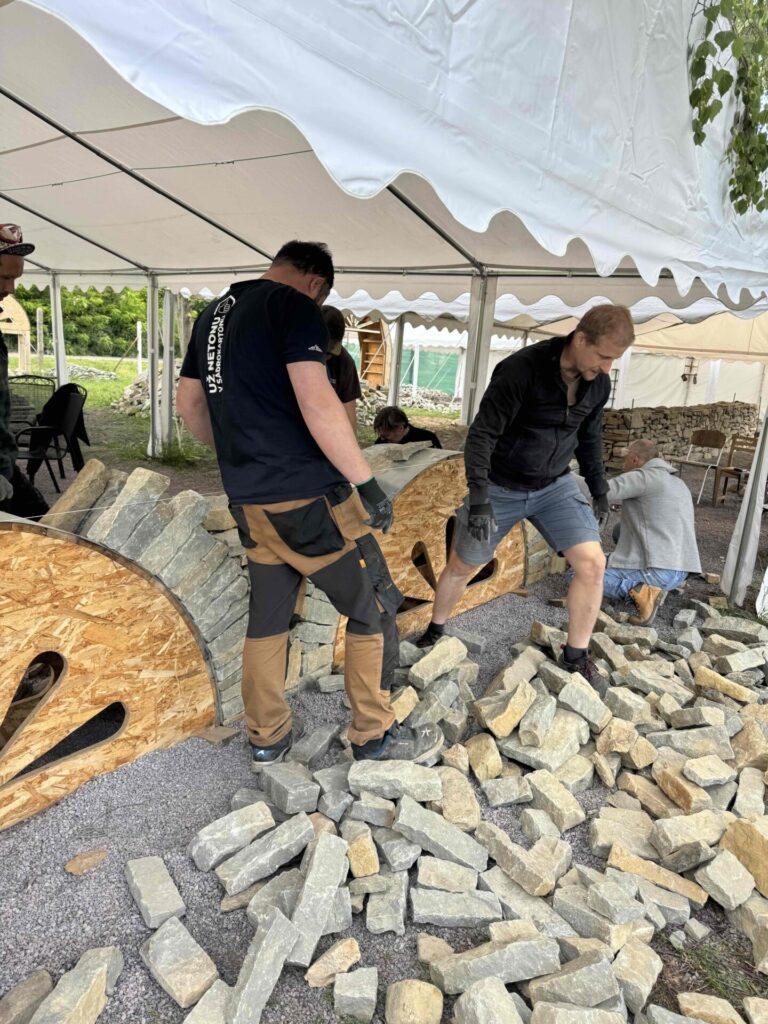
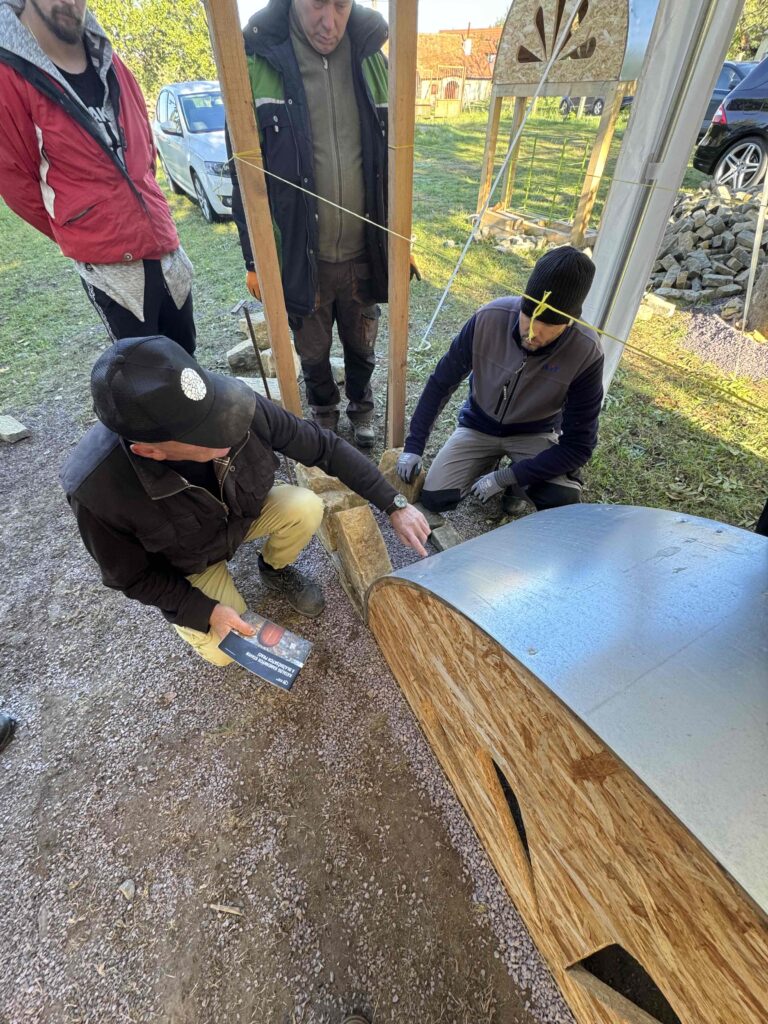
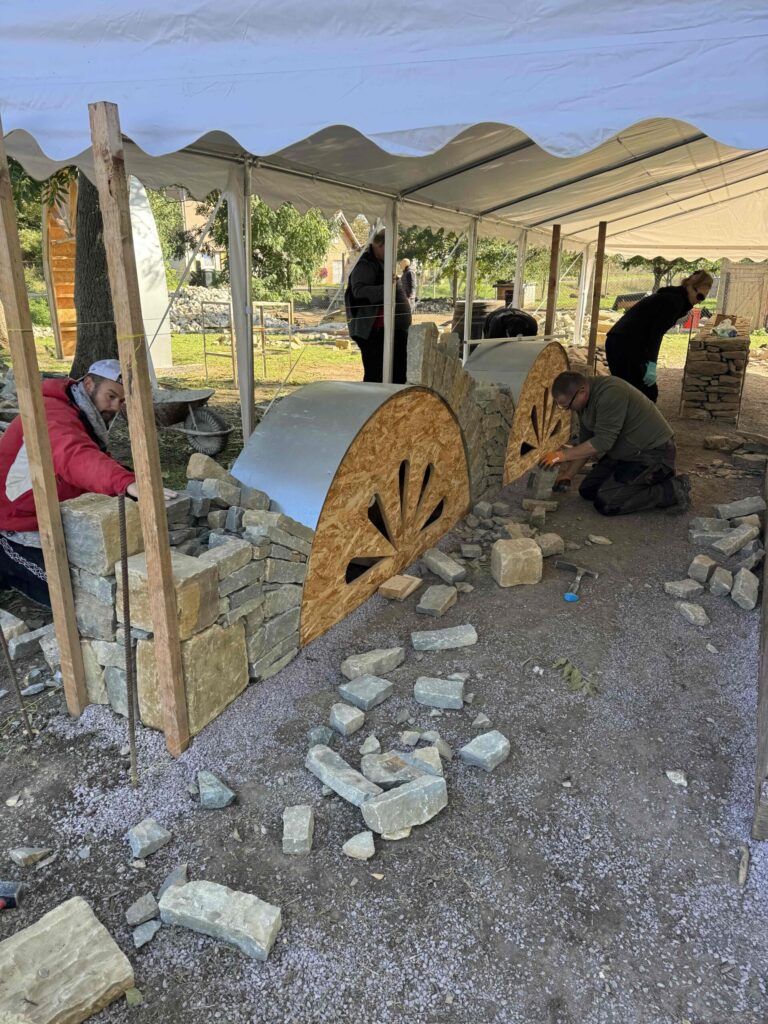
Hands-on stone arch building course in Novosedly. Photographs from the 18 May 2026 session.
A Stone Arch Is More than an Attractive Curve
Building a stone arch is not simply a matter of arranging stones into an attractive curved shape. An arch is a structural system that has to transfer compressive forces into its supports and remain stable once the temporary centering is removed.
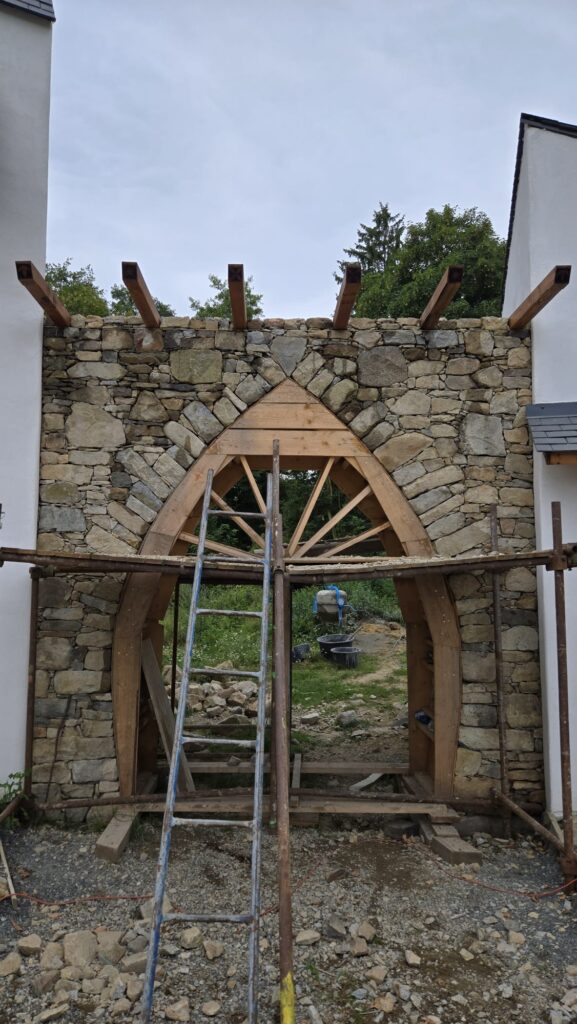
The centering supports the stones while the arch is being built, but it should not be the reason the completed arch remains standing.
This distinction is fundamental. An arch may look correct while the centering is still in place even if the springing points, stone arrangement or supports have been poorly executed. The real test begins when the temporary support is released.
The course therefore focused not only on appearance, but on arch geometry, centering, stone selection, load transfer, stable supports, closing the arch and working safely throughout the construction process.
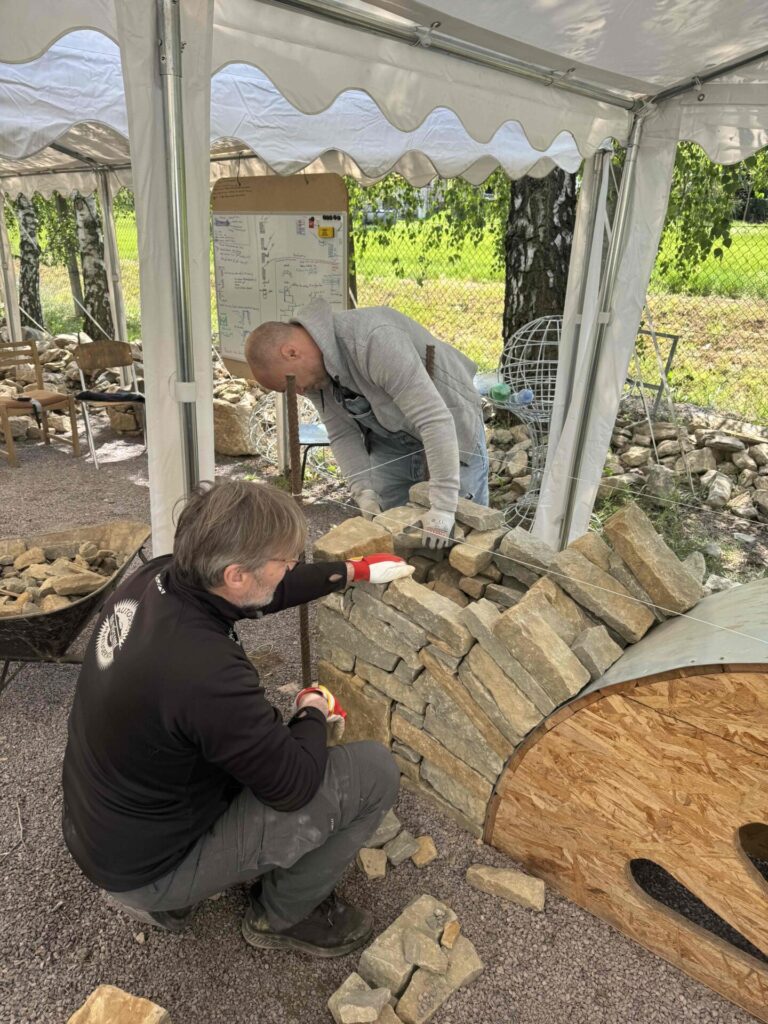
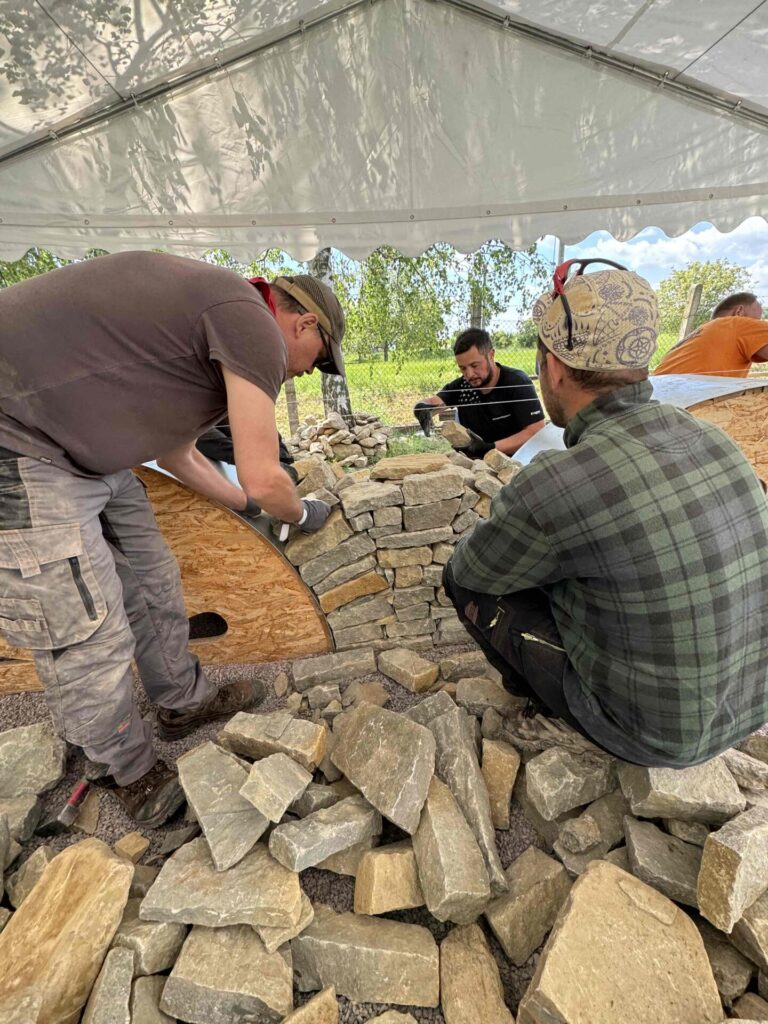
What Participants Learned during the Stone Arch Course
The aim was not to provide a quick demonstration and send everyone home believing that every type of arch was now easy to build. With structural stonework, that would be the wrong approach.
Instead, the course was designed to explain why each step matters and where the most important structural and safety risks can occur.
- how temporary arch centering is used during construction,
- how to establish the sides and supports of the arch,
- how to select stones according to their shape and position within the curve,
- how stones need to work together so the arch remains stable after the centering is removed,
- why simply copying the curve of the temporary support is not enough,
- how to approach the final closing of the arch and the keystone area,
- which errors can weaken the structure,
- which practical safety principles need to be respected.
Participants experienced directly that natural stone is not a standardised building unit. Every piece has its own shape, weight and orientation, and each one has to be assessed according to its position in the finished structure.
That relationship becomes particularly clear in an arch, where individual stones are part of one continuous structural system.
A Company Exploring Stone Arches as a New Service
A four-person company also attended the course. Their reason was practical: they wanted to explore whether adding stone arches to their existing range of services made technical and commercial sense.
For a company, a course like this has a different purpose than it does for a hobby participant. It is not only about experiencing stonework. A business also needs to understand the complexity of the process, the time involved, the risks and the point at which improvisation is no longer acceptable.
Stone arches make these limits particularly important because incorrect construction can have serious consequences.
The practical session therefore showed how much has to be considered before the first stones of the curve are even placed: preparation, supports, centering, safety, geometry and the controlled release of the temporary structure.
Beginners Planning a Stone Passage at Home
The course also included complete beginners with a very different motivation. They were not considering a new commercial service; they were planning a stone passage or arch at home and wanted to understand how such a structure should be approached safely.
This is an important point with arches: they are not structures for careless trial and error. An incorrectly supported, poorly arranged or badly closed arch can collapse.
The safety consequences of collapsing stonework can be serious, so participants also discussed when not to enter beneath an incomplete structure, why the centering should not be removed prematurely, why stone weight must never be underestimated and why adequate supports are essential.
For larger, loaded or structurally important arches, professional design or assessment may be necessary. A practical course helps participants understand the principles and limits, but it does not replace structural engineering where that is required.
Using a Course to Explore a Future Stonework Trade
Another participant was not attending because of one specific construction project. He was exploring different possibilities and wanted to discover which type of stonework interested him most before potentially developing it into an independent trade.
This is one reason why trying several different stonework disciplines can be valuable. From the outside, working with stone can appear to be one single craft. In practice, there are significant differences between dry stone walling, paving, gabions and arch construction.
Each requires a different way of thinking, a different level of precision and a different kind of patience.
Once someone begins handling the material themselves – assessing its weight, shape, position and relationship to surrounding stones – it becomes much easier to understand which type of stonework they genuinely enjoy.
The Arch Must Work after the Centering Is Removed
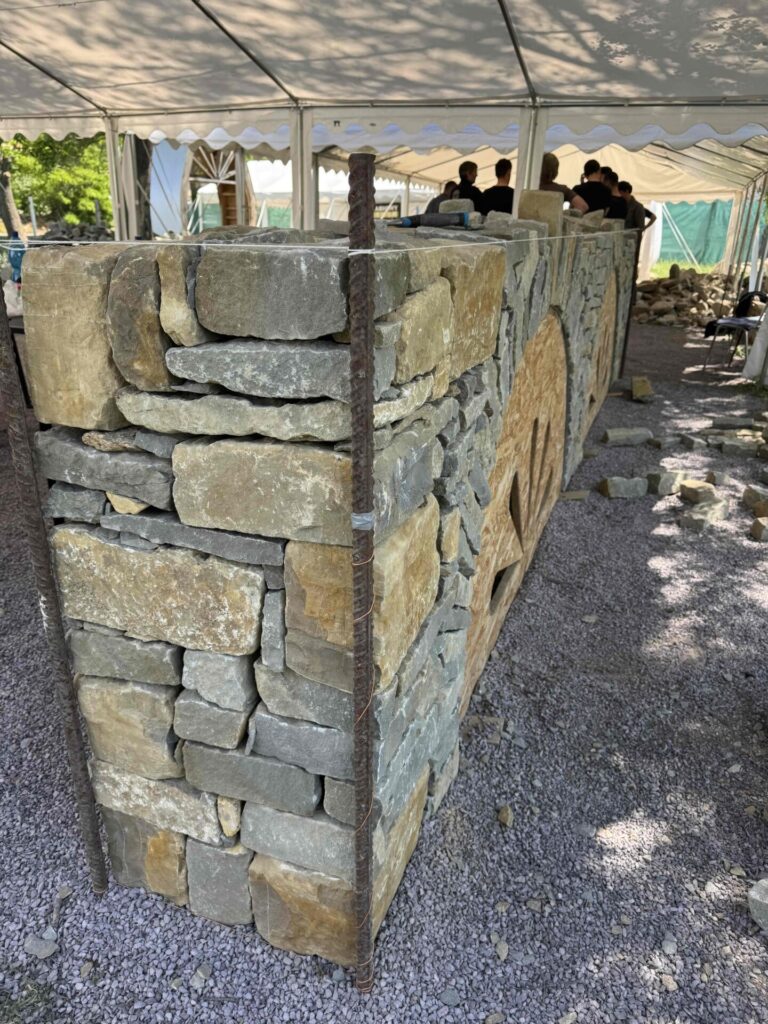
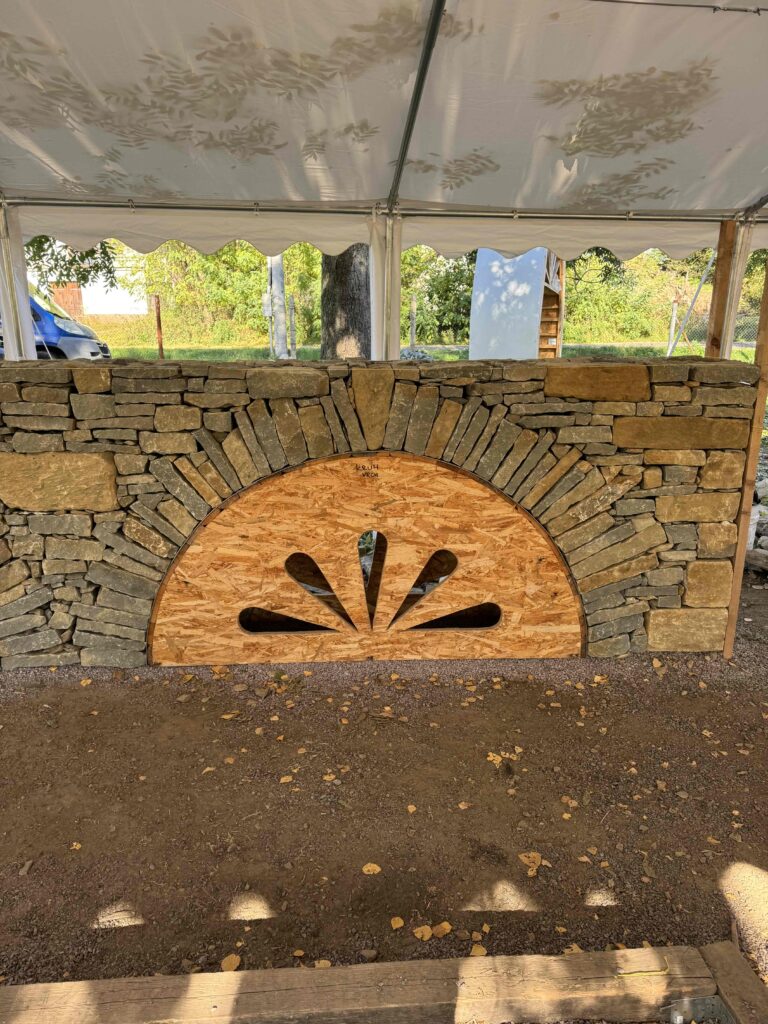
One of the central parts of the course was understanding the role of the temporary centering. It defines and supports the arch during construction, but a correctly built arch must ultimately function as its own structural system after that support is removed.
Participants therefore did not simply learn to arrange stones around a curved template. They learned to think about how compression is transferred toward the sides, why stable abutments matter, why the arch has to be closed correctly and why some stones are unsuitable for particular positions in the curve.
Smaller details also became important in practice: whether a particular stone should be used or replaced, how the joints are developing, how to recognise a weak area and why “it is holding for now” is not a sufficient structural principle.
Safety Is Not a Formality in Stone Arch Construction
With paving or a low stone wall, a construction mistake may mainly result in repair work. With an arch, a serious mistake can lead to structural collapse.
That is why the course also covered practical safety considerations based on real stonework experience.
An arch carries considerable weight and compressive force. If its supports, geometry or stone arrangement are inadequate, it may become unstable when the centering is released or when additional load is introduced.
For larger, loaded or structurally important arches, there is no place for guesswork. Appropriate professional design and assessment should be used where required.
The purpose of the course is therefore not to encourage every participant to build any type of arch without further consideration. It is to provide a practical understanding of the principles, risks, construction sequence and limitations so participants can better recognise what is reasonable to undertake themselves and when specialist input is needed.
Stone Arch Building as Part of a Three-Day Stonework Programme
Some participants attended the stone arch course as part of a three-day programme combining stone arch construction, dry stone walling and traditional stone paving.
This combination is particularly useful for people who want to compare several different ways of working with natural stone rather than experience only one isolated discipline.
- Dry stone walling develops an understanding of stability, bonding and how to read irregular stone.
- Stone paving places greater emphasis on base preparation, levels, surface geometry and accurate placement.
- Stone arches introduce curved structural geometry, compression, supports, centering and additional safety considerations.
For someone considering stonework as a future trade, experiencing several disciplines first-hand can make it much easier to understand which type of work suits them best.
Who Is the Stone Arch Building Course For?
The course can be useful for several different types of participants. Professional experience is not required, but the subject does need to be approached seriously. A stone arch is a structural element, not simply a decorative arrangement of stone.
- Beginners can understand the basic principles, risks and construction sequence.
- Home and garden owners can gain a clearer understanding of smaller stone passages and similar projects.
- Companies can assess whether stone arch construction could realistically become part of their services.
- Tradespeople can explore another type of stone structure and its practical requirements.
- People considering a new craft can find out whether this type of stonework genuinely suits them.
Explore Our Practical Stonework Courses
If you are interested in working with natural stone, you can begin with one discipline or explore several different techniques depending on the kind of project or craft that interests you.
Our hands-on courses take place in Novosedly, South Moravia, Czech Republic, where participants work directly with natural stone in a practical outdoor training environment.
Who Is Behind This Article