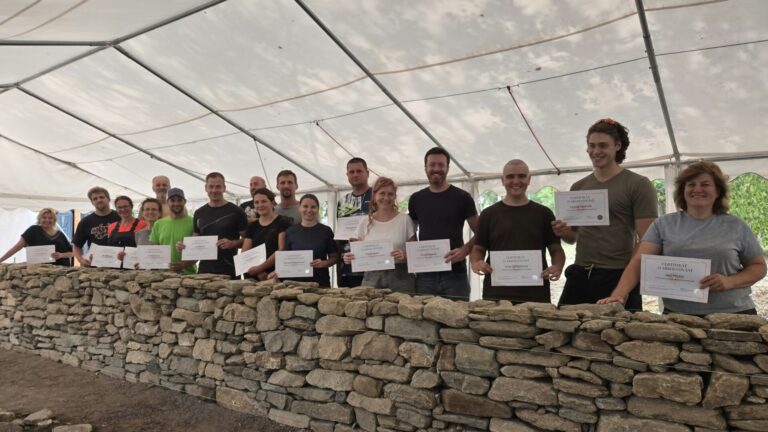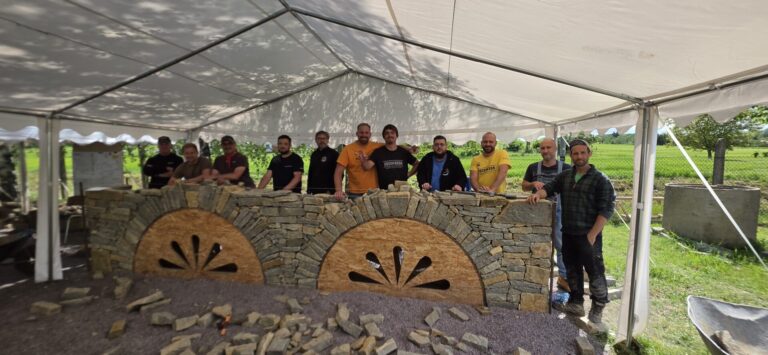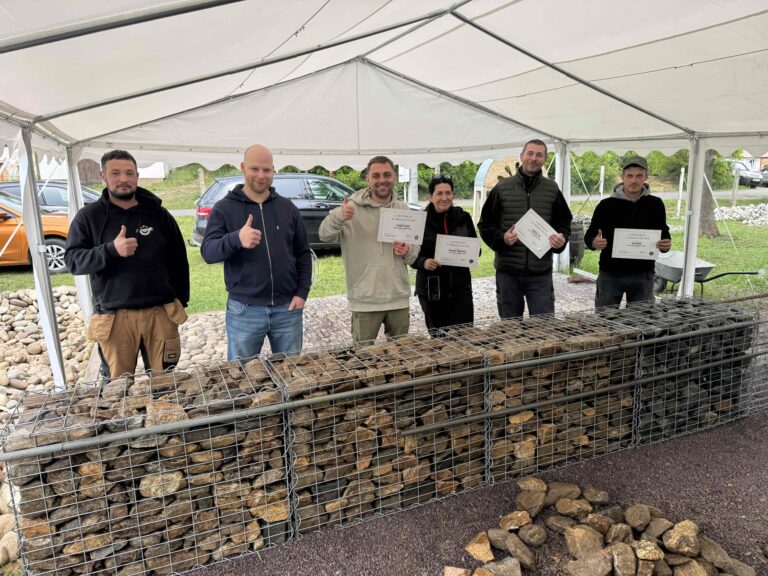


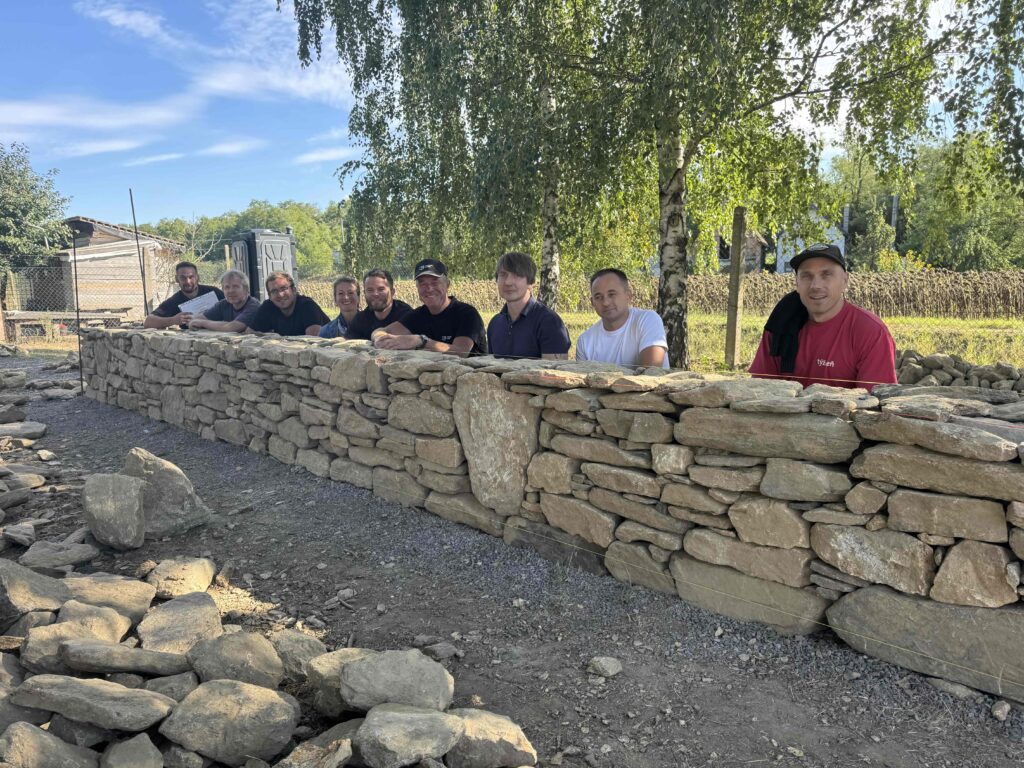
On Sunday, 7 September 2025, we held another dry stone walling course in Novosedly, South Moravia, Czech Republic. This session was less about speed and more about precision, cooperation and understanding the basic principles behind a well-built dry stone wall.
The group worked on a relatively low garden dry stone wall – the kind of structure that many people might realistically want to build at home around a path, terrace, flower bed or another part of the garden.
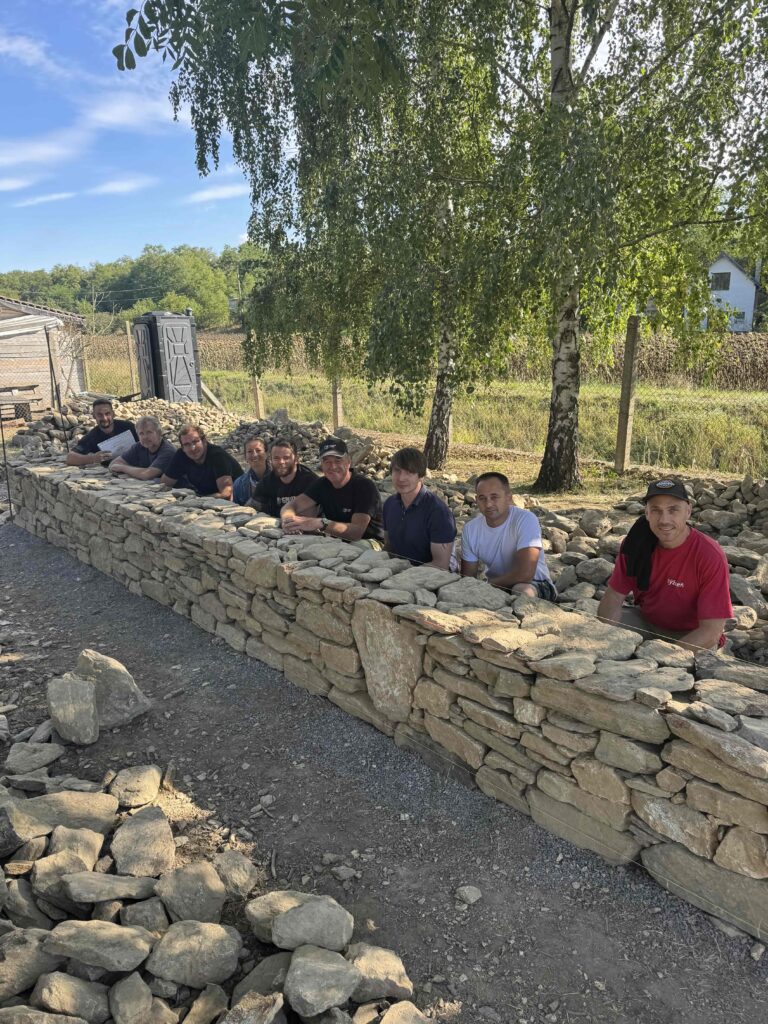
A Course for Beginners, Couples and Different Levels of Experience
The group included both women and men, as well as couples who wanted to practise the kind of stonework they were planning to use at home.
The structure built during this course was not a massive retaining wall. It was a lower garden stone wall designed mainly as a landscape and visual feature while still requiring proper alignment and structural stability.
This type of work also demonstrates an important point: stonework is not simply about physical strength. Technique, patience, stone selection and following the correct sequence of work are often much more important.
Teamwork You Can See in the Finished Wall
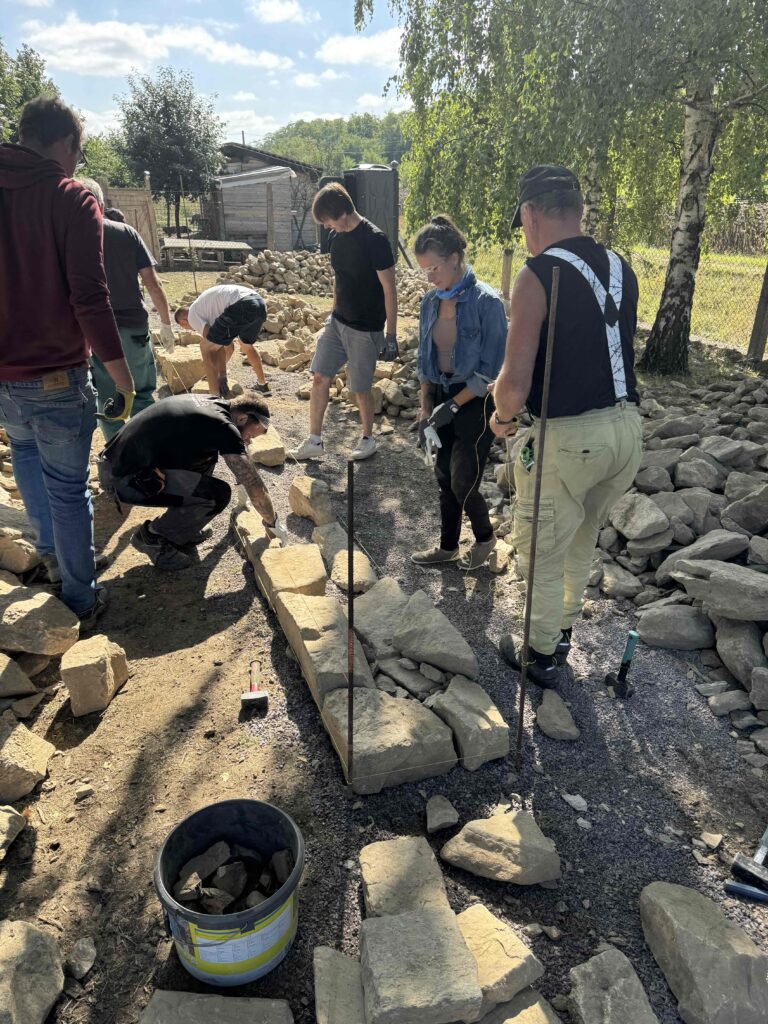
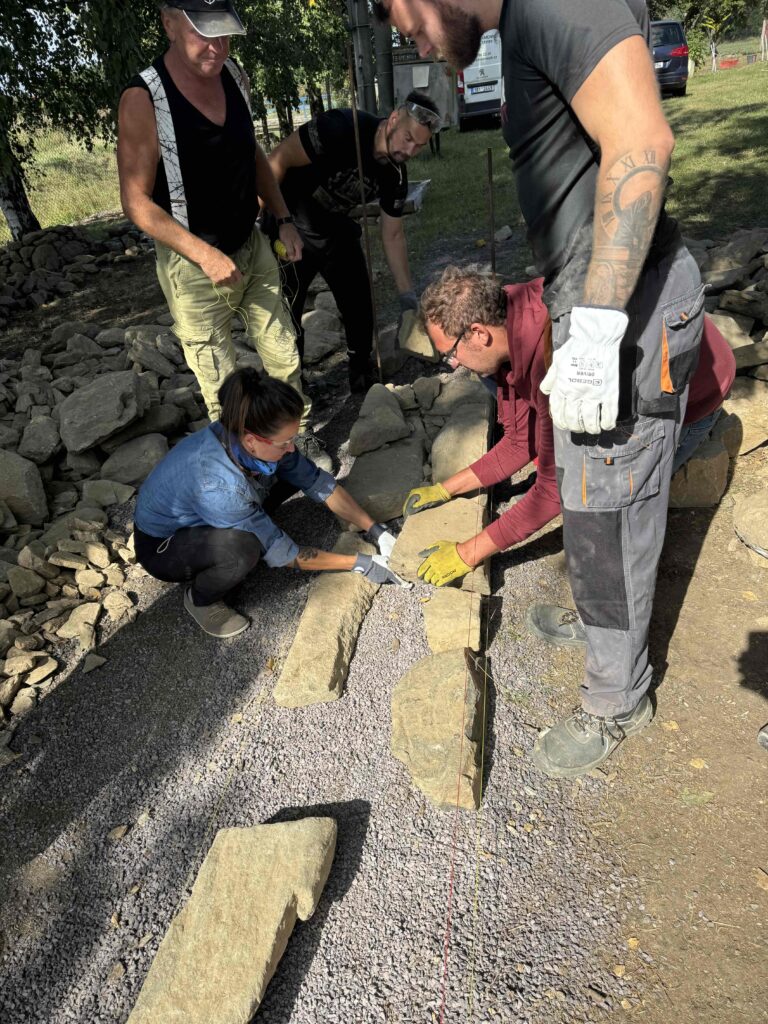
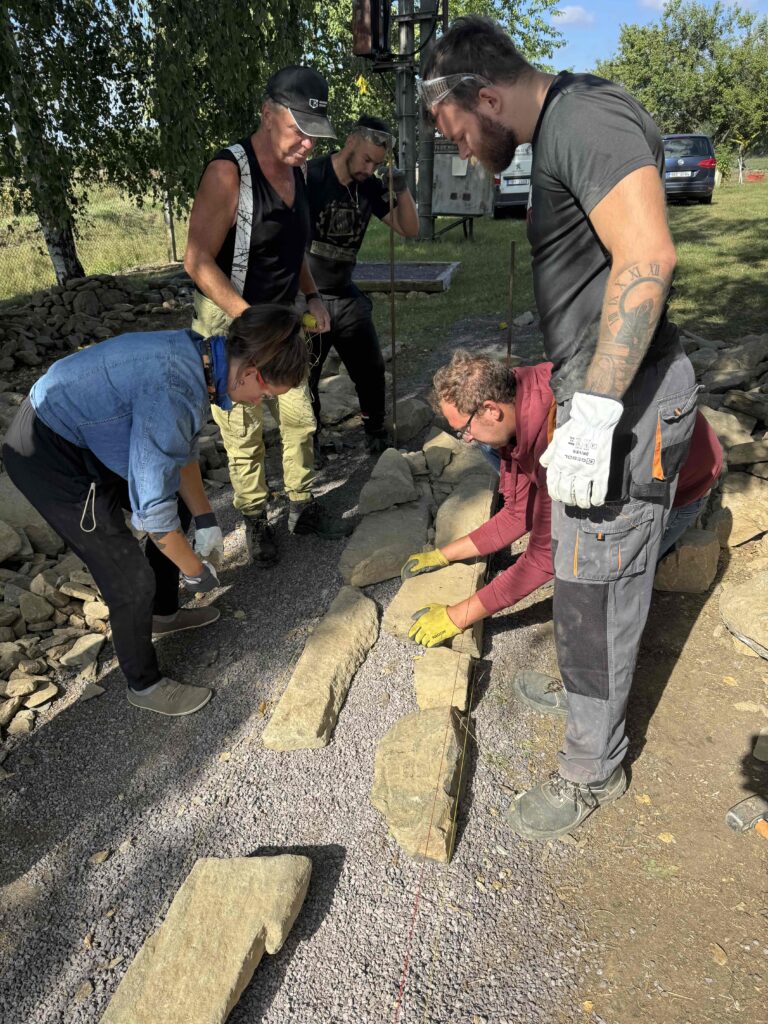
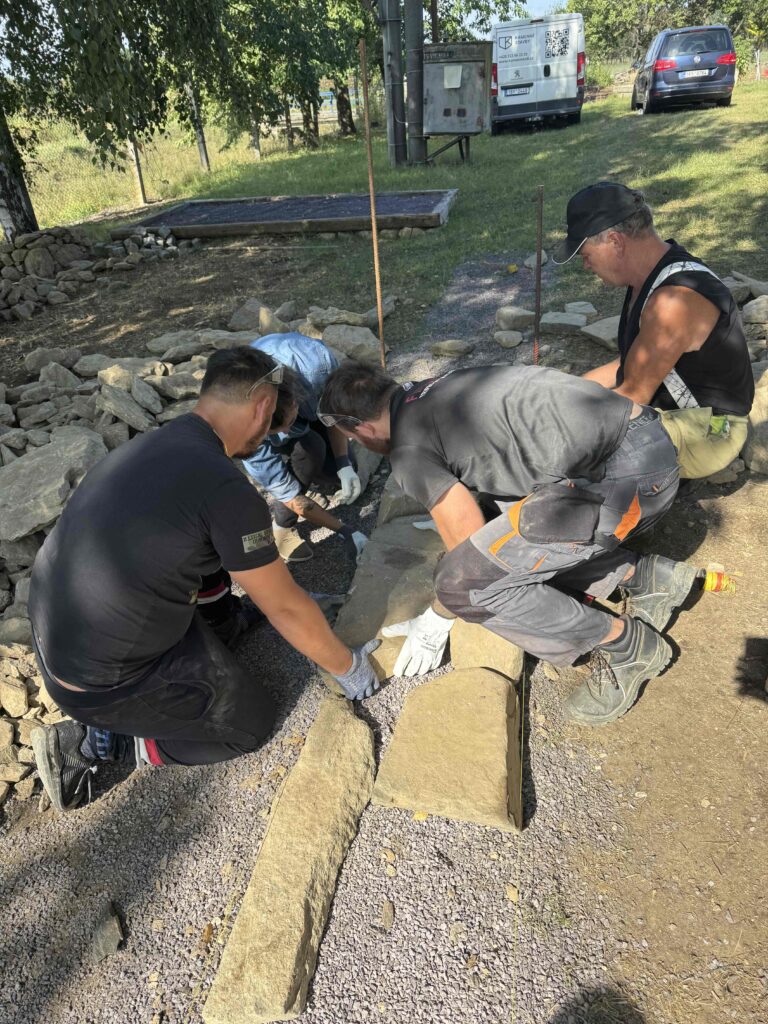
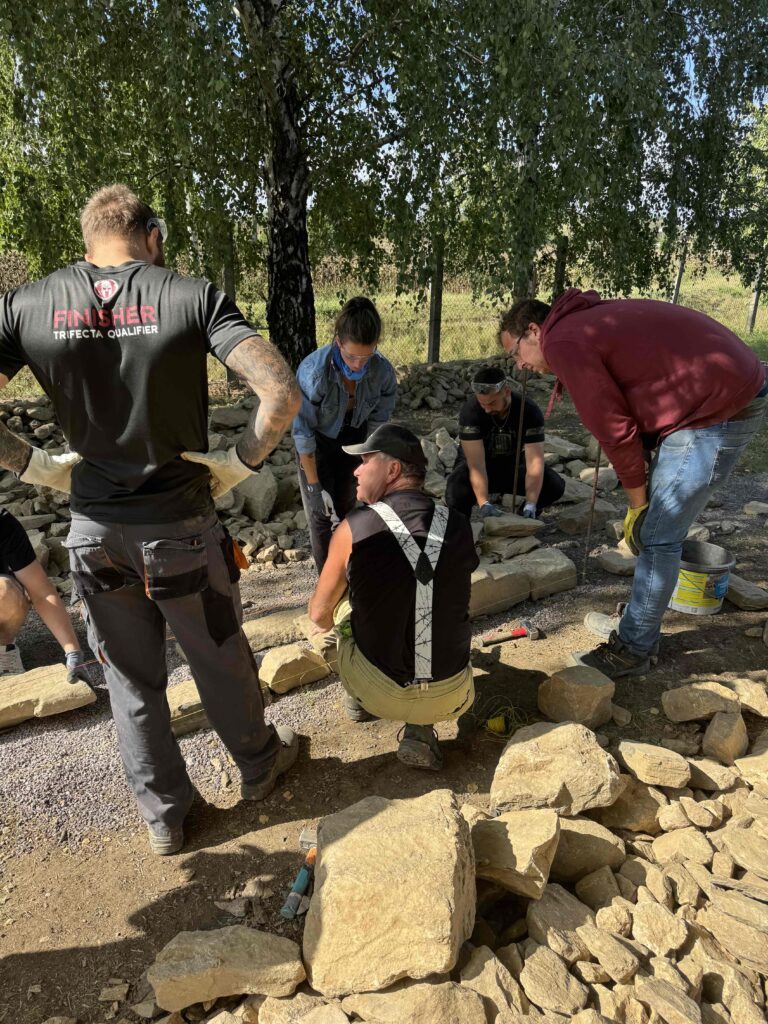
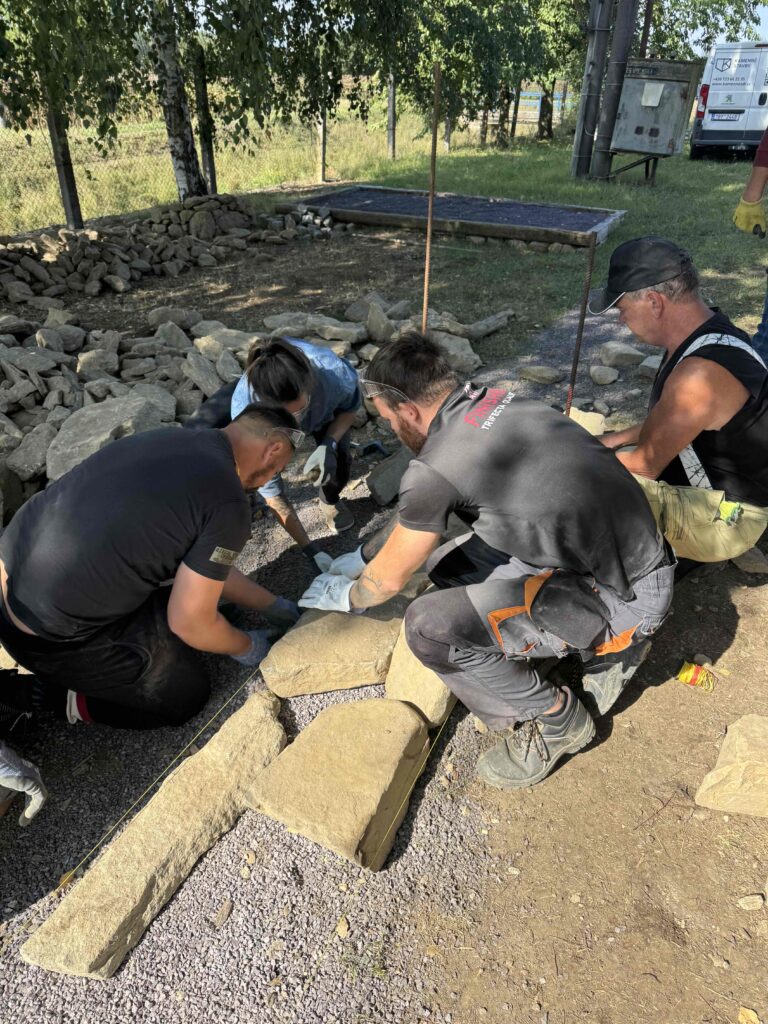
This group worked particularly well together. Participants helped one another move heavier stones, checked the line and level, and kept an eye on the string line so the wall continued in the intended direction.
Instead of everyone building independently, the wall developed as one shared structure. Small issues could therefore be corrected as they appeared rather than being discovered only at the end.
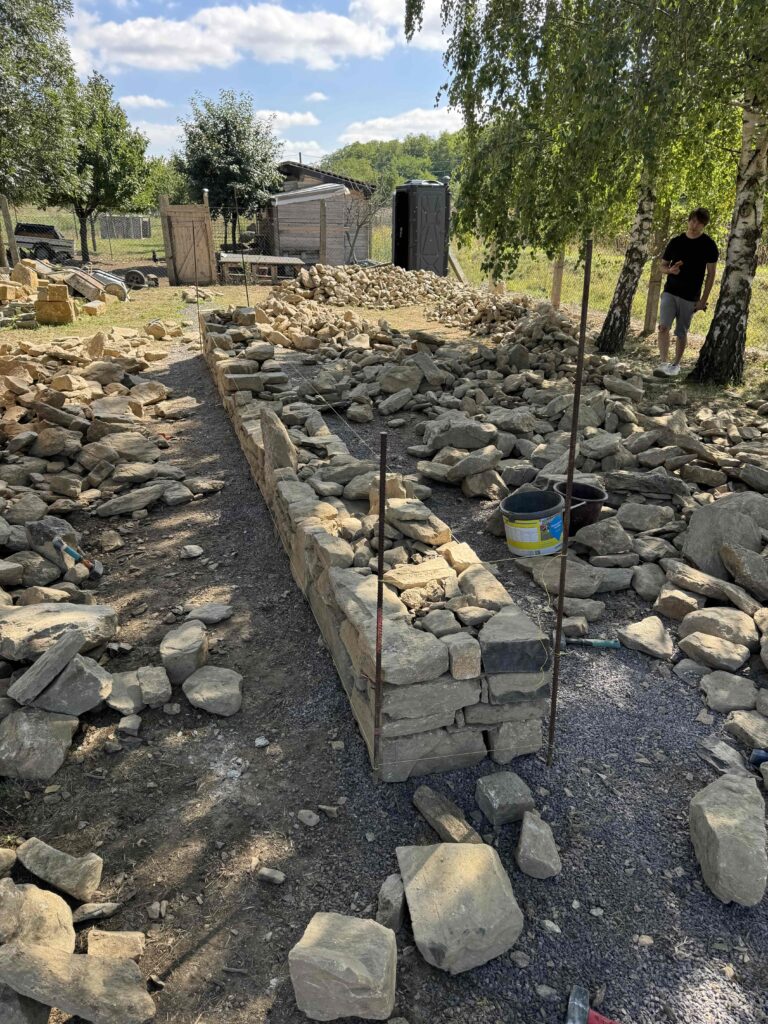
Maintaining alignment throughout the build is important. A small deviation in the first part of a wall can become increasingly noticeable as the structure continues.
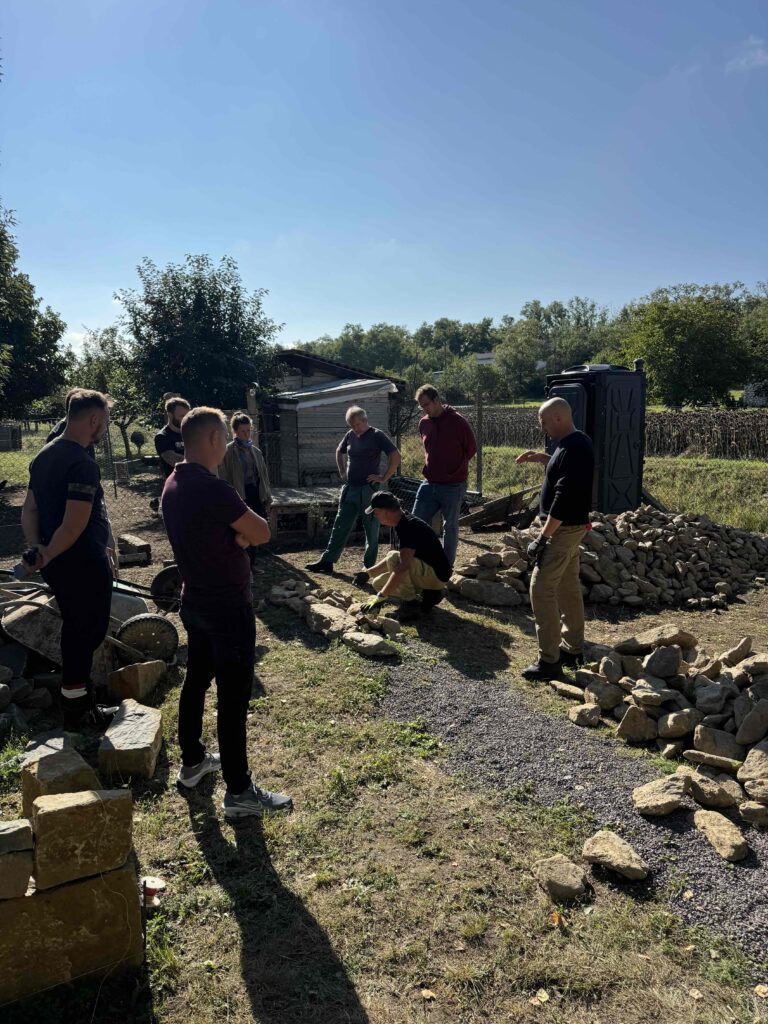
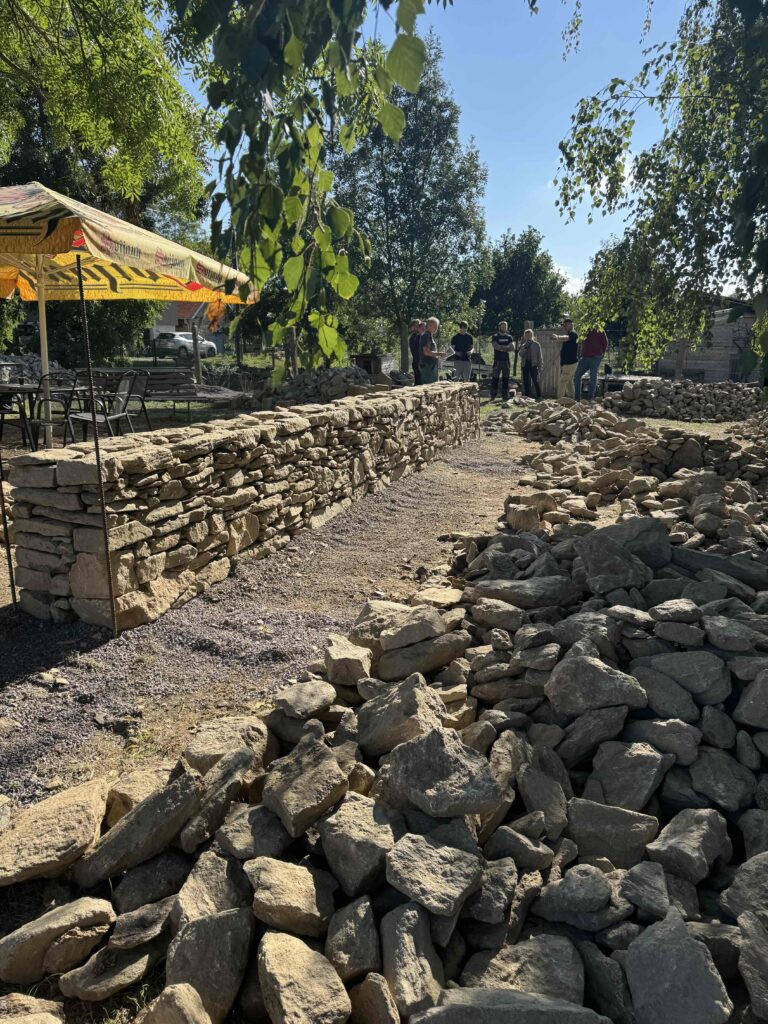
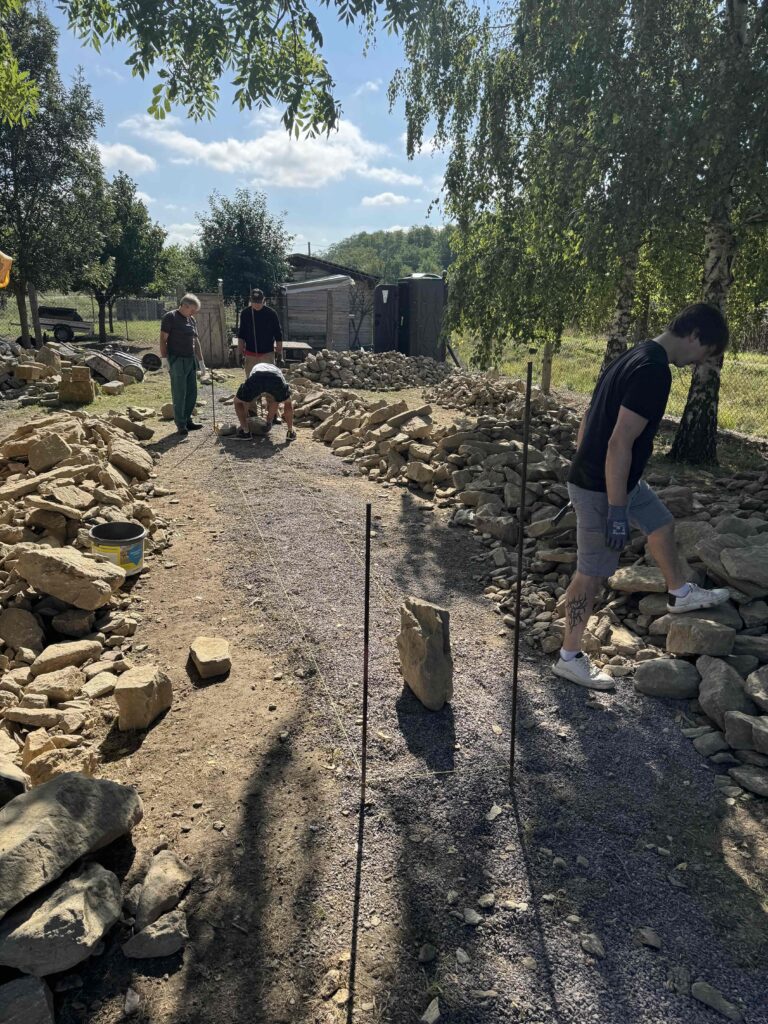
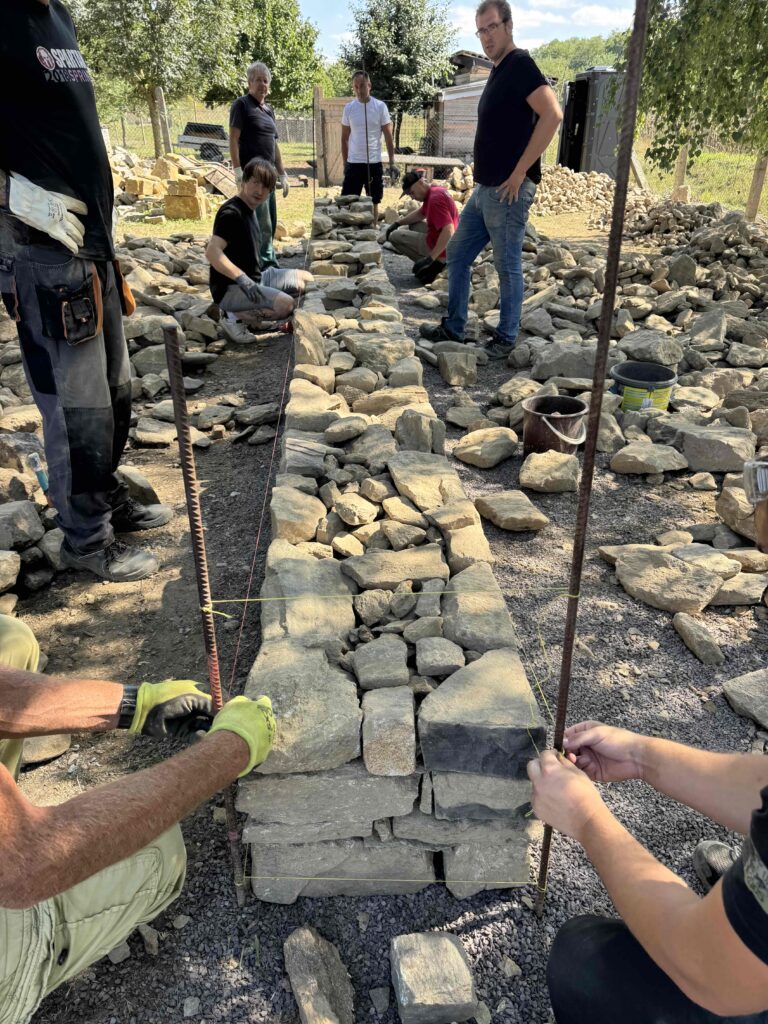
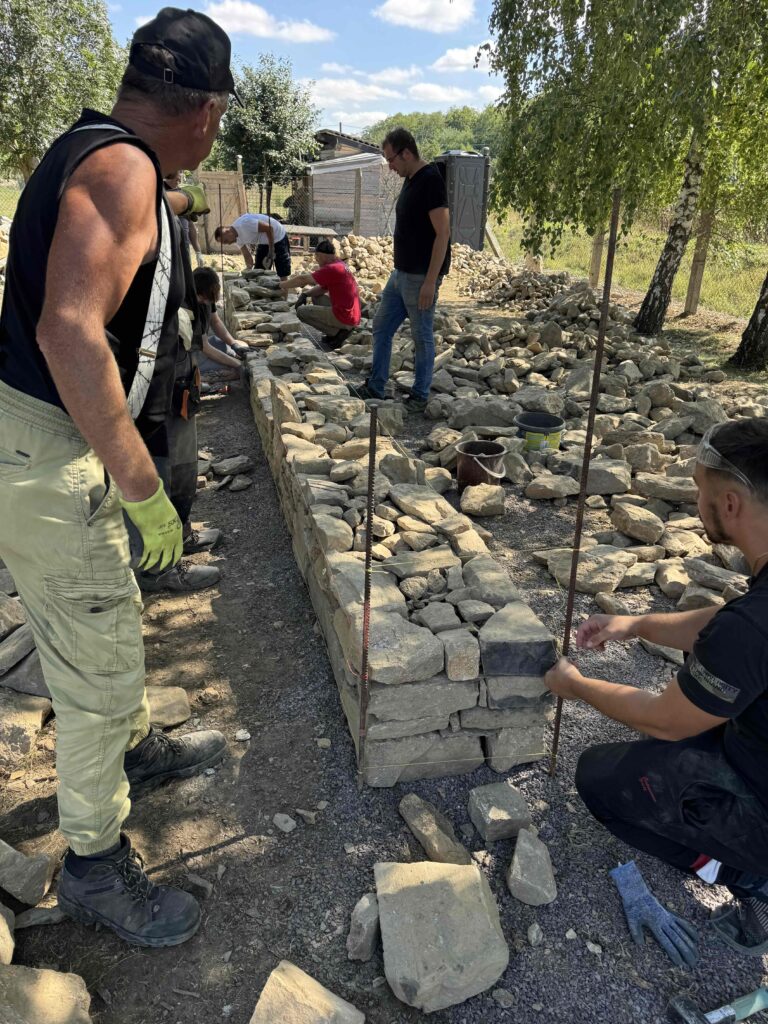
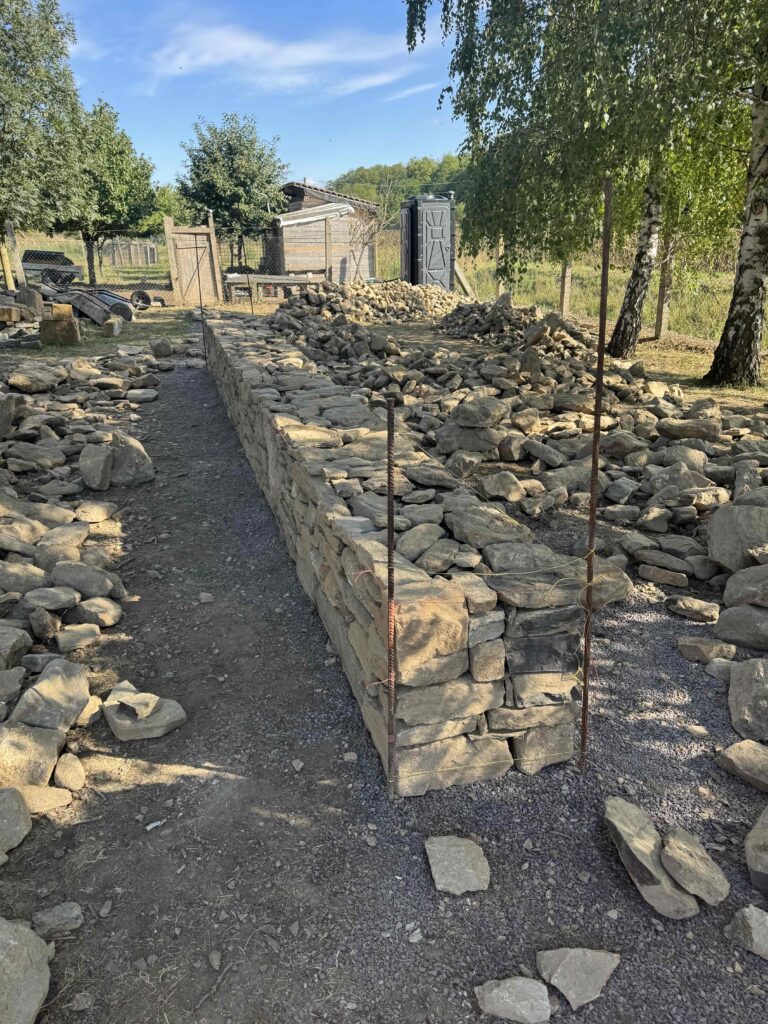
What We Built: a Low Dry Stone Garden Wall
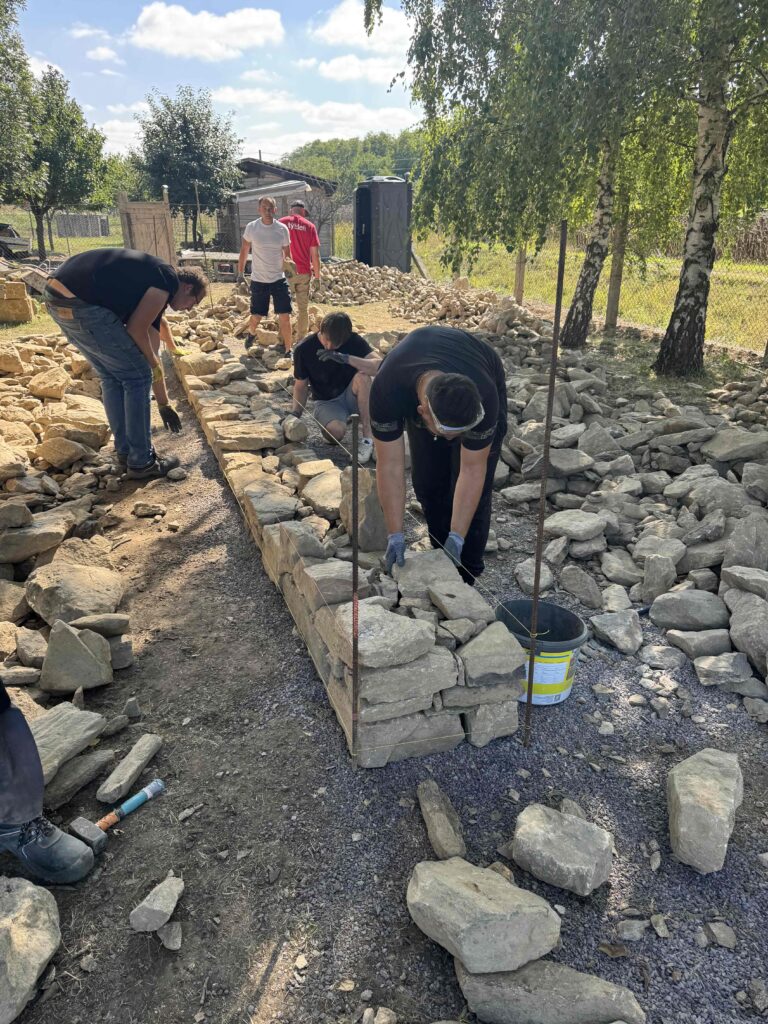
During the day, participants built a long, relatively low stone wall. It was closer to a garden feature than to a substantial retaining structure.
A wall like this can be used in several ways:
- to separate different areas of a garden,
- as a decorative element beside a path or terrace,
- as a low border around planting beds,
- to define part of a property or landscape design.
Building the Garden Wall Step by Step
The course covered the same fundamental decisions that matter when building a smaller wall at home.
- preparing and establishing the first course,
- using a string line to maintain the intended direction,
- selecting suitable stones for the visible face,
- placing individual stones so they sit securely,
- creating stability without mortar,
- checking the wall continuously instead of trying to correct everything at the end.
The individual principles are relatively simple to describe, but their importance becomes clear only when working with irregular natural stone. If the first courses or alignment are neglected, problems tend to continue into the rest of the wall.
Why a String Line Matters
One of the practical tools used throughout the day was the string line. It gives the group a clear reference for the intended direction of the wall and makes deviations easier to recognise while there is still time to correct them.
Natural stone itself is irregular, so the individual faces do not create a perfectly uniform edge. The string provides a consistent reference while still allowing the builder to work with the natural shape of each stone.
Stonework Is More about Technique than Strength
Courses like this also help challenge the idea that stonework is simply about lifting heavy material. Some stones are naturally heavy and participants help one another when necessary, but much of the work consists of observation, selection, positioning and patience.
A stone that initially seems difficult to use may work well after being turned or moved to another part of the wall. Conversely, forcing the wrong stone into a particular position usually creates more work rather than less.
When a Company Sends Its Gardener for Practical Training
One participant had been sent to the course by his employer as a professional gardener. The purpose was not simply to receive a certificate, but to gain practical experience that could later be applied to real landscaping work.
This is a useful application of hands-on training. Understanding how a stone wall is actually constructed helps professionals make better decisions when natural stone becomes part of a garden or landscape project.
A Practical Example of a Garden Dry Stone Wall
The course on 7 September showed that dry stone walling can be approached by people with very different backgrounds and levels of previous experience.
With a lower garden wall, the emphasis is often less on handling very large stones and more on maintaining a consistent line, selecting suitable pieces and building a stable structure that fits naturally into the surrounding garden.
The result was a straightforward example of how traditional dry stone principles can be applied to a structure that many participants could realistically reproduce on their own property.
Learn to Build a Dry Stone Garden Wall
Our practical courses take place in Novosedly, South Moravia, Czech Republic. Participants work directly with natural stone and learn how to prepare the base, select and position stones, maintain the wall line and create stability without mortar.
Find out more about the Dry Stone Walling Course or view all practical stonework courses and available dates.
Who Is Behind This Article