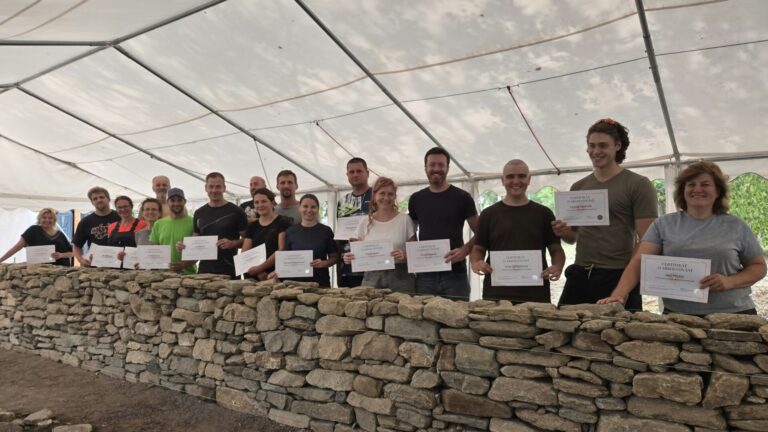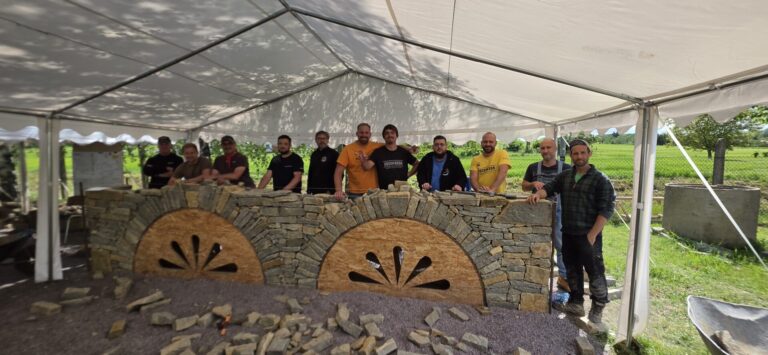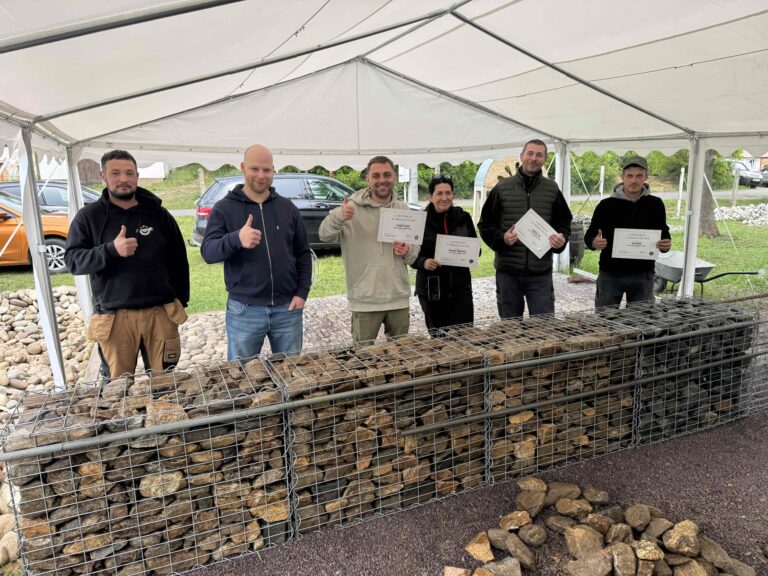


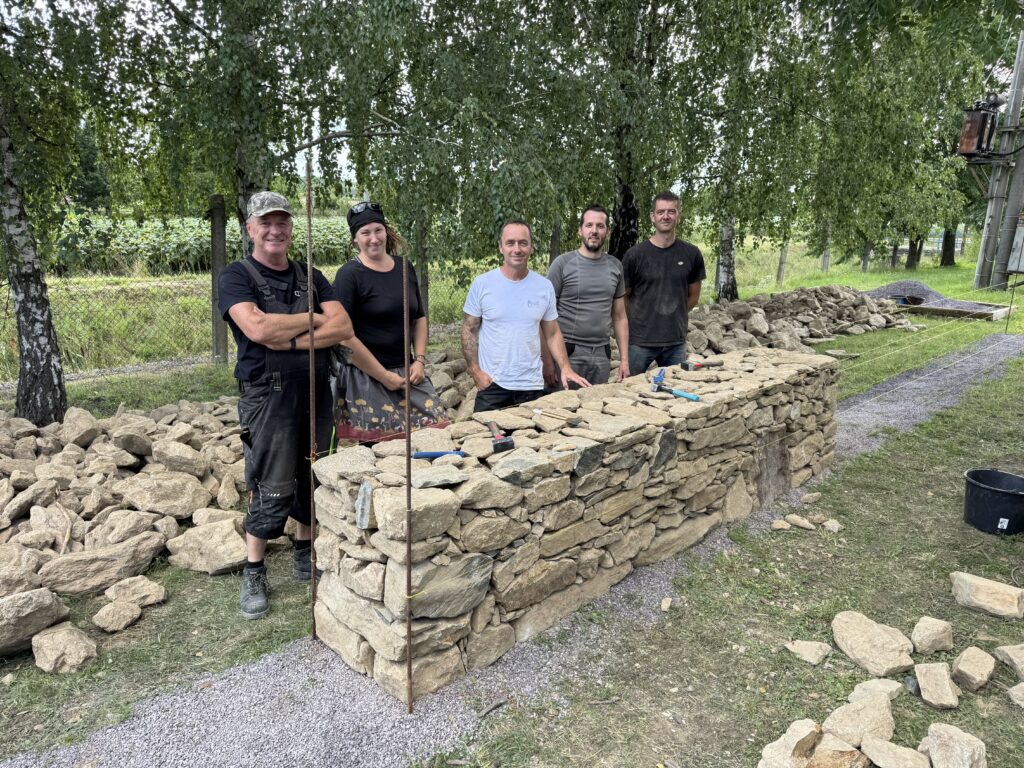
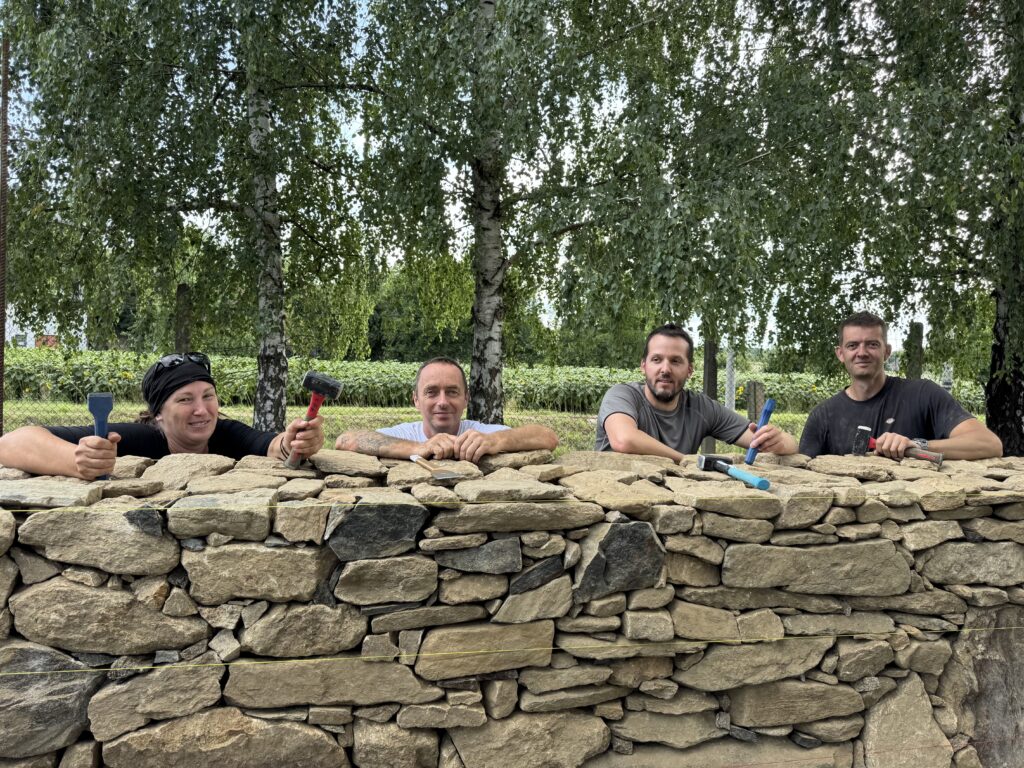
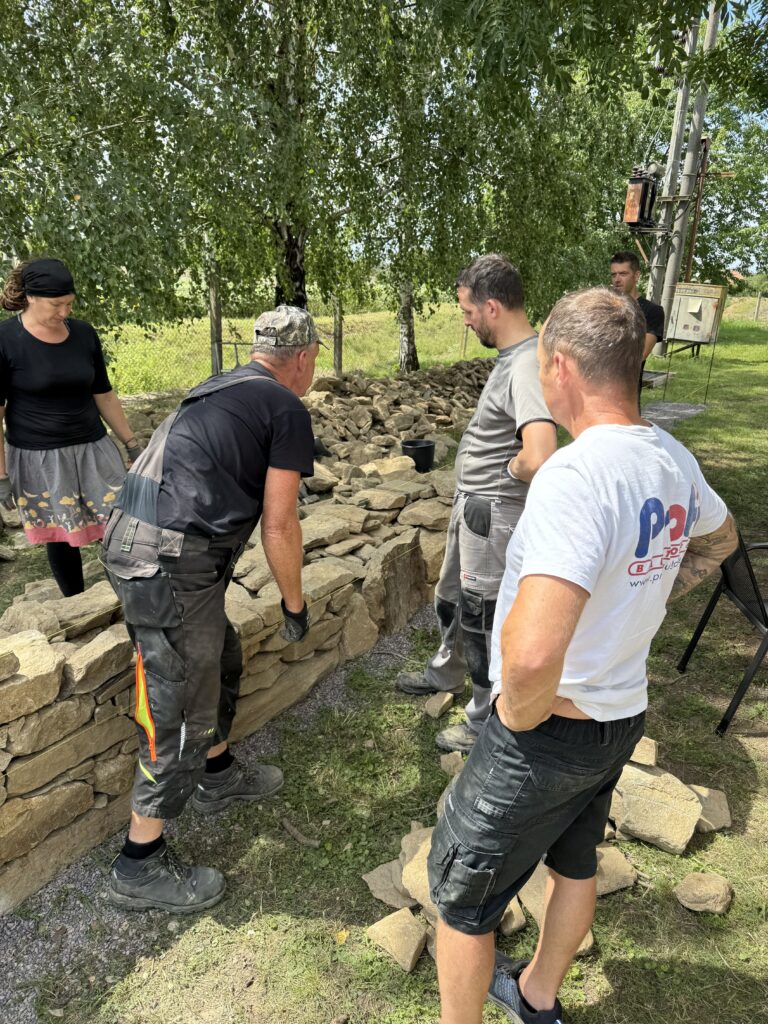
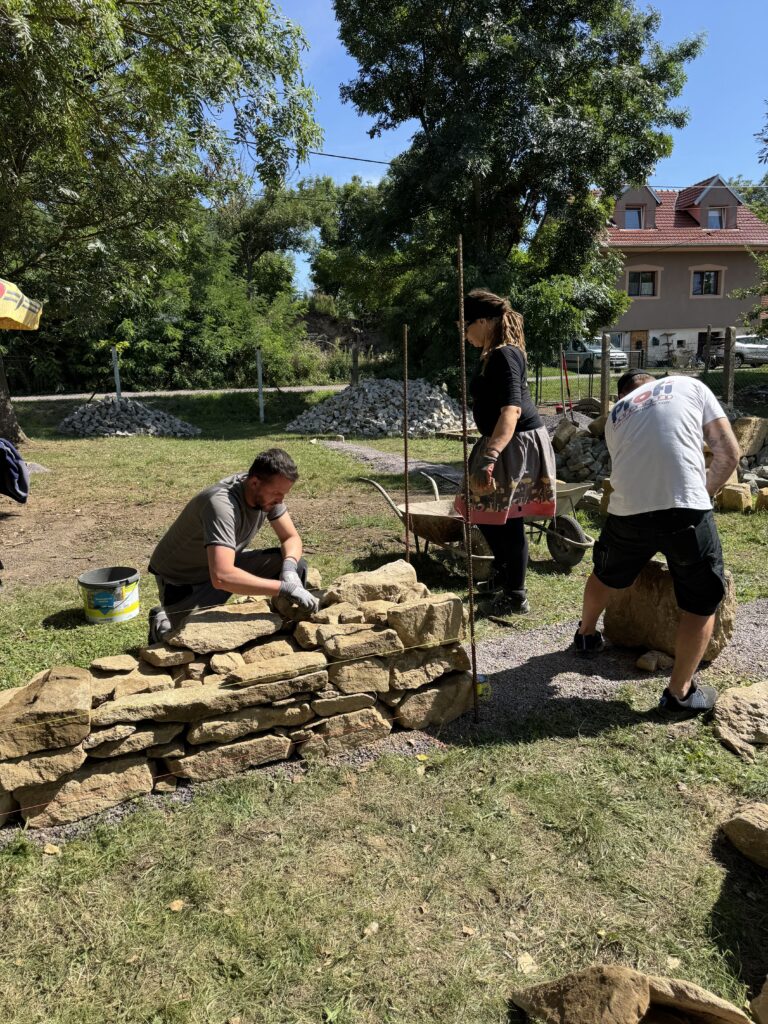
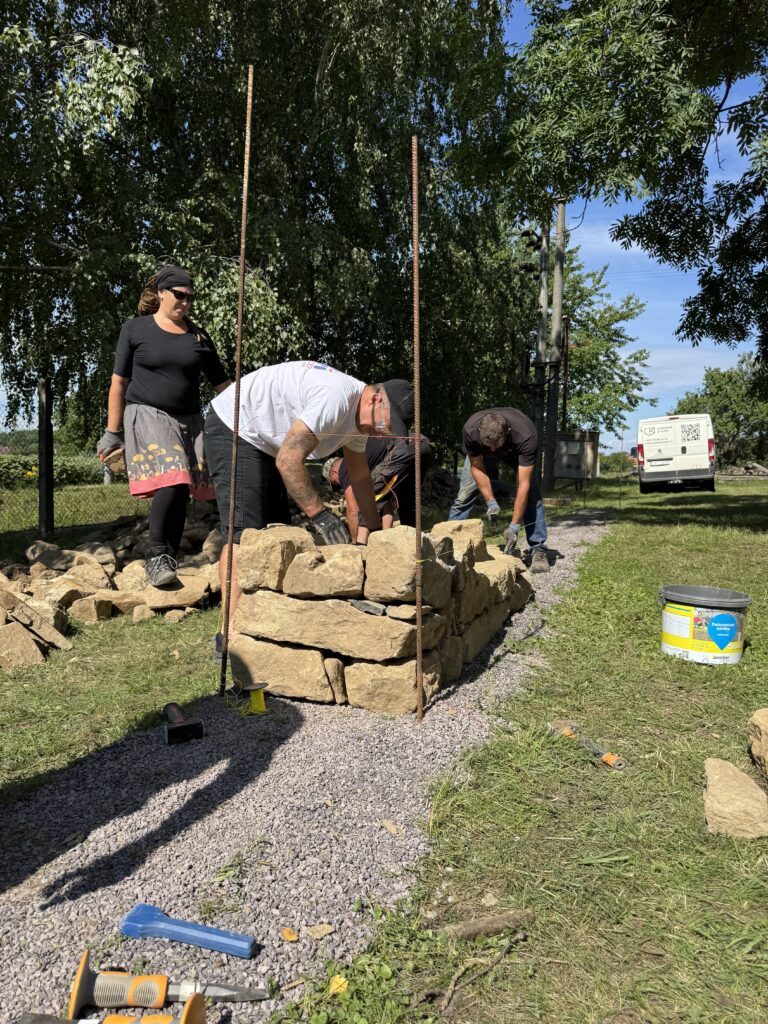
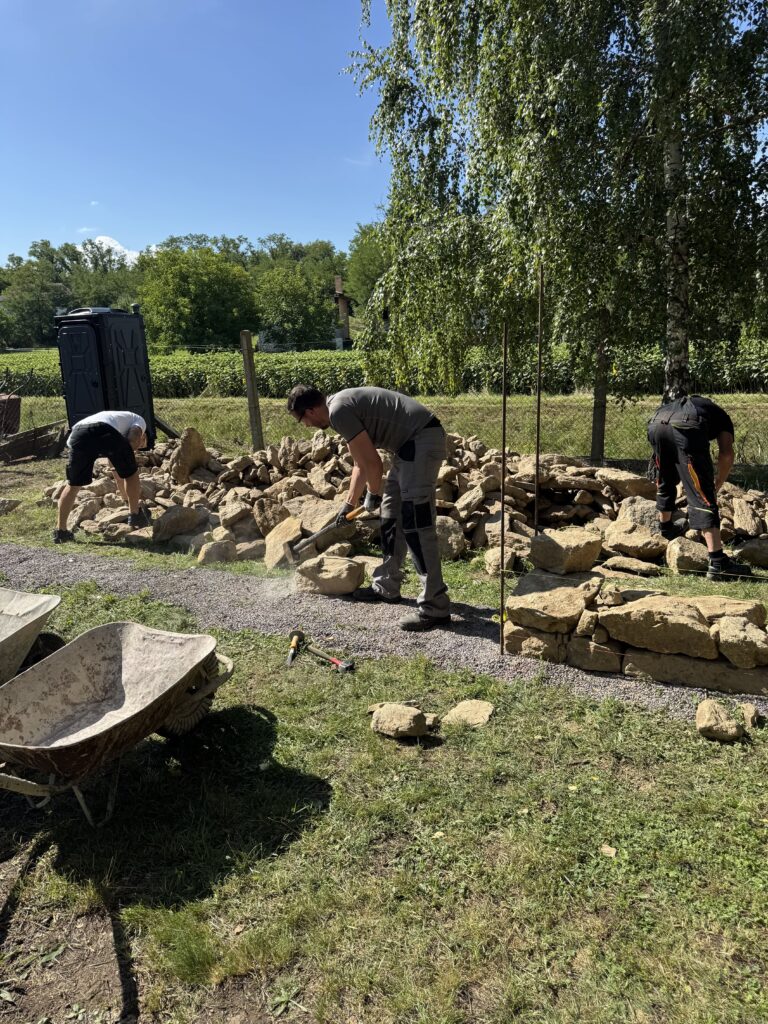
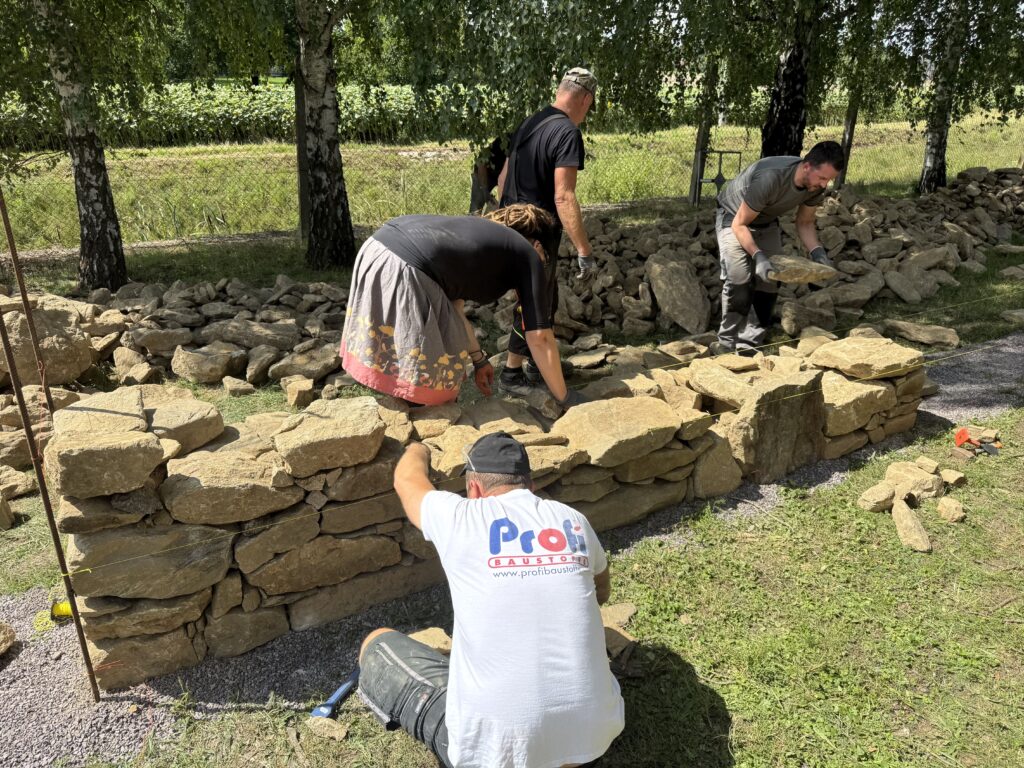
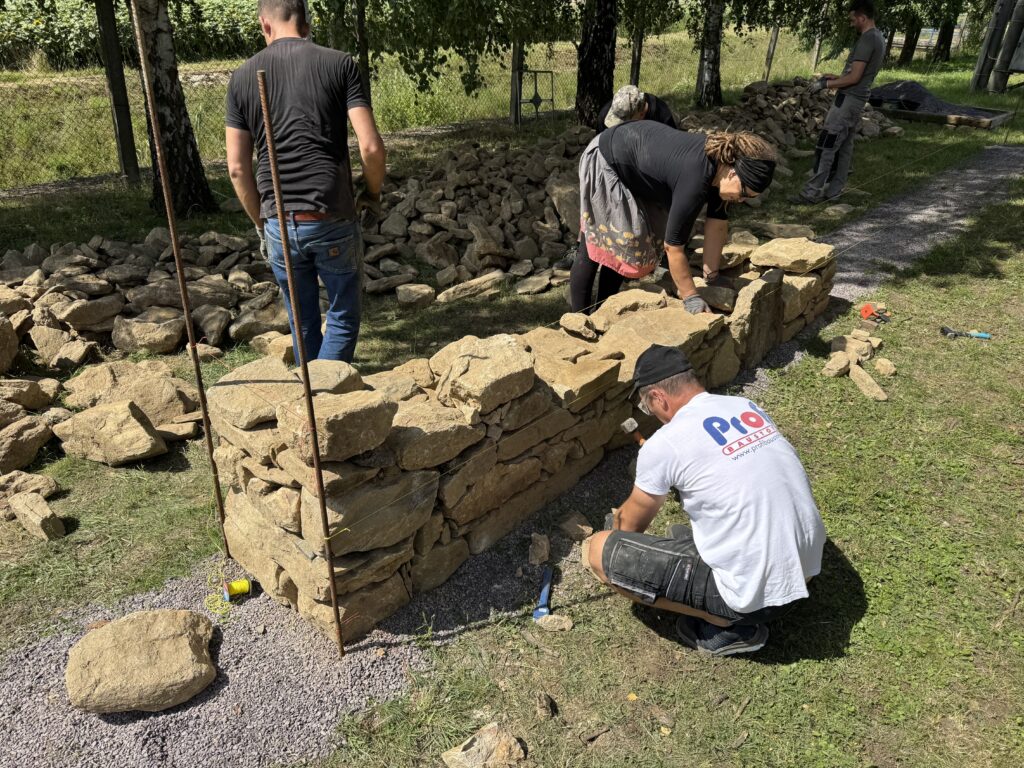
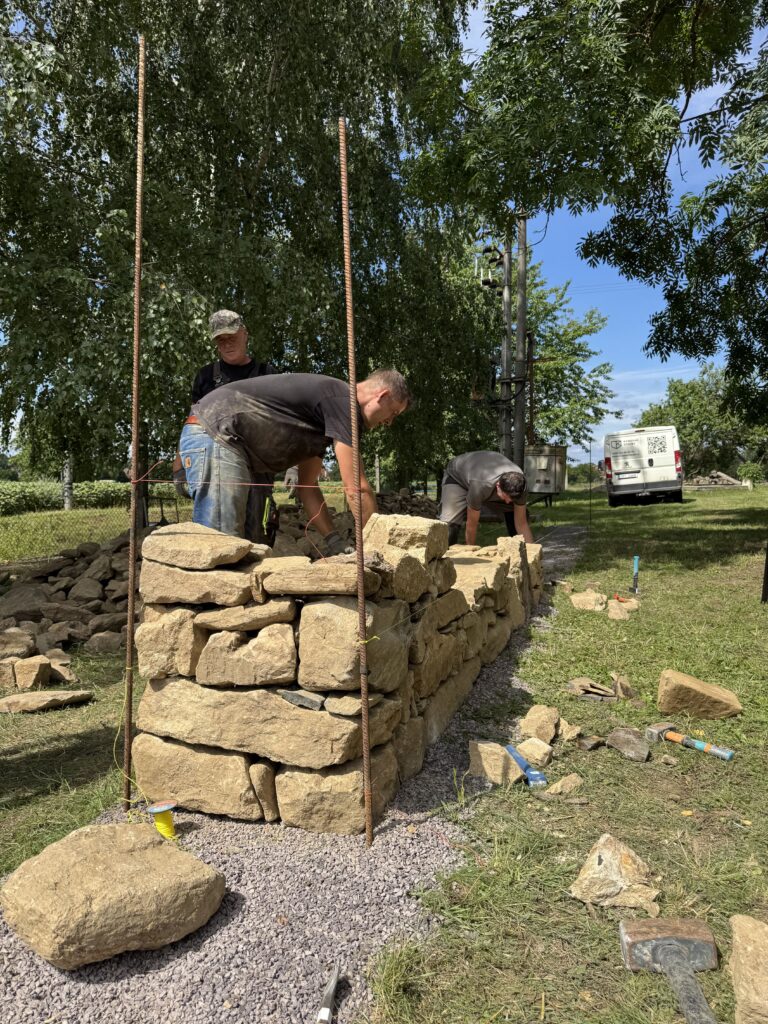
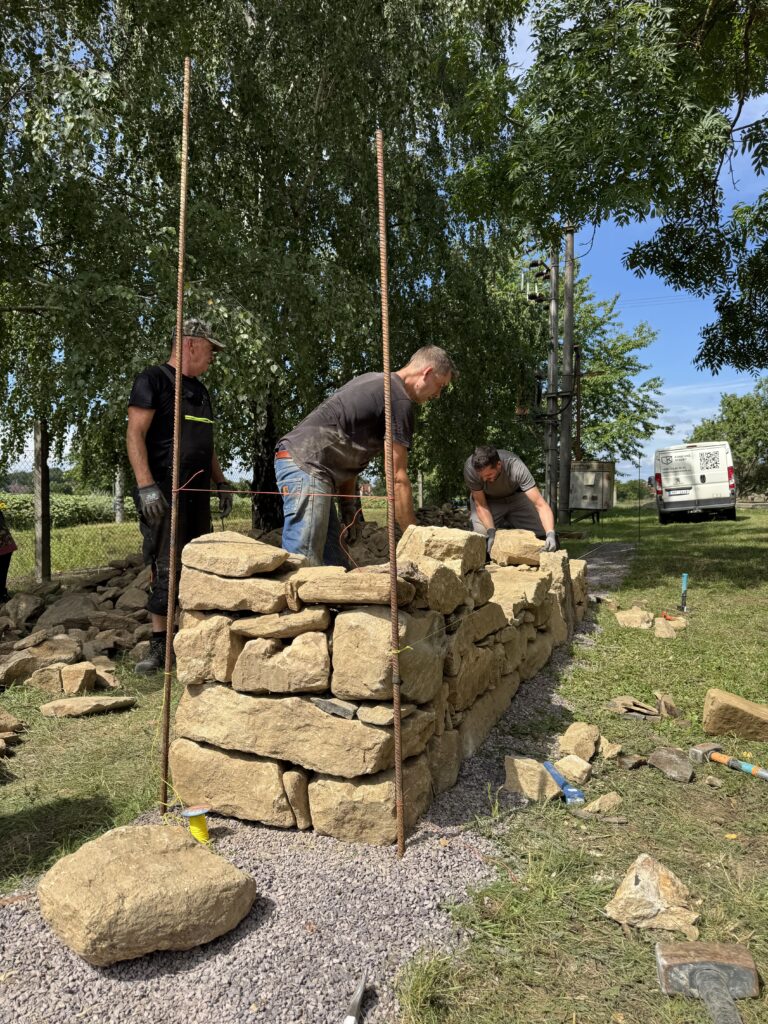
On 2 August 2025, we held our very first dry stone walling course in Novosedly, South Moravia. Four participants joined us, picked up local fieldstone and, in a single day, built the first substantial section of a new dry stone wall. No long classroom lectures – everything took place outdoors, directly at the wall, with stone in our hands.
How the Course Worked
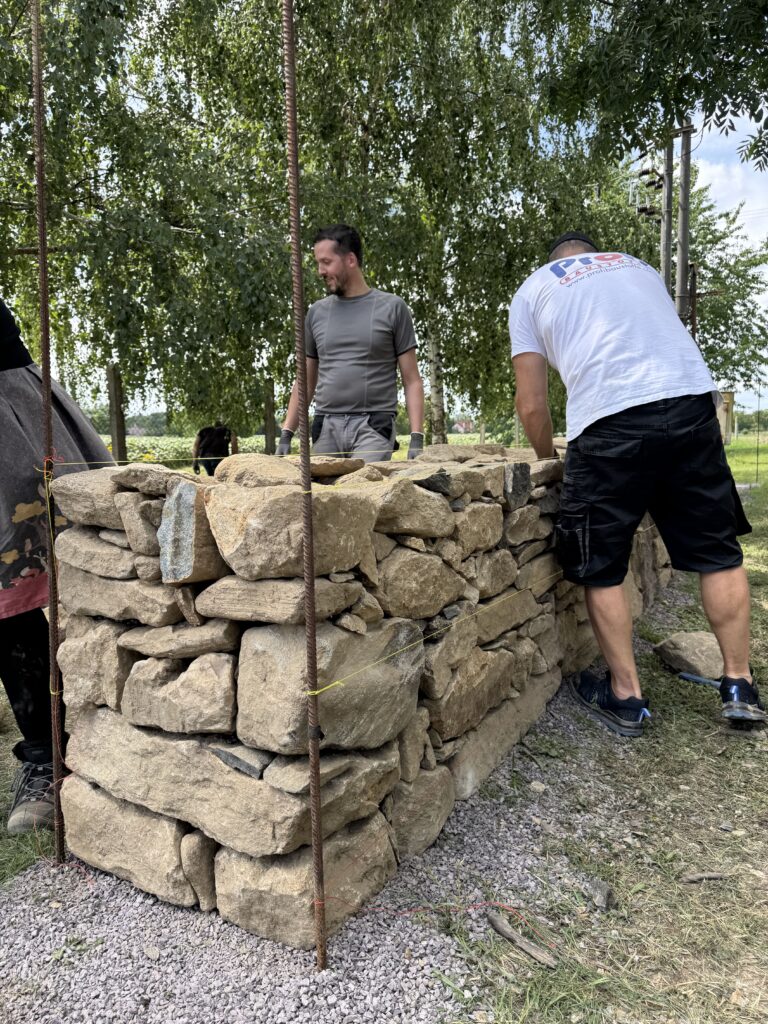
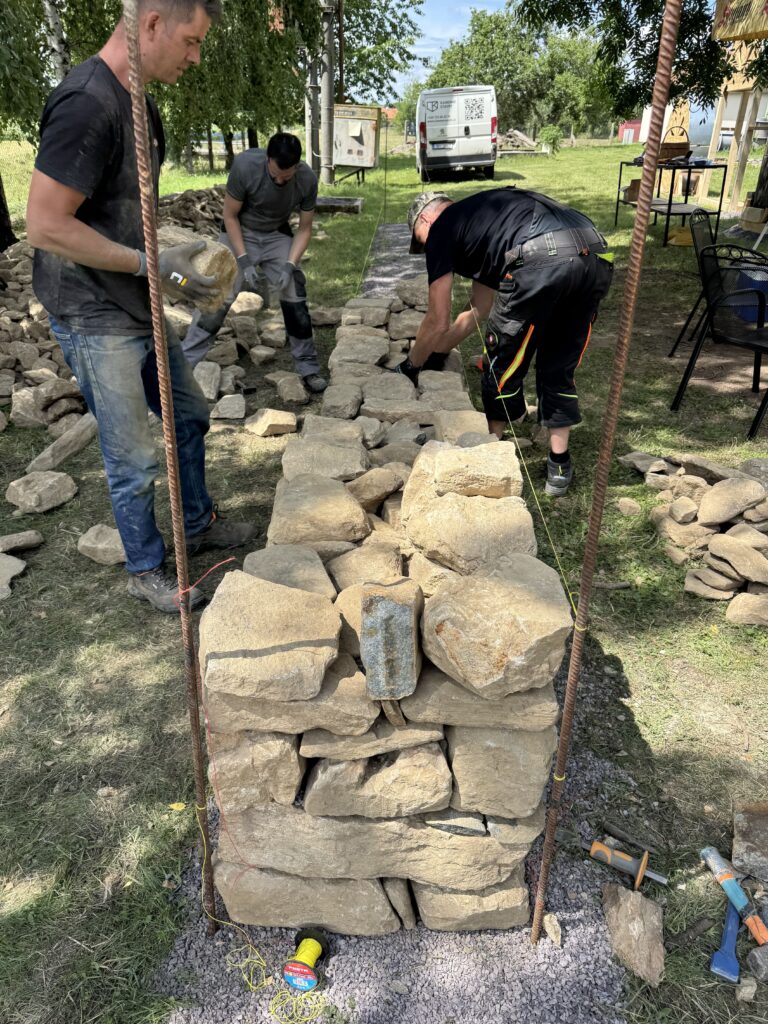
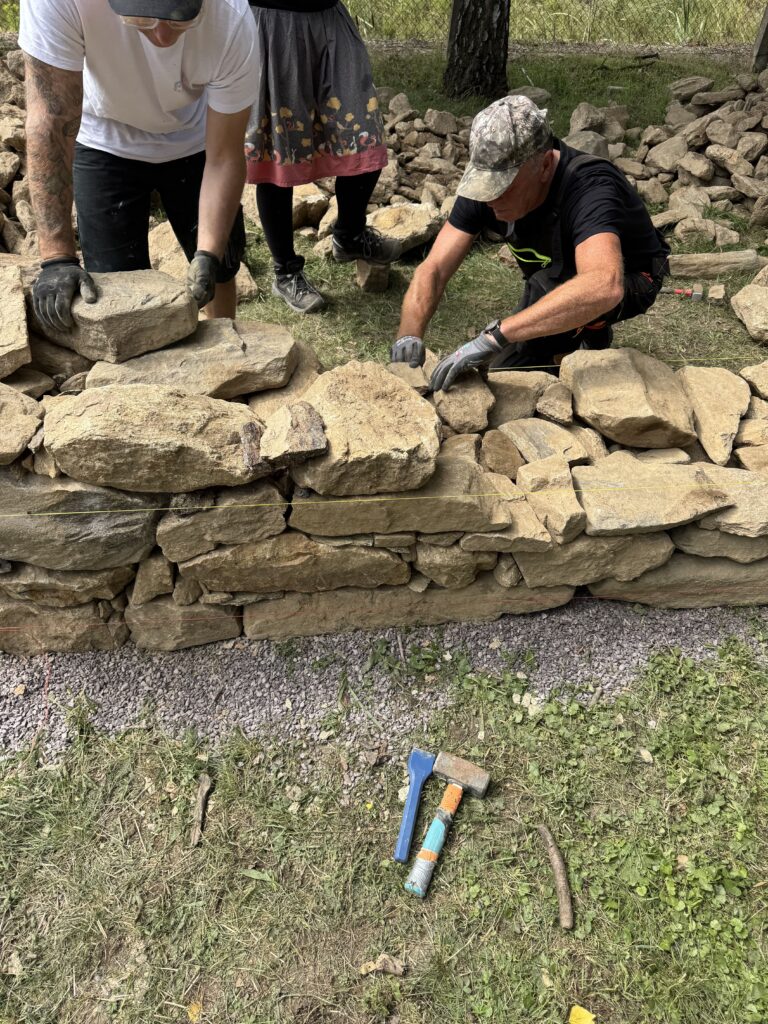
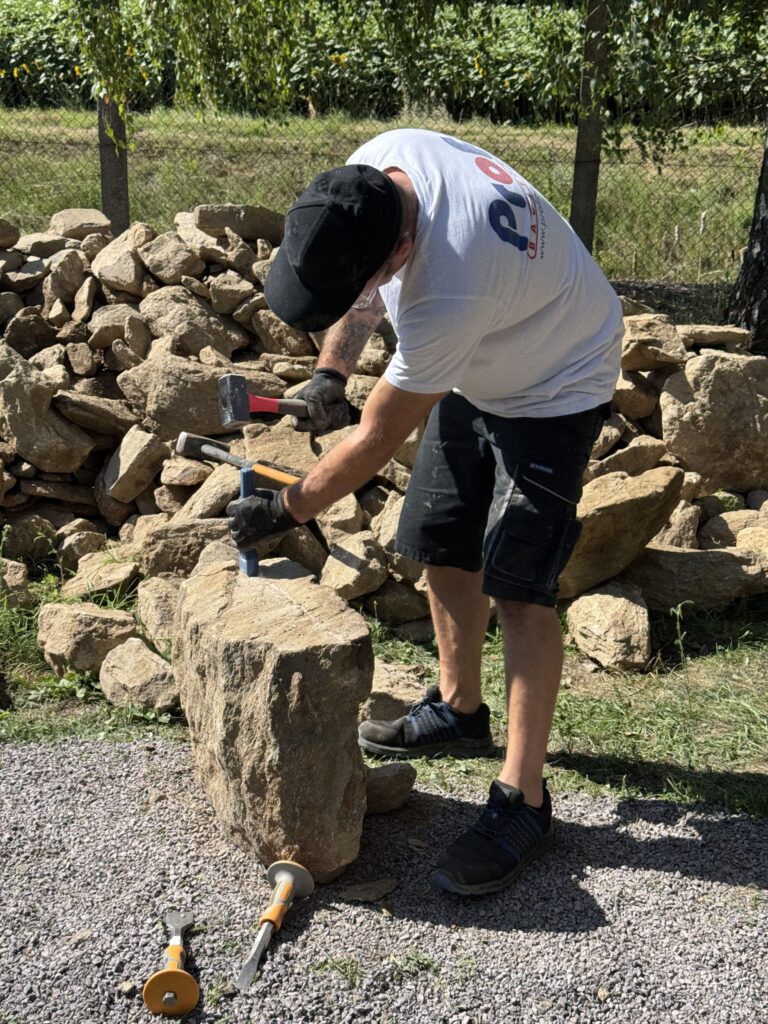
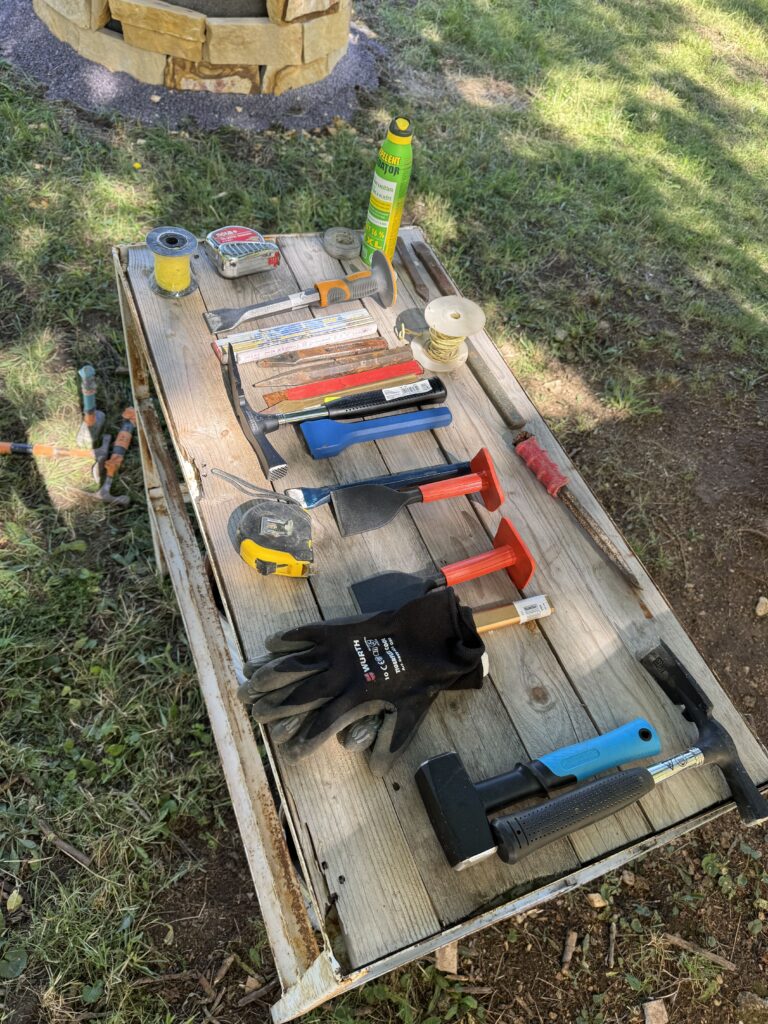
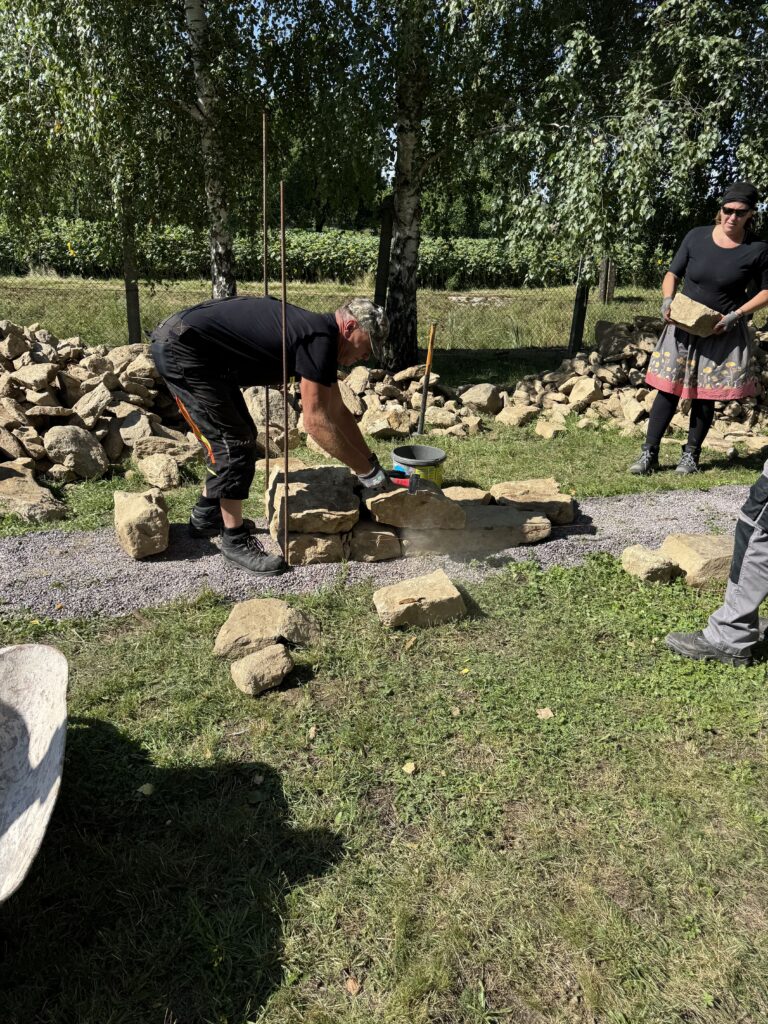
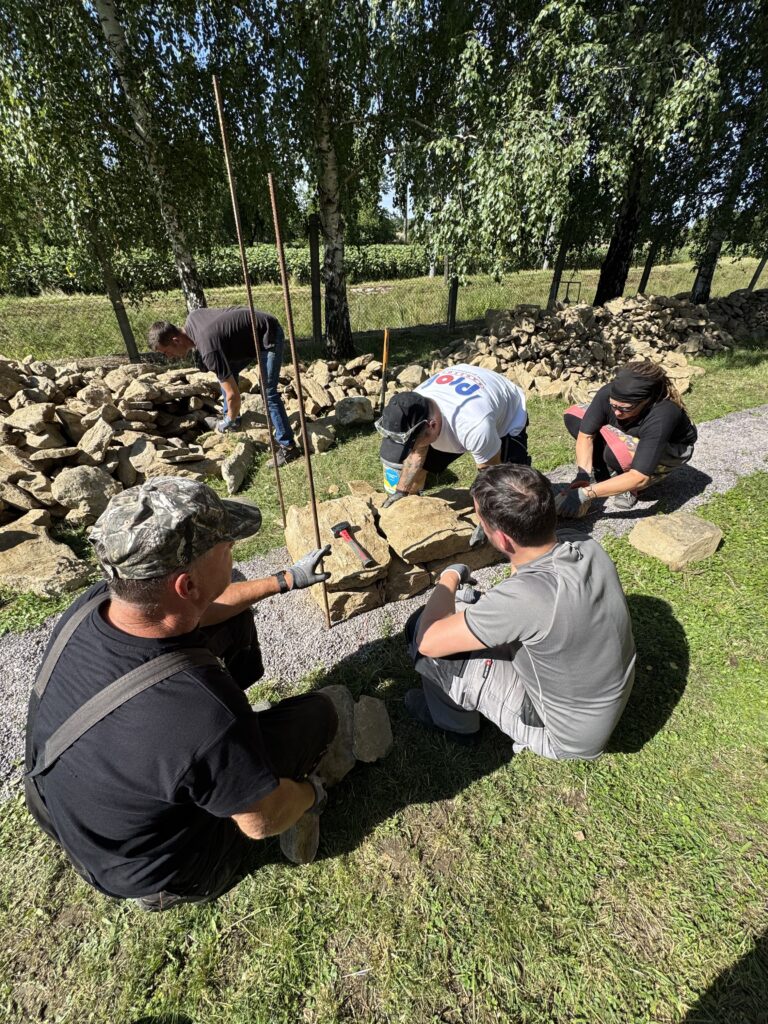
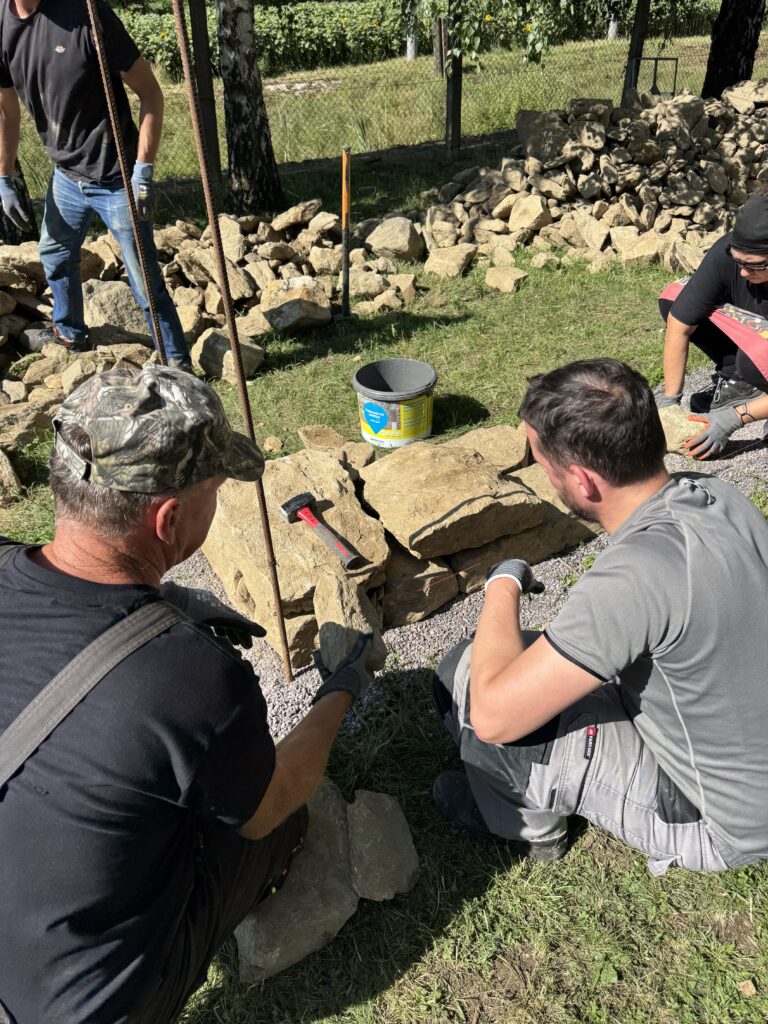
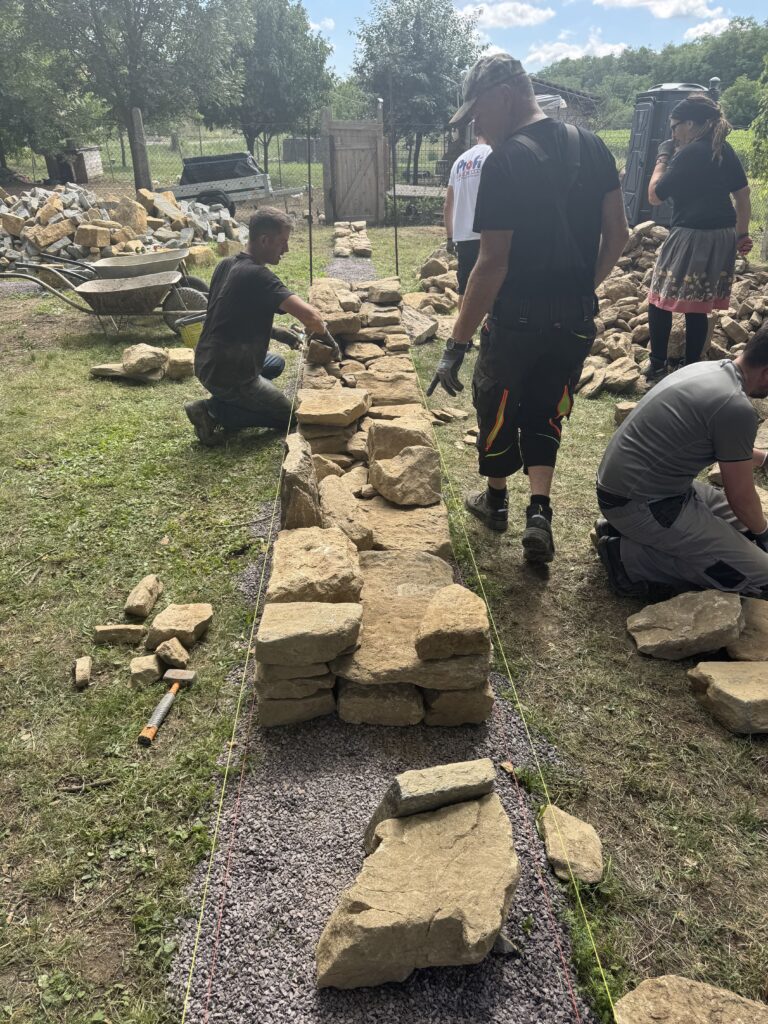
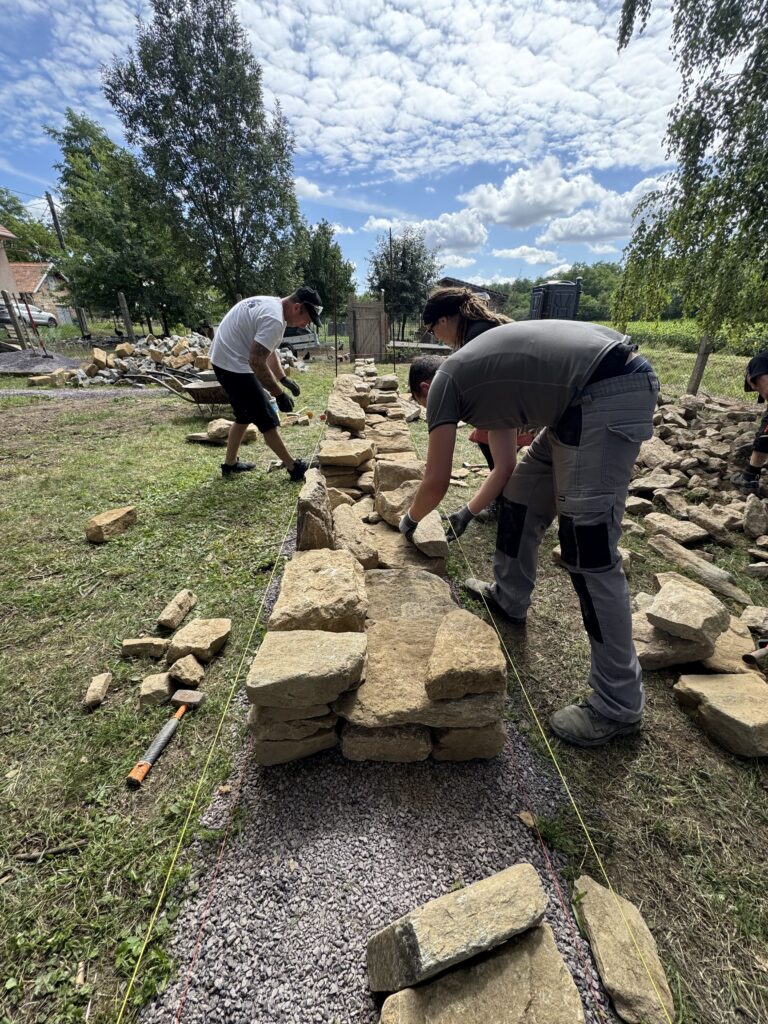
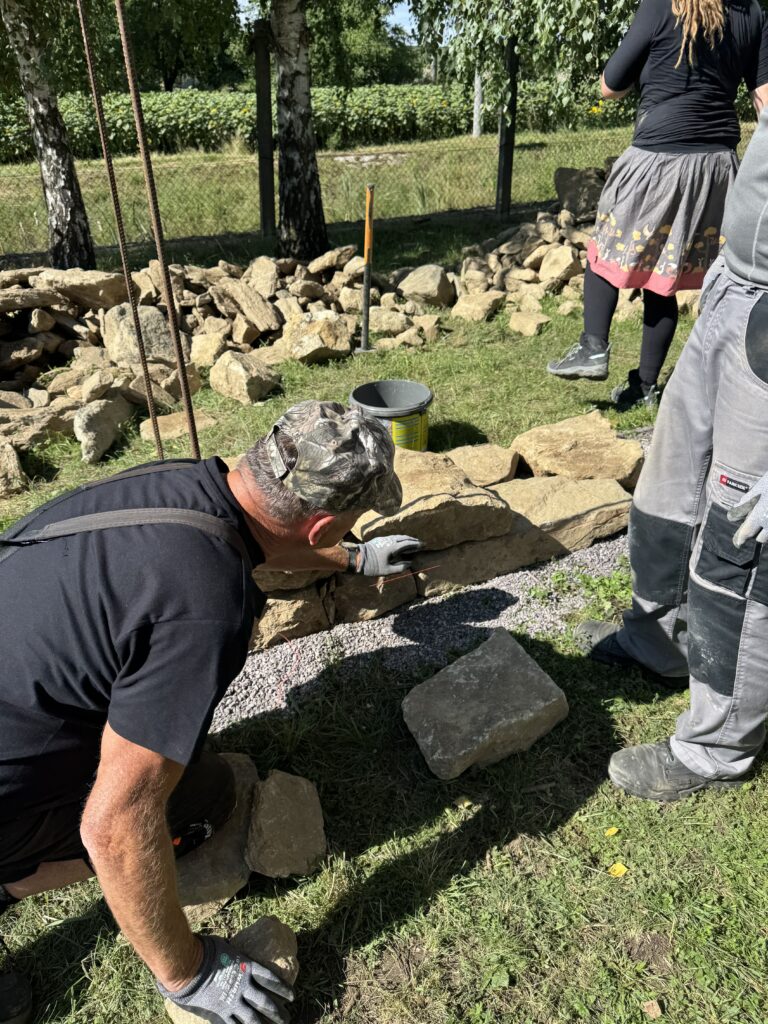
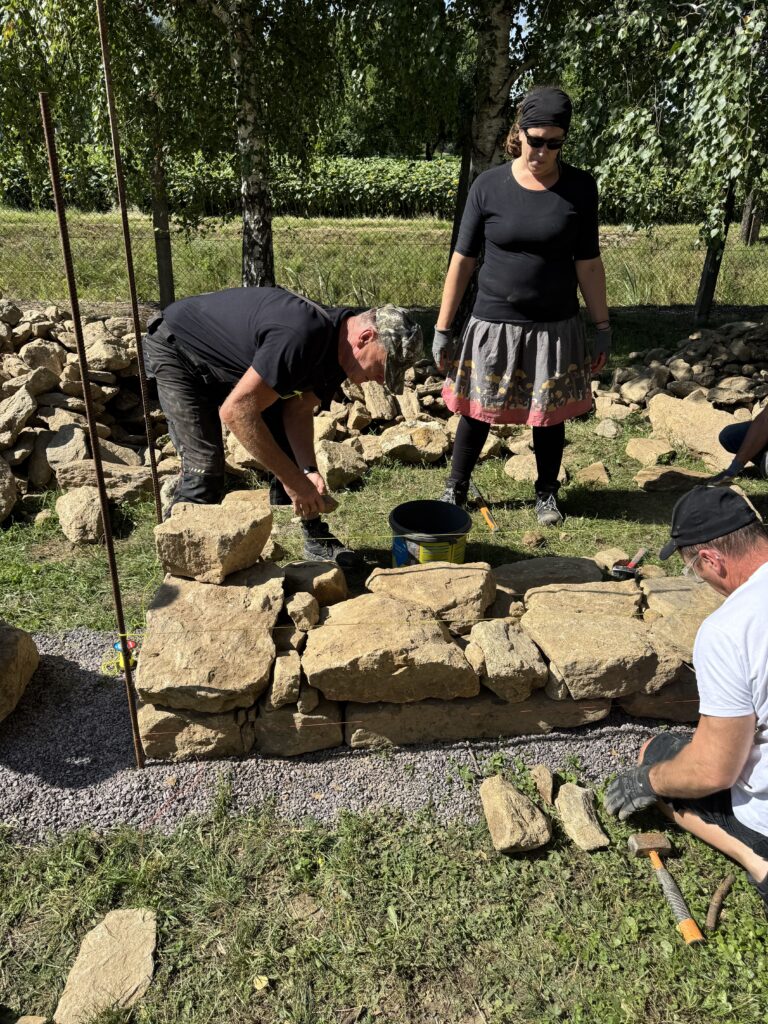
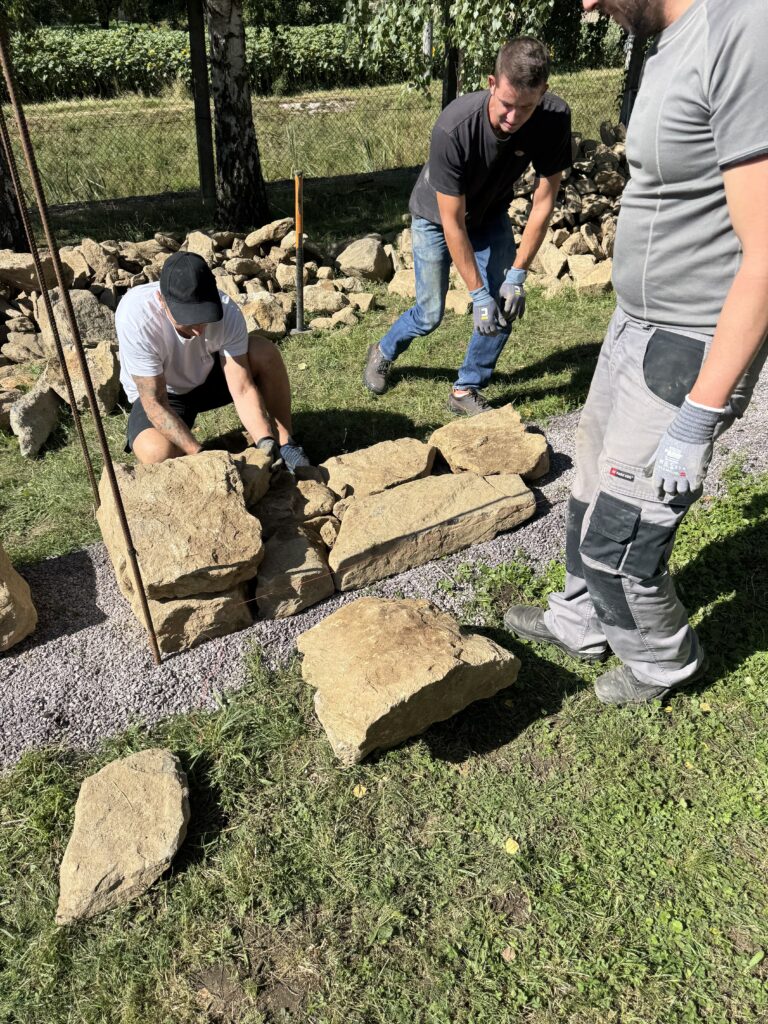
We began the morning with the fundamentals: safety, preparing the working area and levelling the foundation layer. Everyone quickly discovered how important it is to select the right stone and place it correctly in the face of the wall so that it sits securely.
During the practical work, we covered principles including:
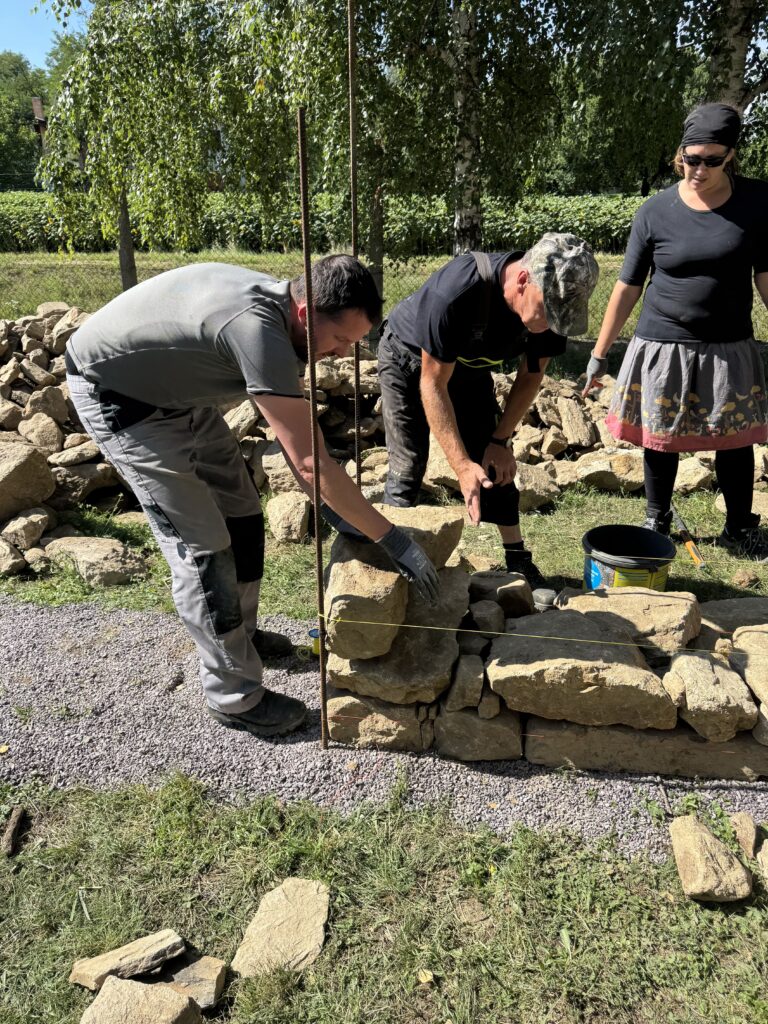
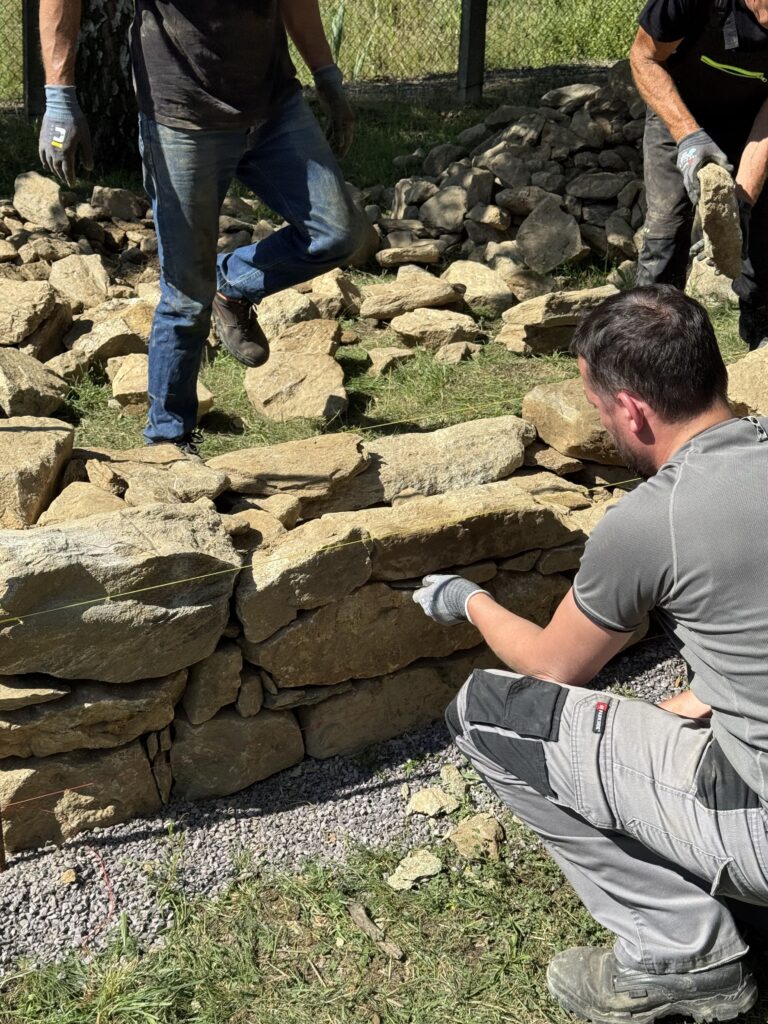
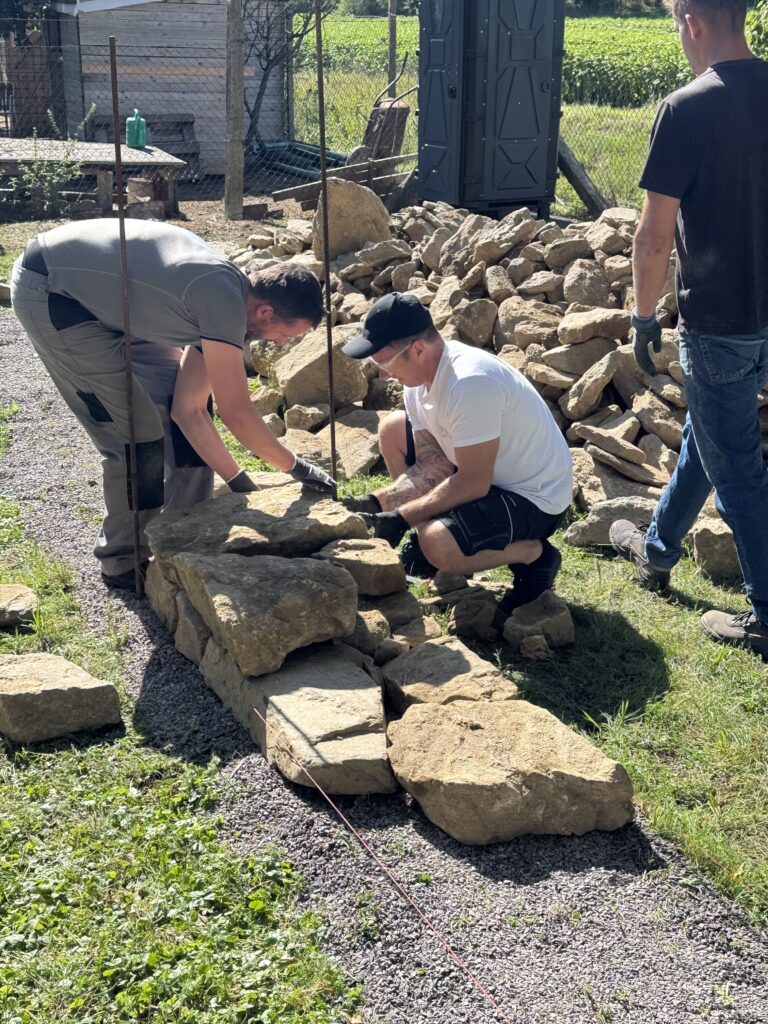
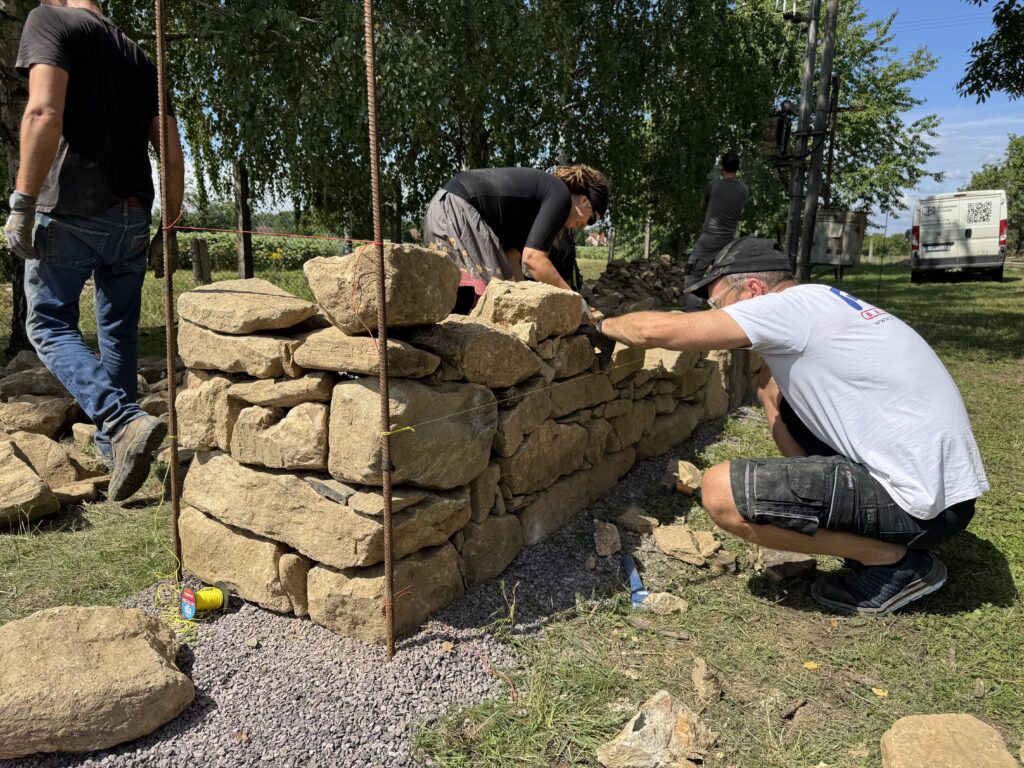
- how to build the first courses so that the dry stone wall remains stable,
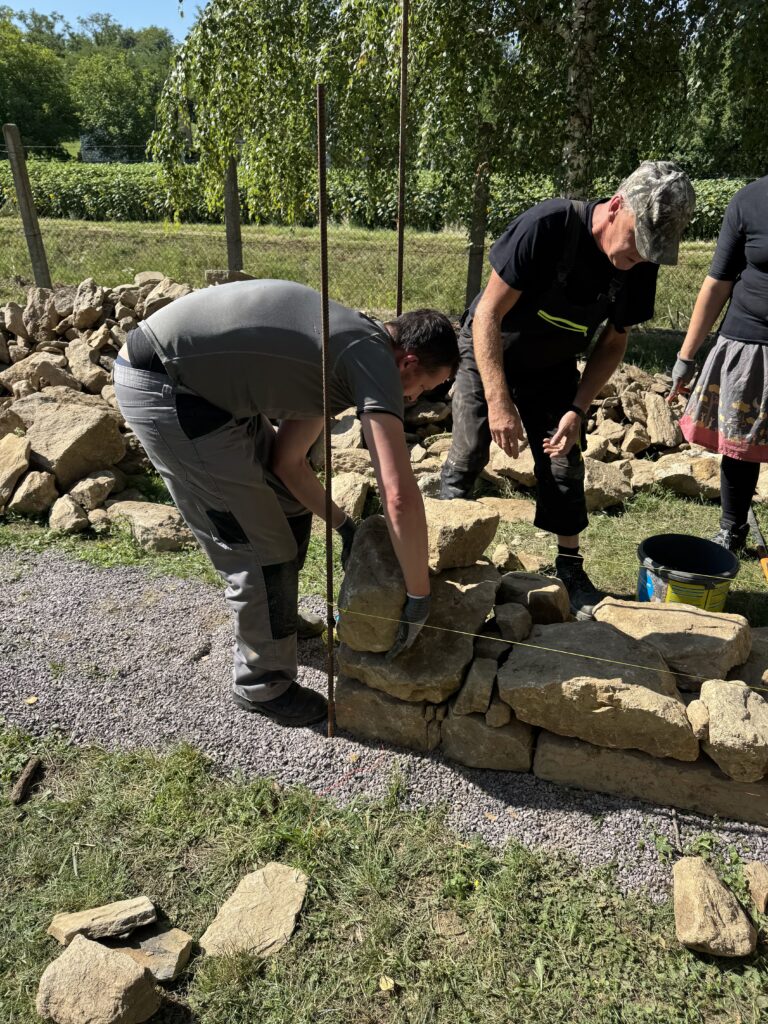
- how to use wedges and smaller stones correctly,
- why the internal part of the wall needs to be properly filled and structured,
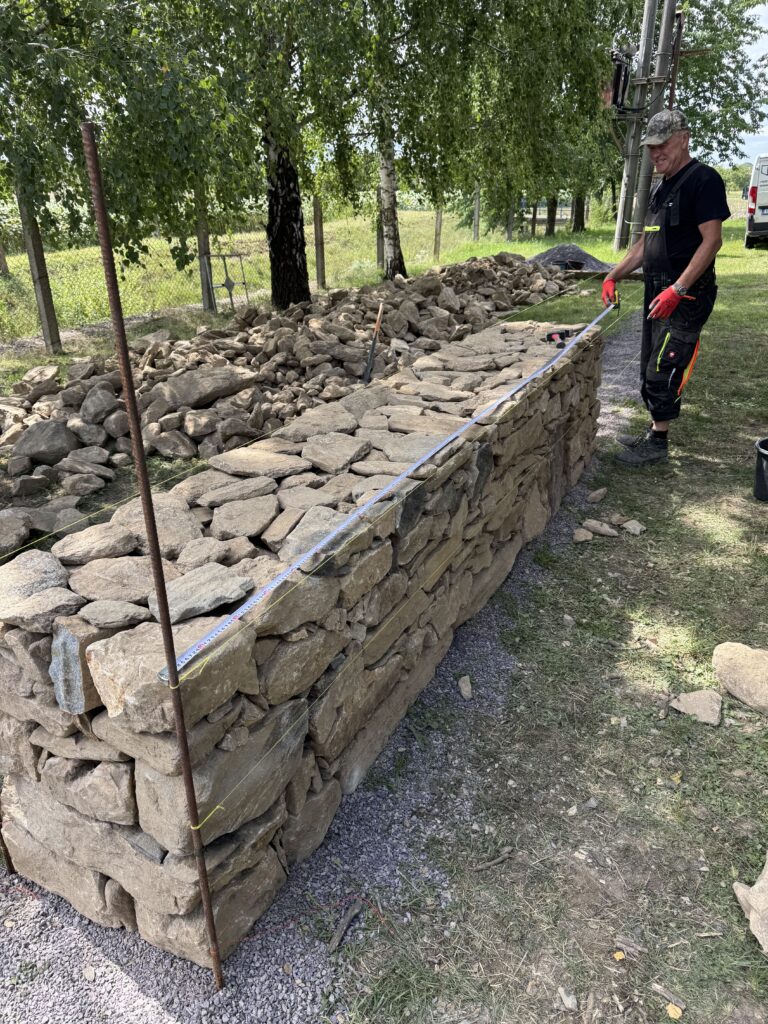
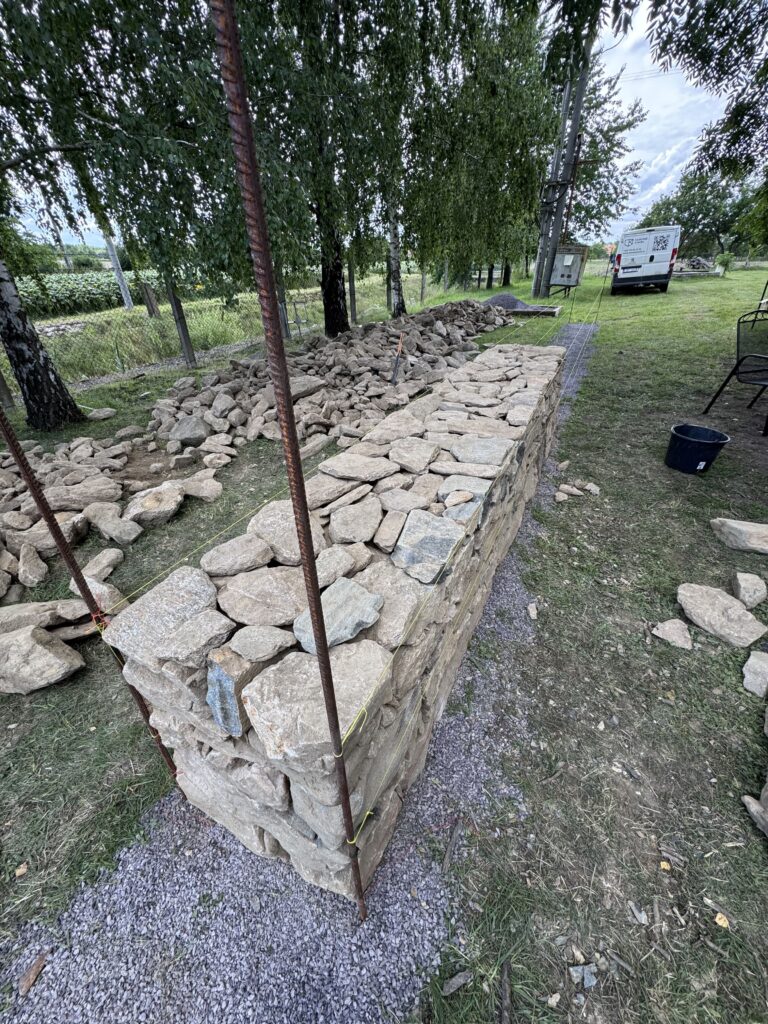
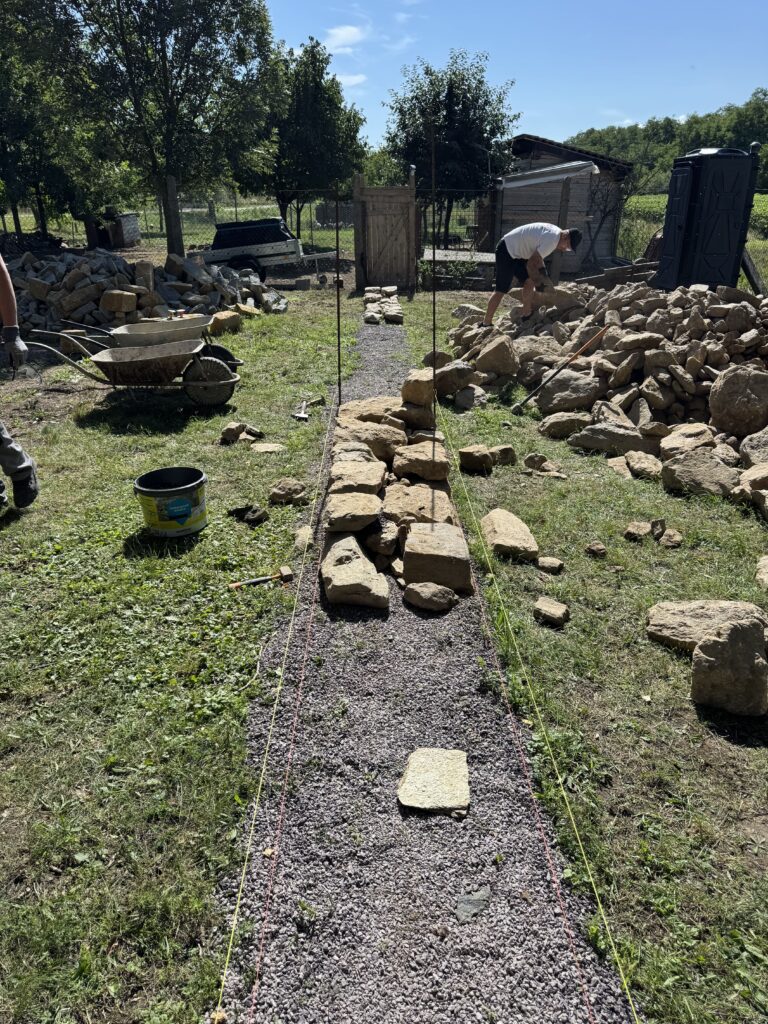
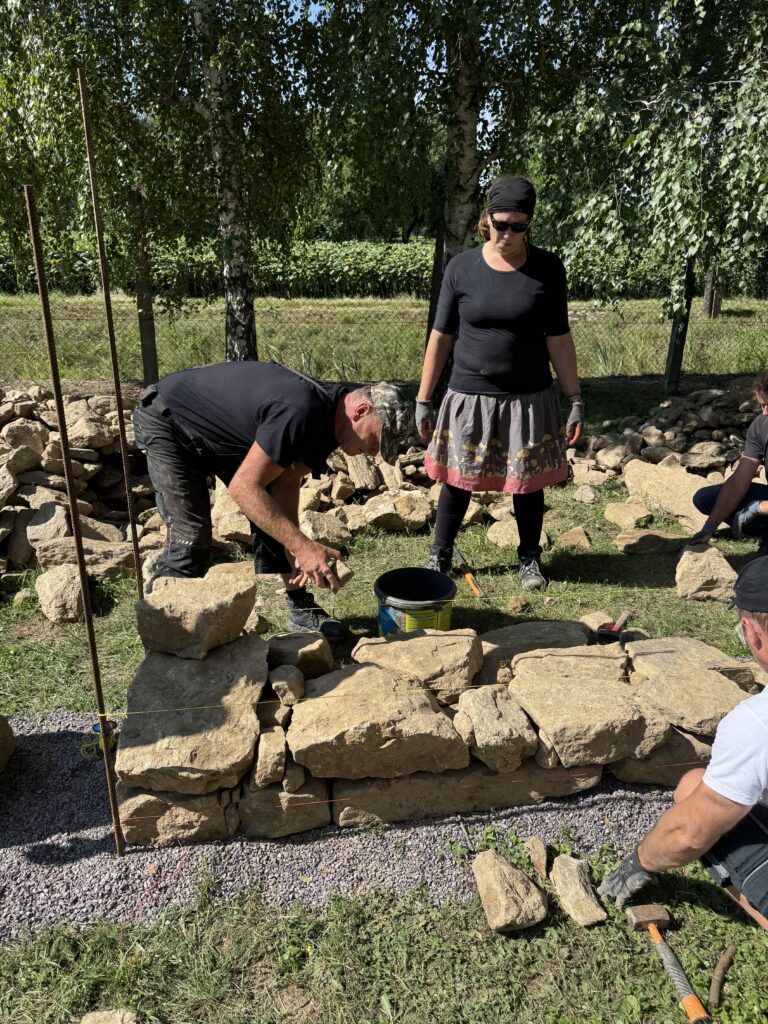
- how to control the line, level and batter of the wall.
No shortcuts – just proper stonework and an understanding of why the structure works.
What We Built
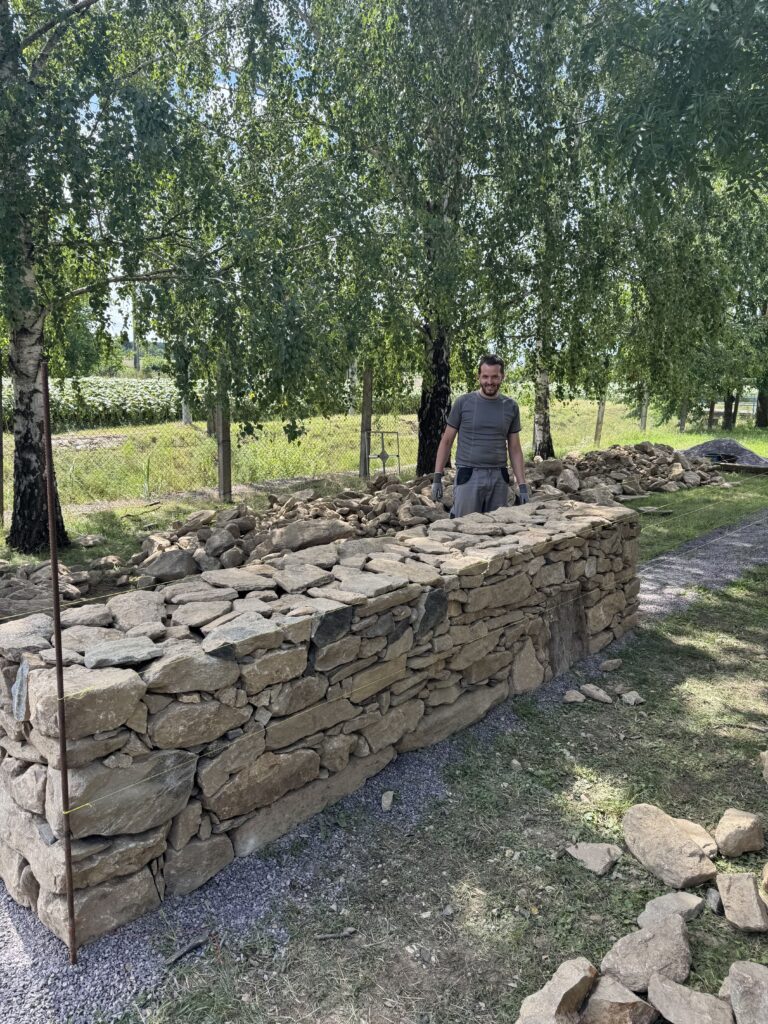
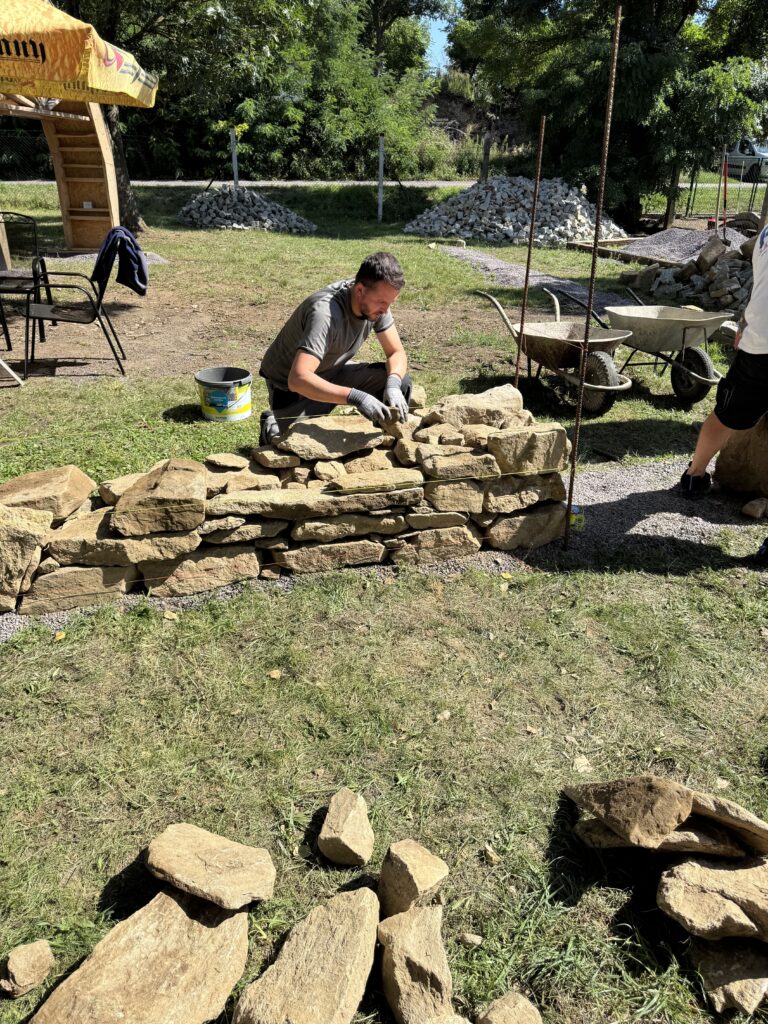
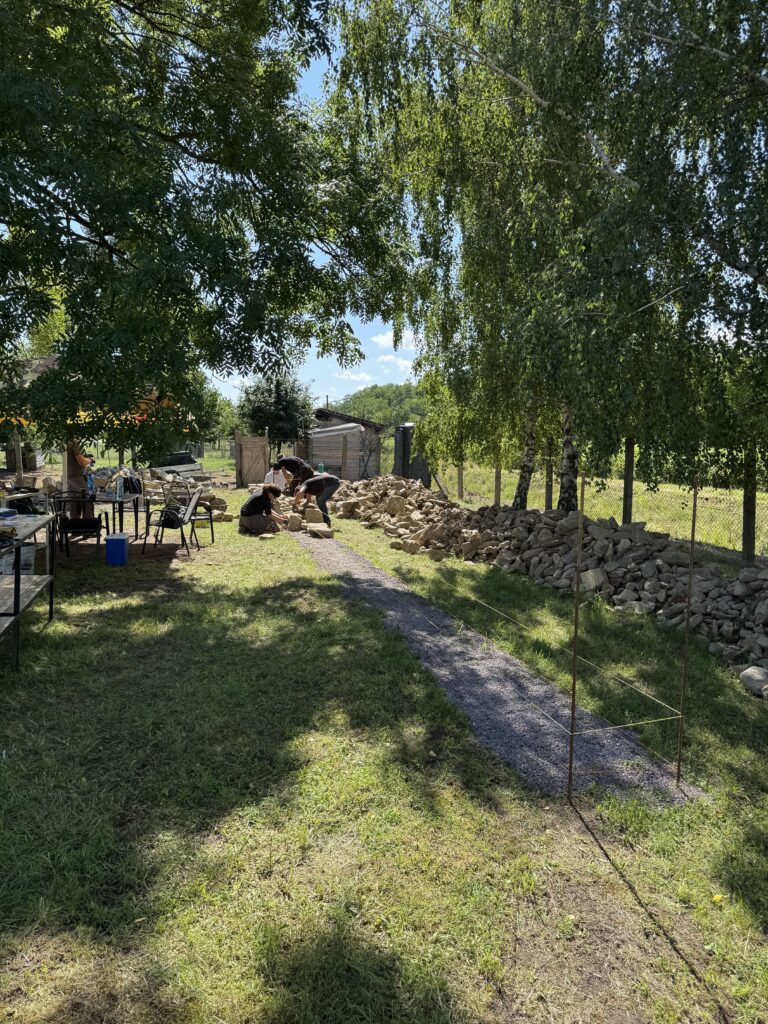
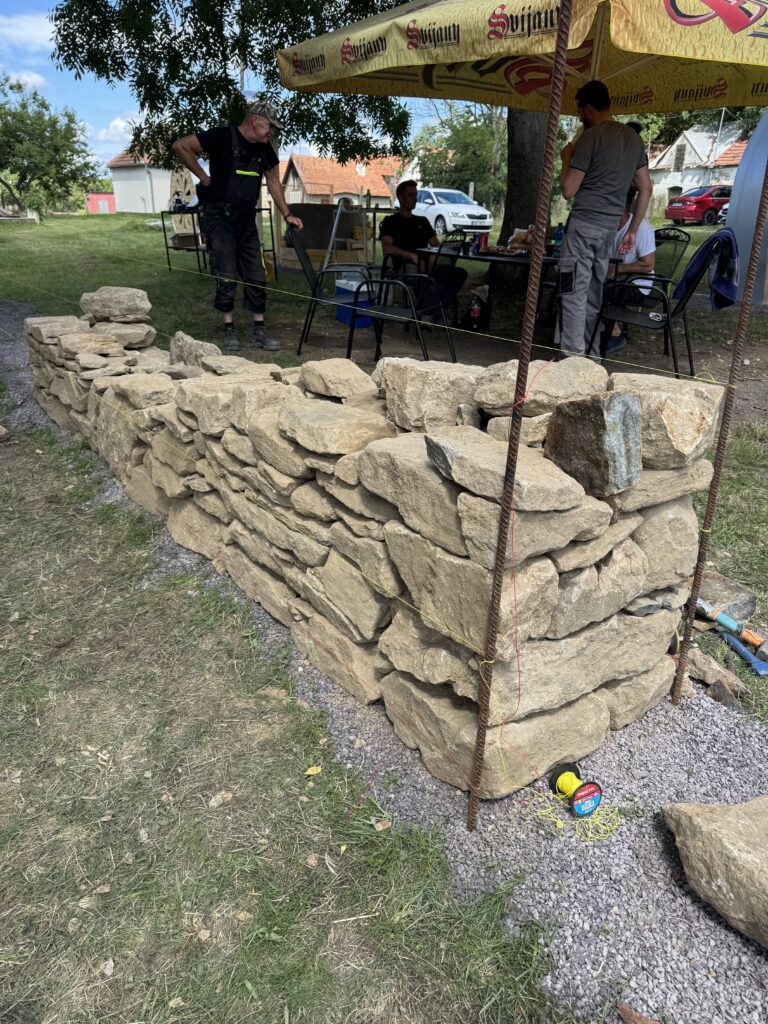
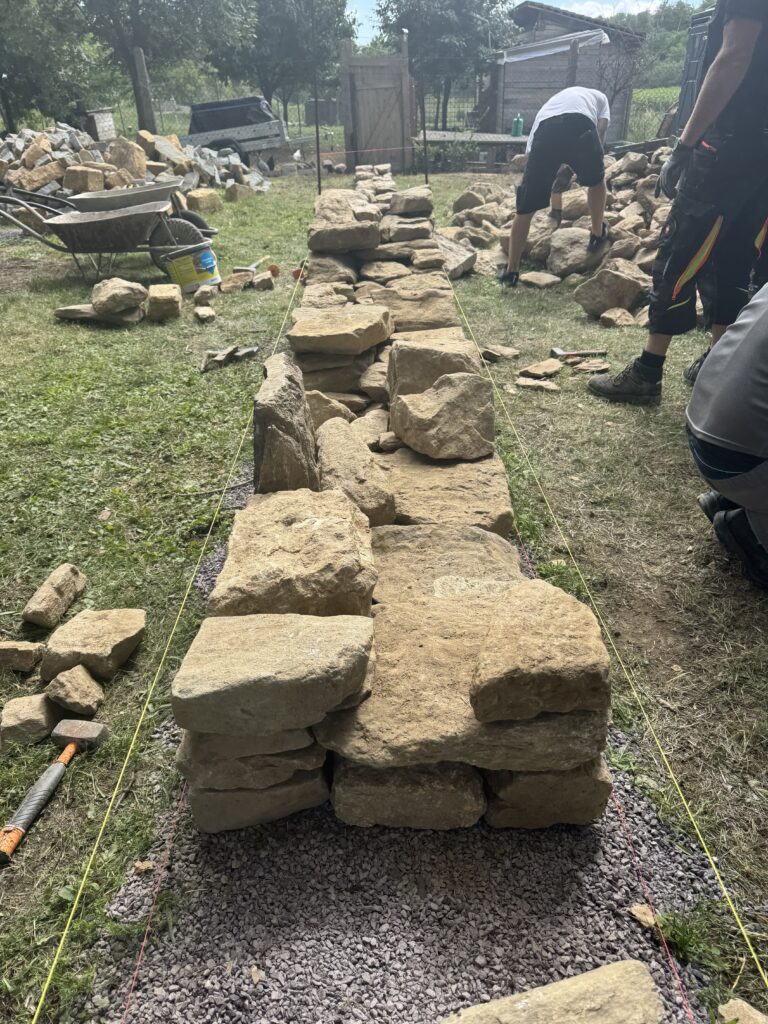
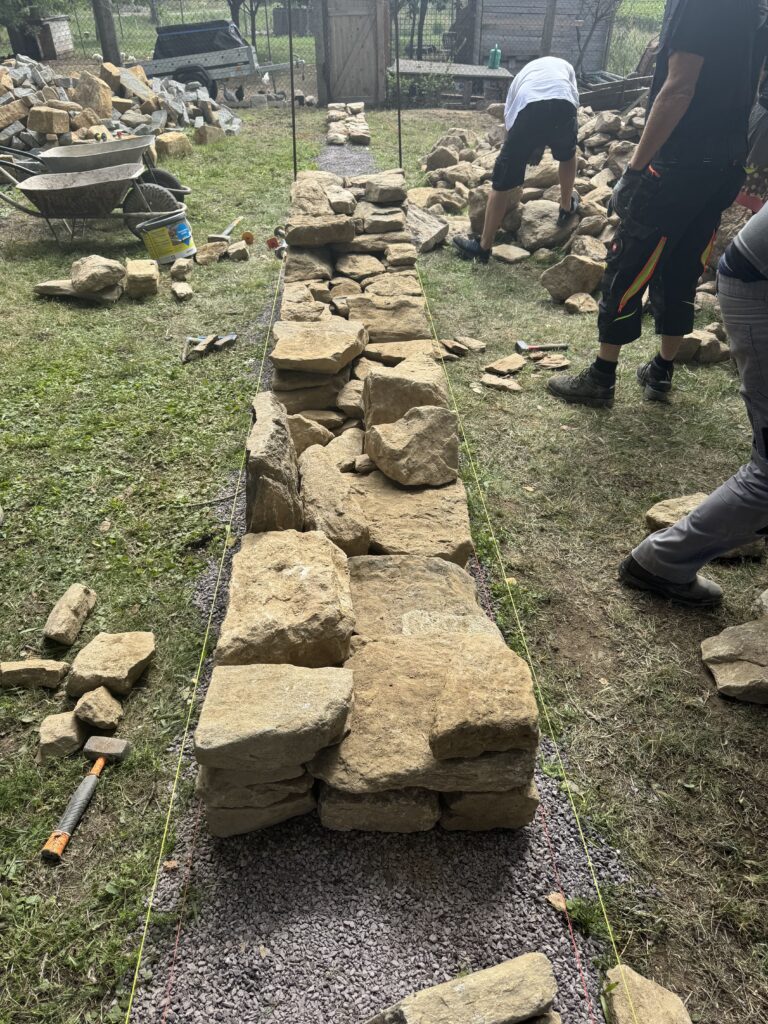
With four participants working for one day, we built more than four metres of visible dry stone wall. We worked with local weathered granite, an irregular natural material that requires careful selection and positioning.
The result was a solid section of wall that demonstrates how much can be achieved by a small group once the basic principles of dry stone construction are understood.
Course Atmosphere and the Stone Wine Cellar
After the practical work, we also visited an example of a traditional wine cellar built with natural stone. It was a relaxed way to finish the day – the main focus had been the wall itself, but stone craftsmanship and the wine-growing landscape of South Moravia naturally belong together.
What the First Course Showed Us
The first dry stone walling course showed that even complete beginners can understand the basic principles and make real progress in a single day. All four participants left not only with practical experience, but also with a better understanding of how natural stone behaves and how to work with it rather than against it.
The most important lesson is that stone is not an obstacle. Once you learn how to read its shape, find the right position and understand the structure around it, it becomes an exceptionally durable and rewarding building material.
👉 If you would like to experience traditional stonework yourself, see the current dates for our practical stonework courses.
Who Is Behind This Article