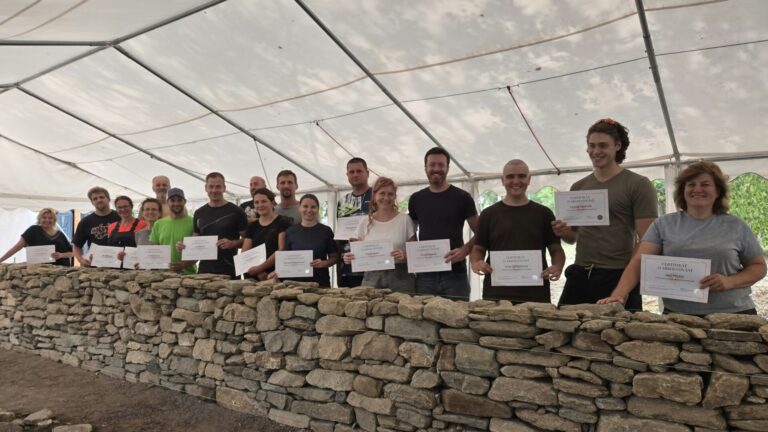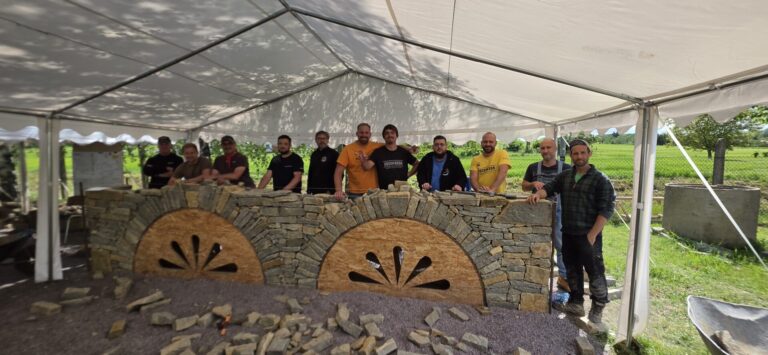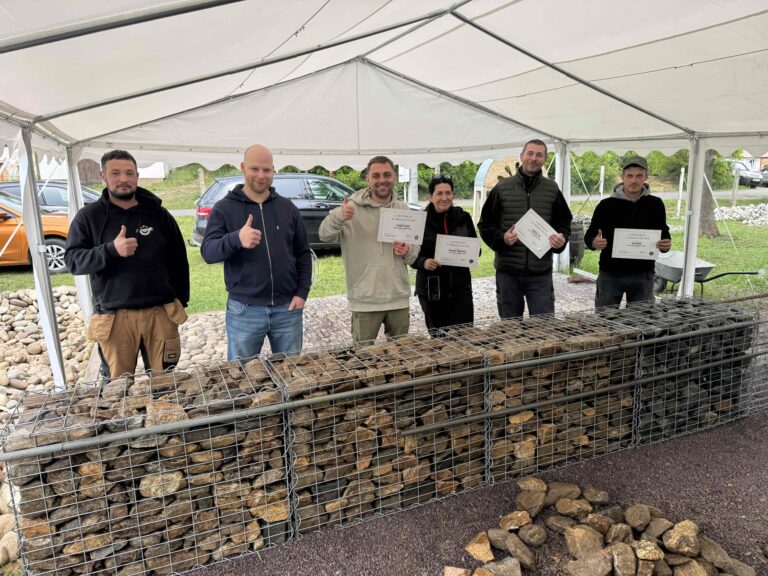


On 9 August 2025, we held our second dry stone walling course in Novosedly, South Moravia, Czech Republic. Four participants arrived from completely different professional backgrounds – a physiotherapist, the owner of two old barns, an experienced gardener and a service manager.
None of them came for exactly the same reason, but they all shared one goal: to understand how a strong dry stone wall is built and to gain practical experience they could use on their own projects.
How the Dry Stone Walling Course Worked
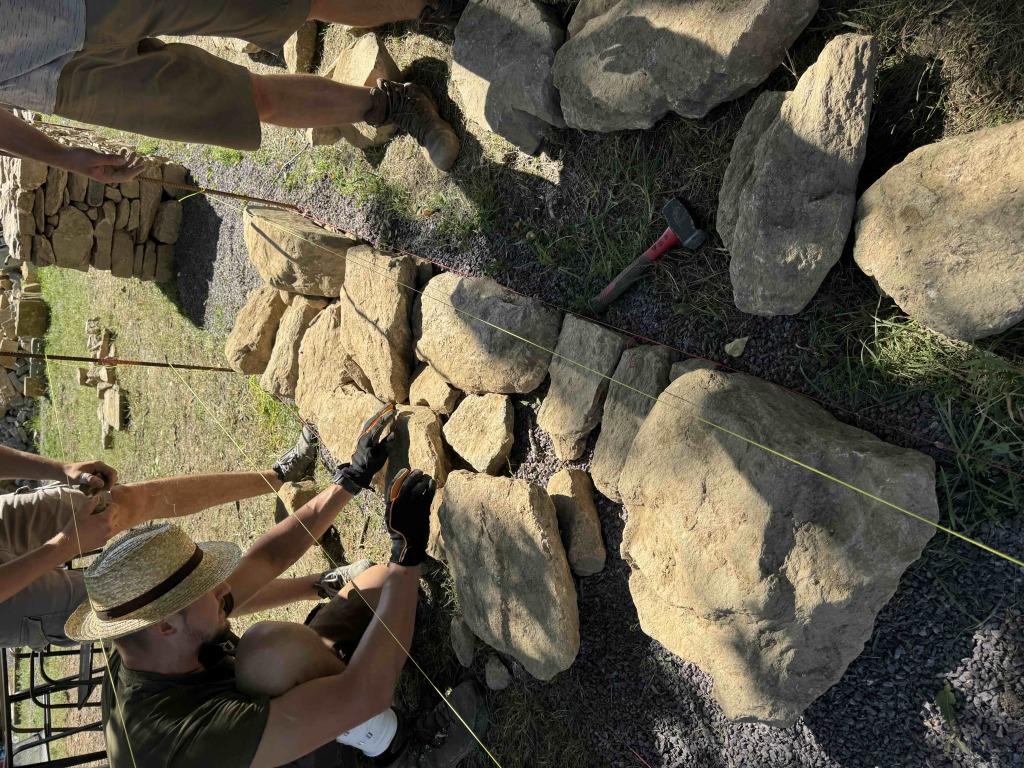
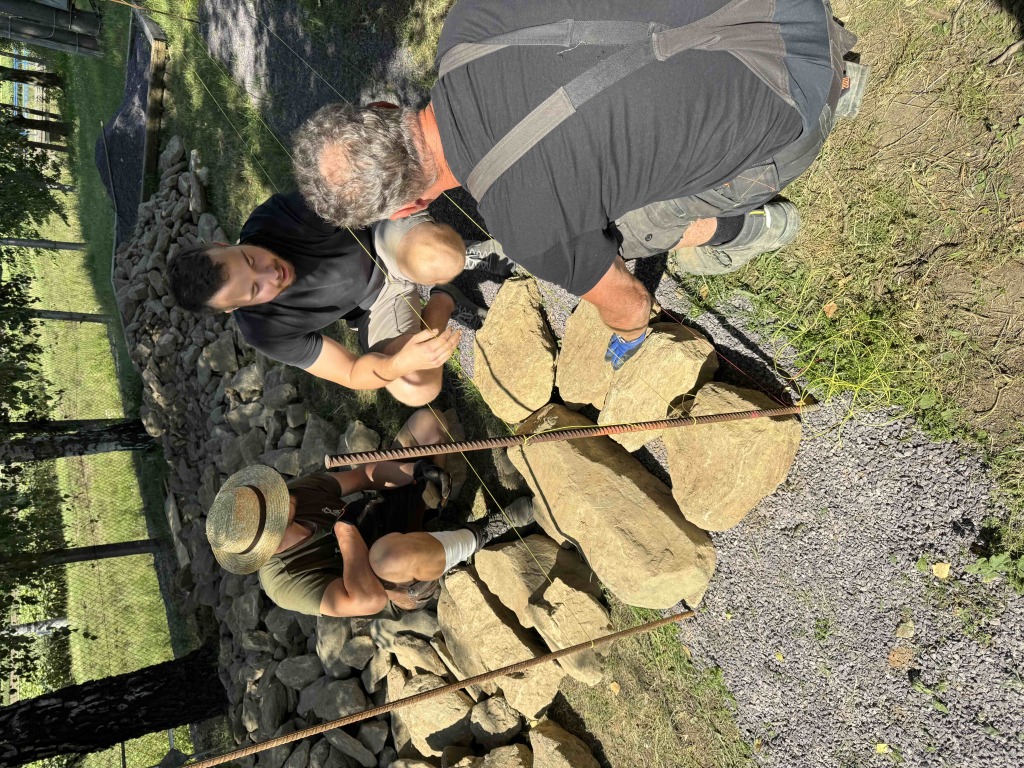
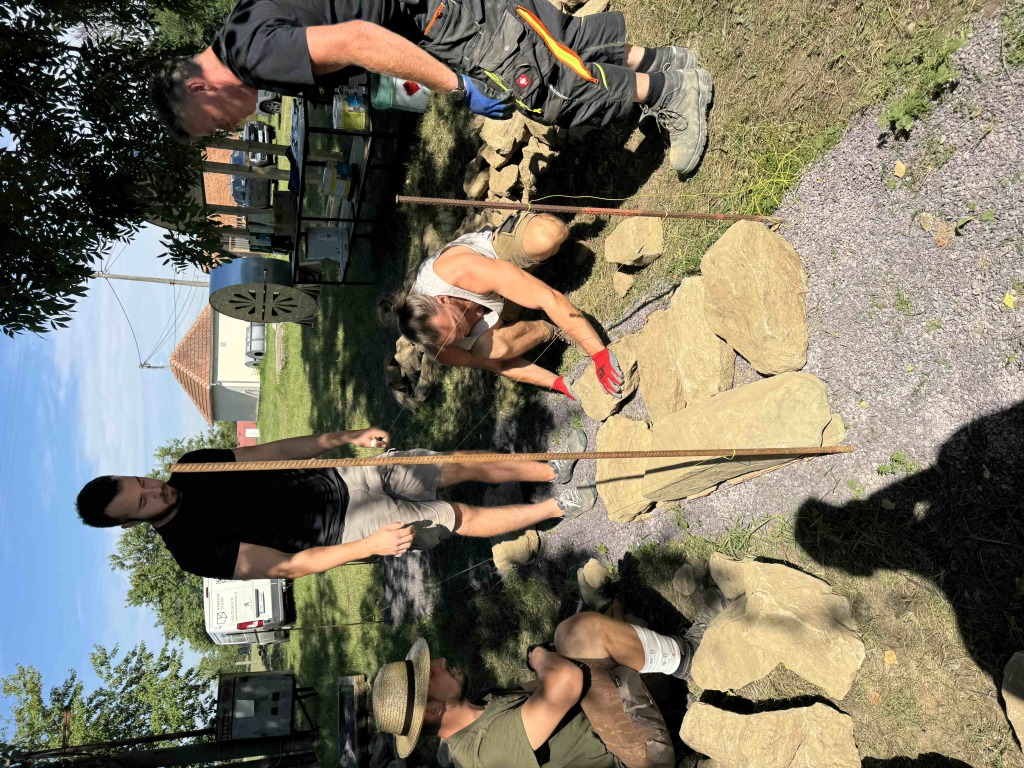
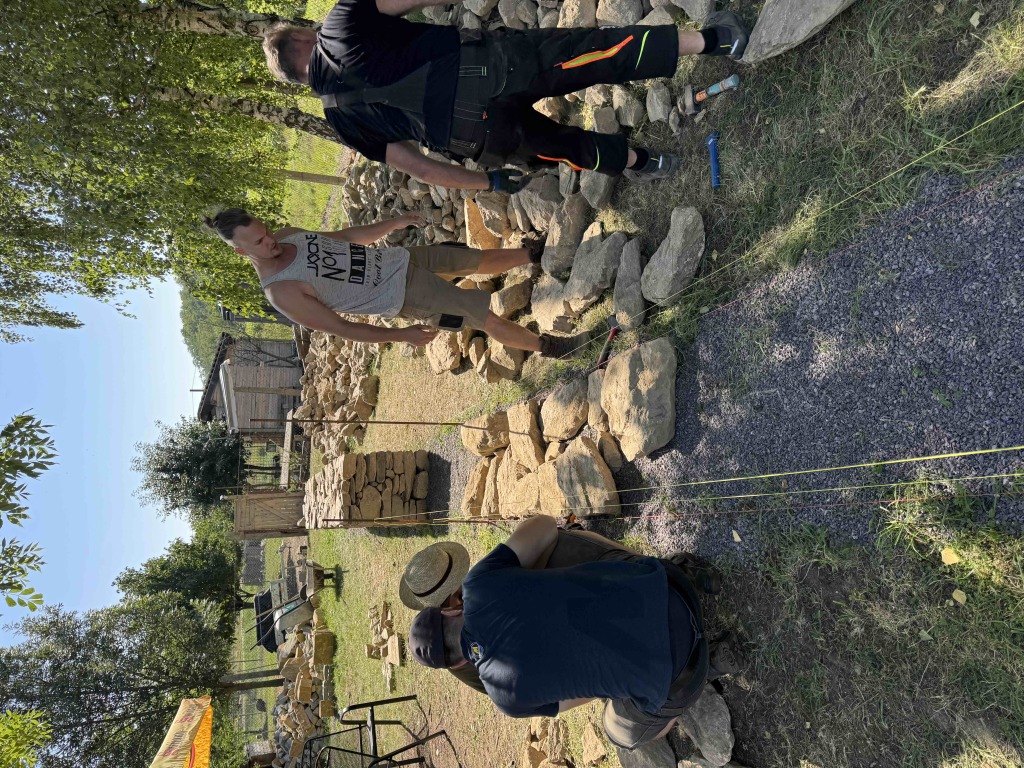
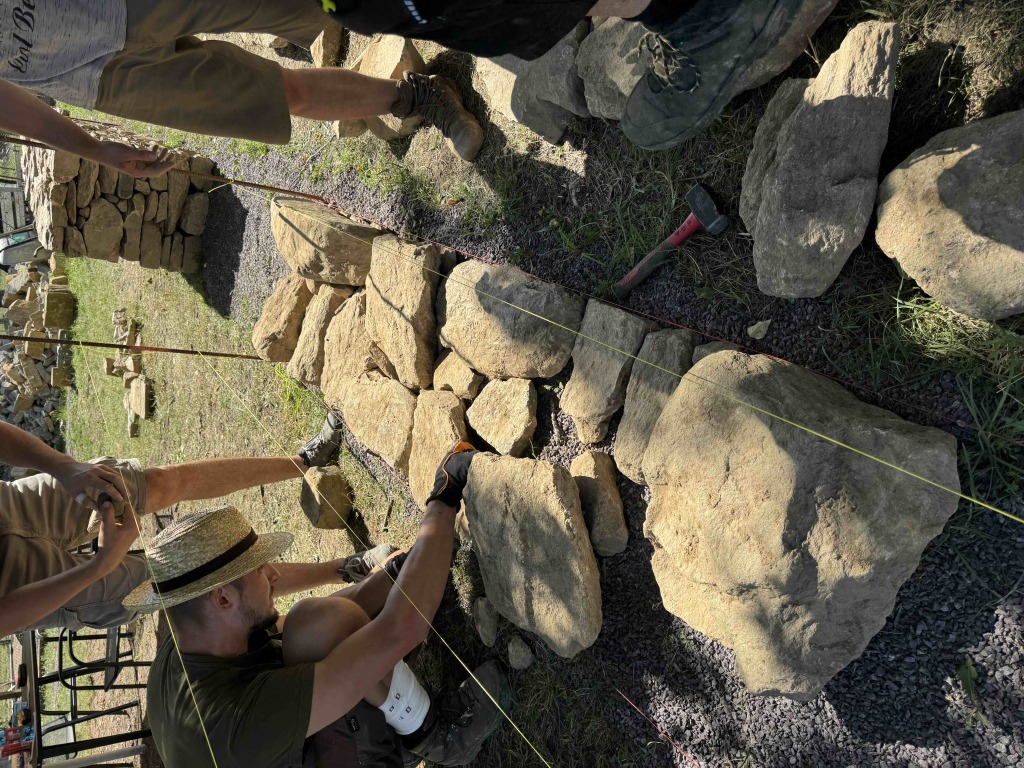
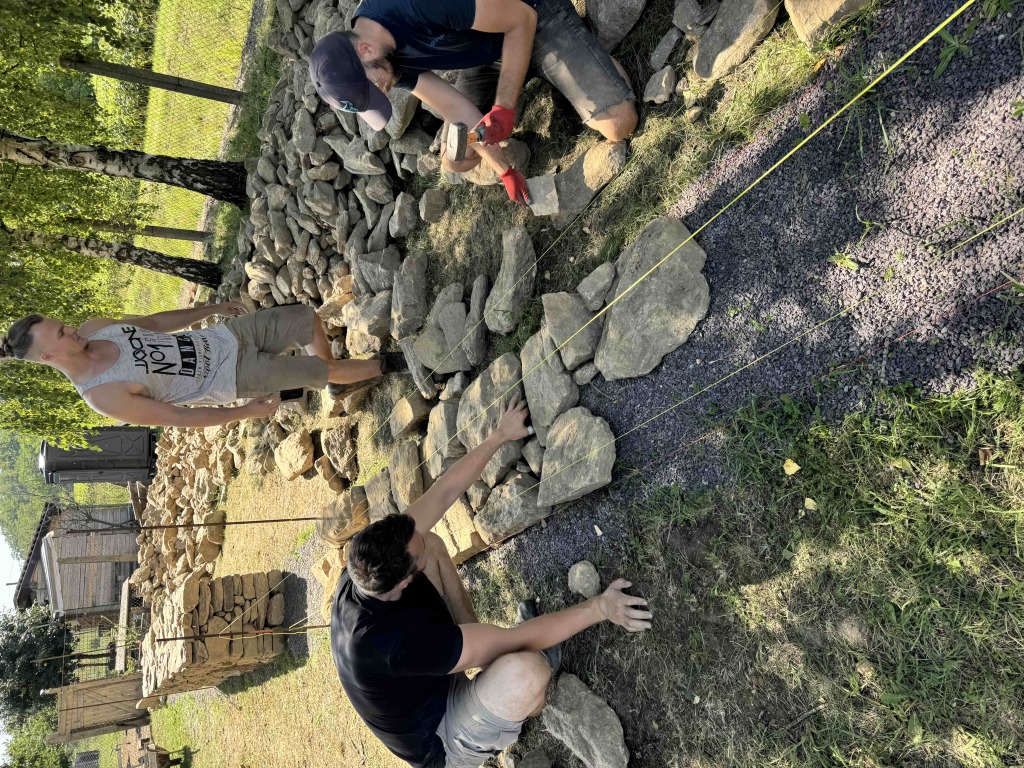
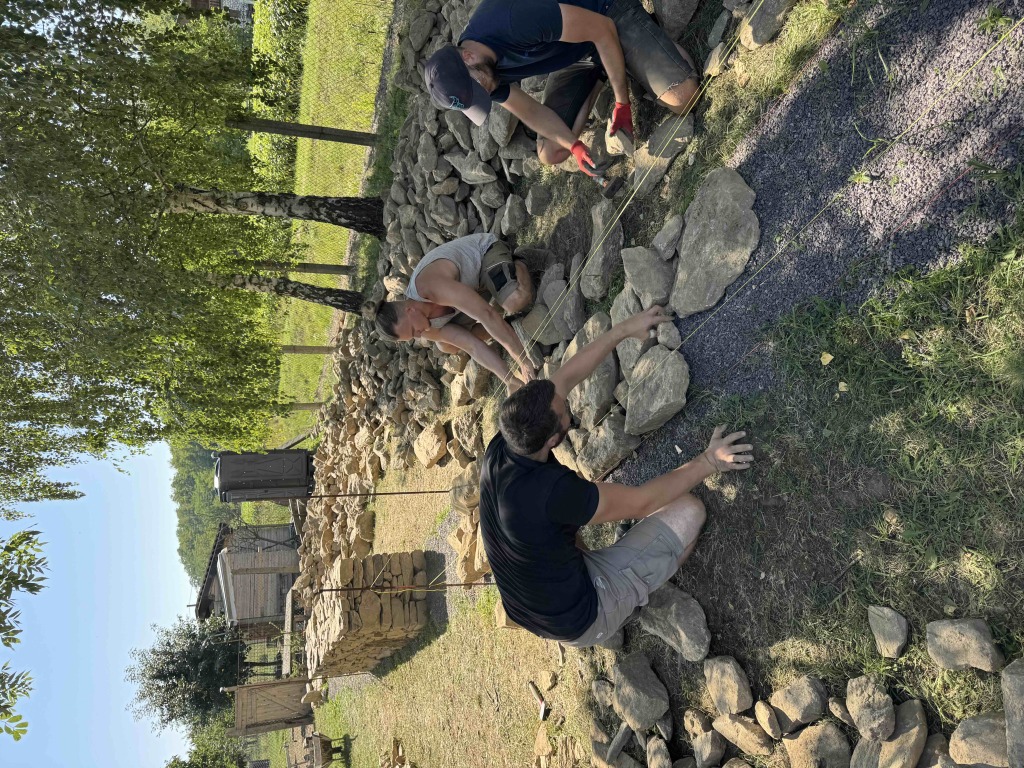
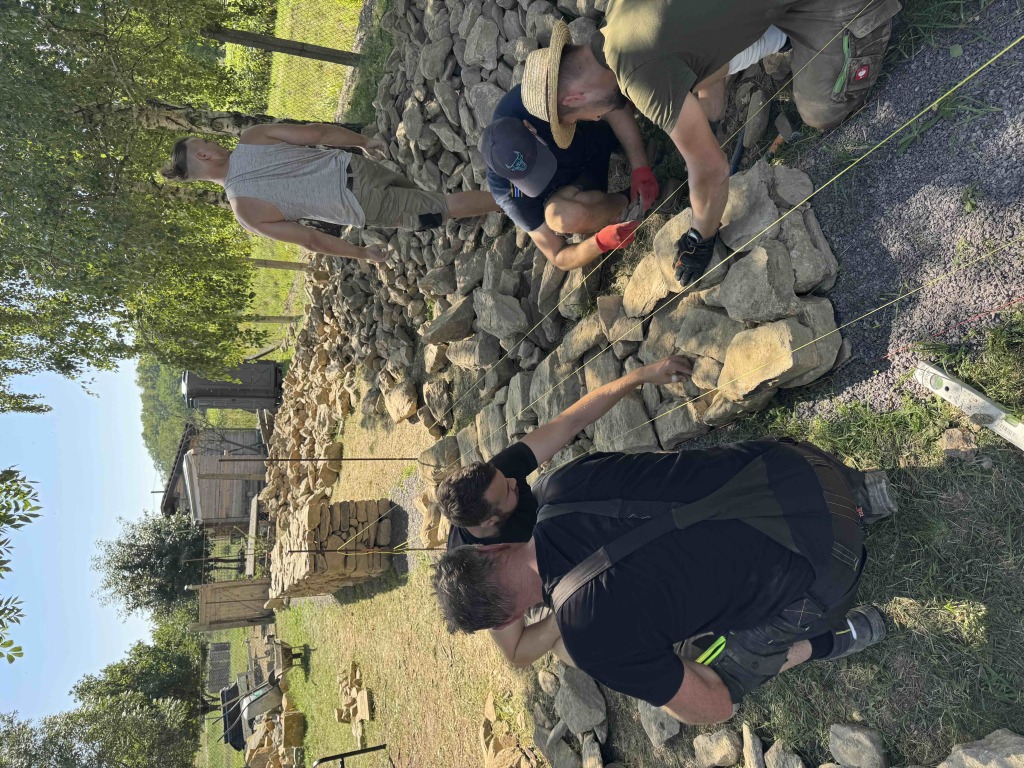
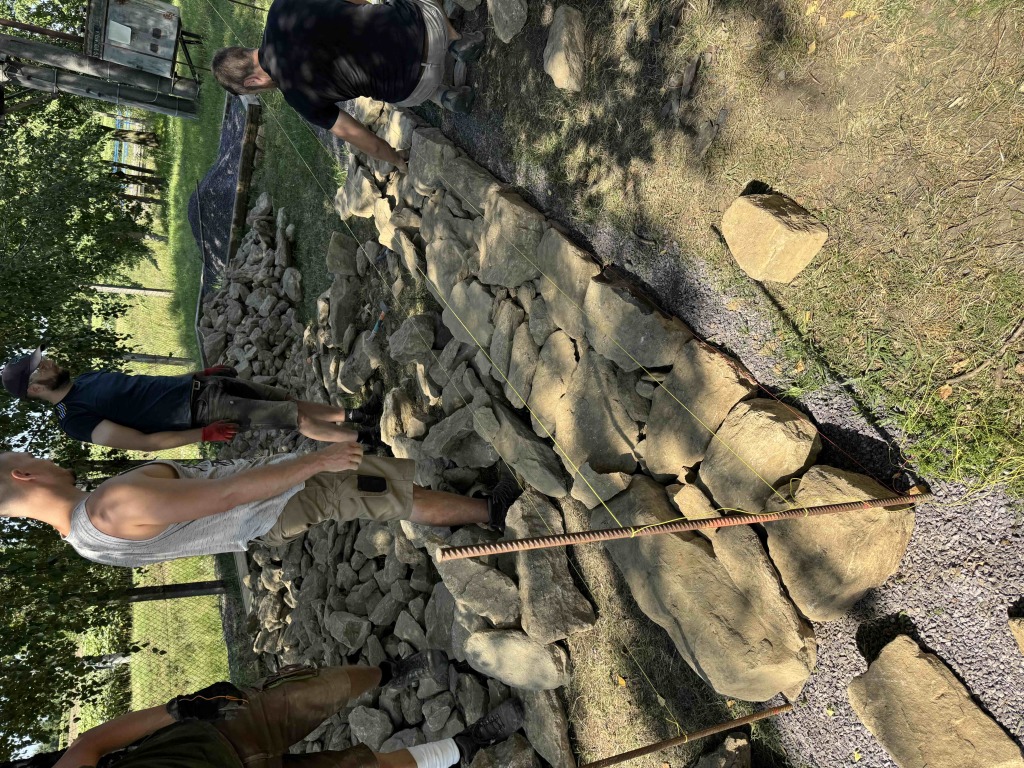
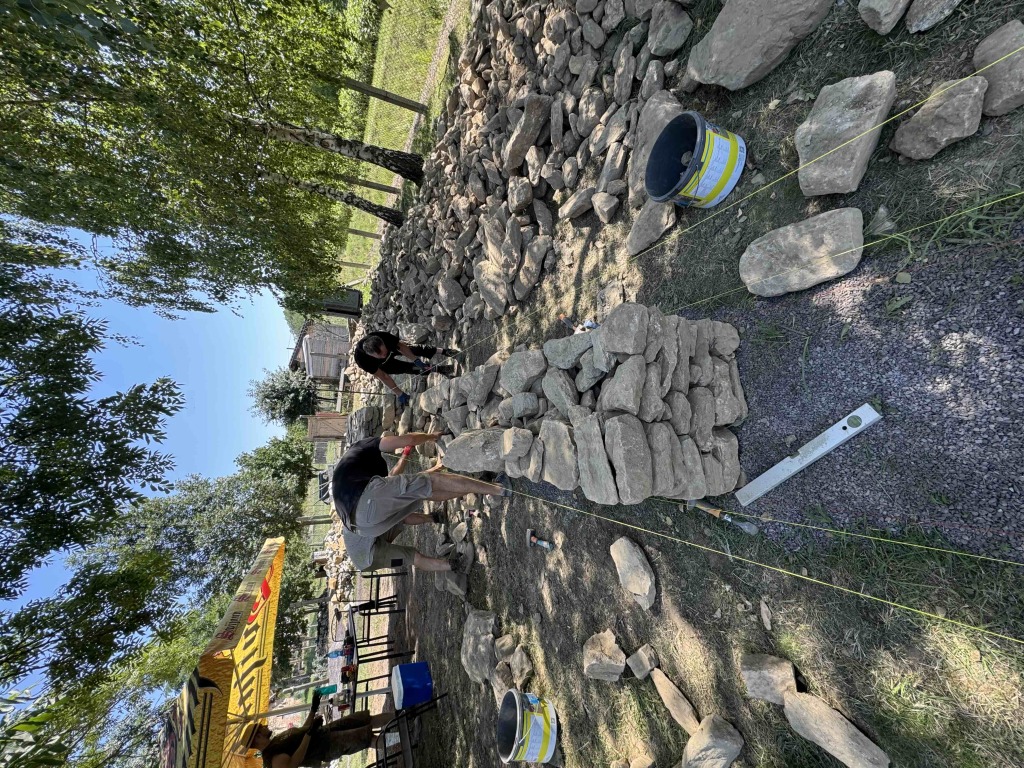
After the initial safety briefing, we went straight to practical work. We prepared the foundation, laid the first courses and explained why the stability of a dry stone wall depends on much more than simply stacking stones on top of one another.
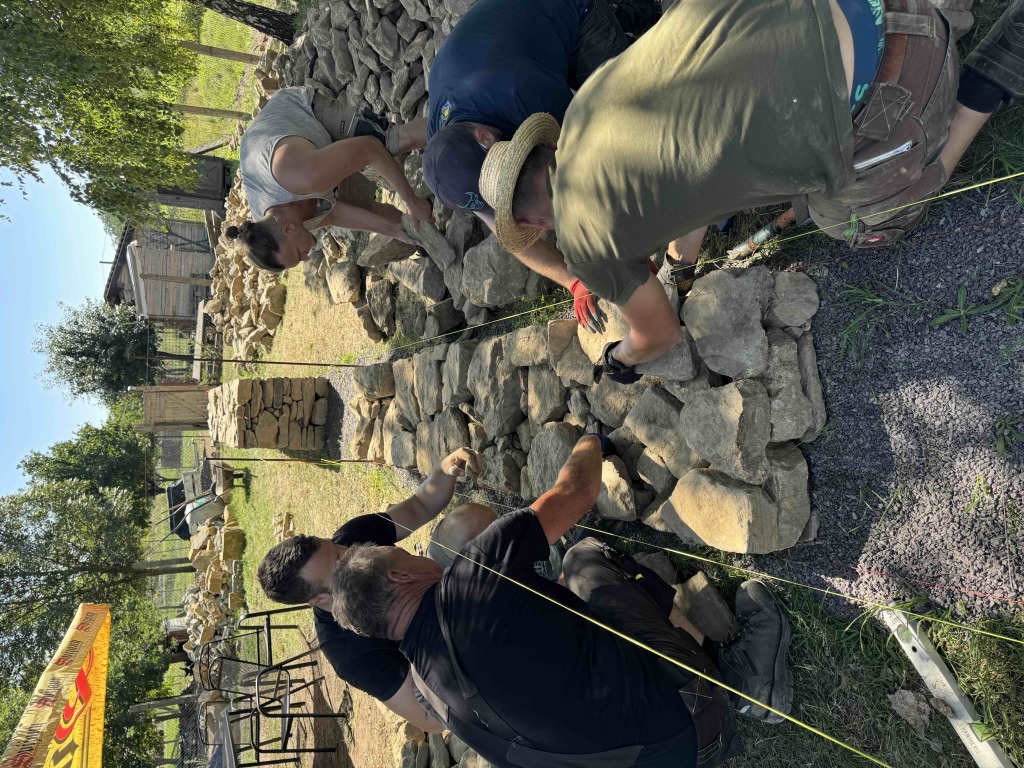
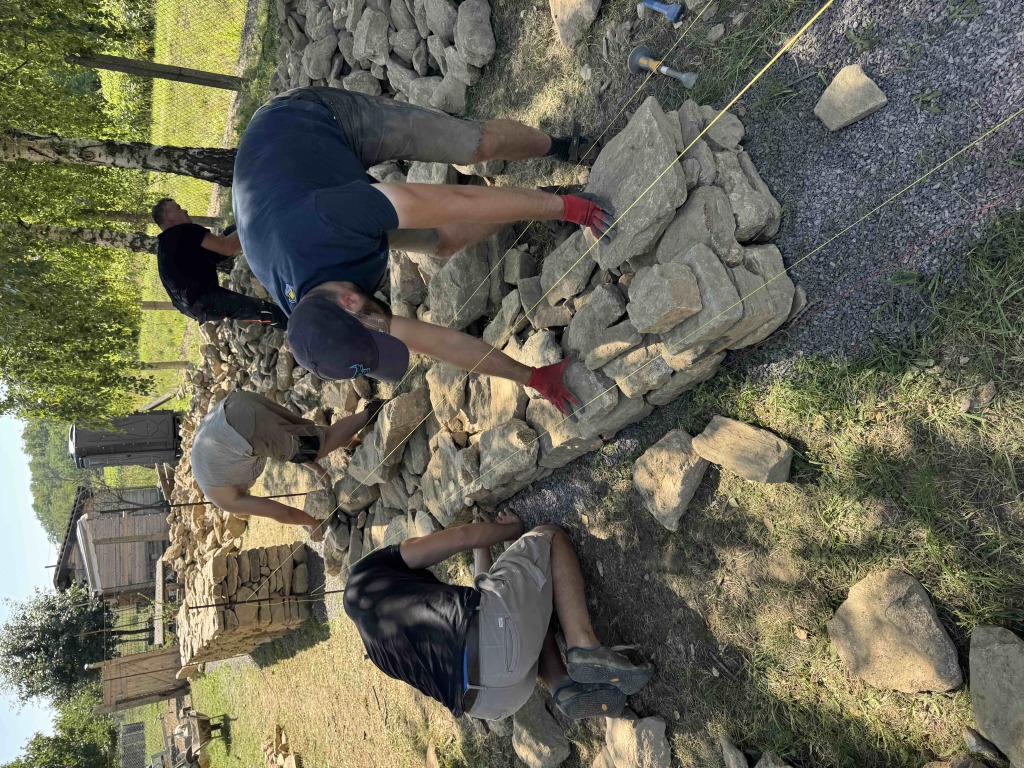
Each participant rotated through the different tasks, so everyone had the opportunity to practise:
- selecting suitable stones for different positions in the wall,
- placing face stones securely and maintaining a consistent wall line,
- using smaller stones and wedges correctly,
- creating a stable internal structure and hearting,
- maintaining the correct batter of the wall,
- understanding how stones should bond through the structure rather than simply sit in separate layers.
The work is physical, but the underlying principles are logical. Natural stone cannot simply be forced into place – each stone has to be read, selected and positioned so that it contributes to the stability of the entire structure.
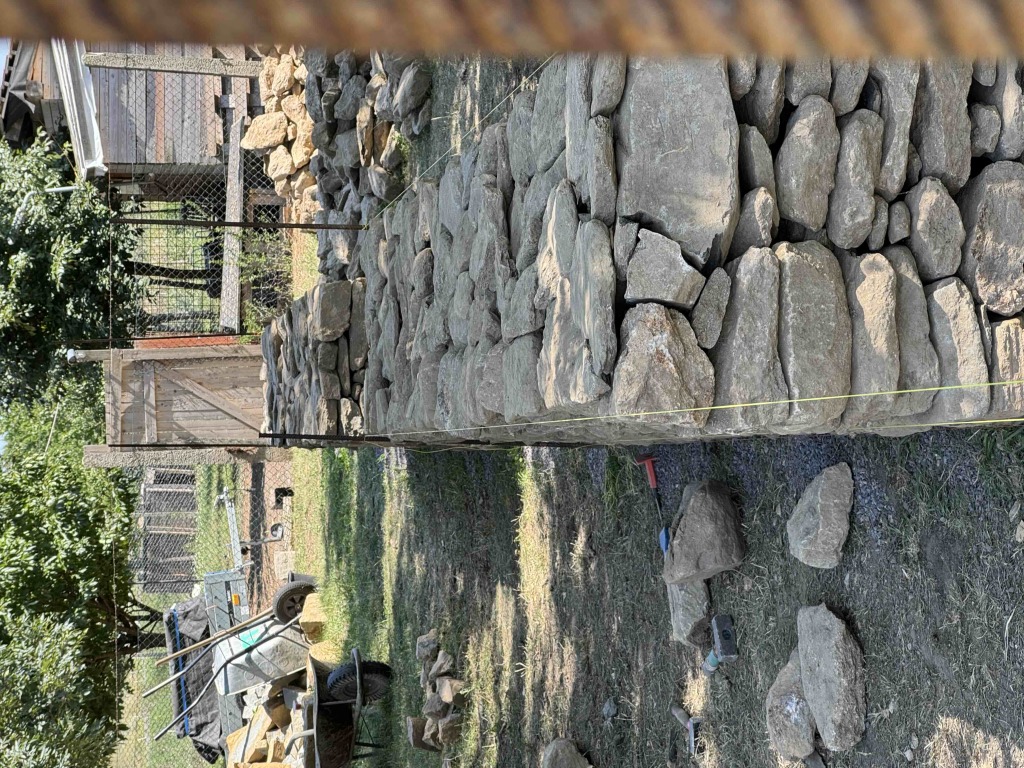
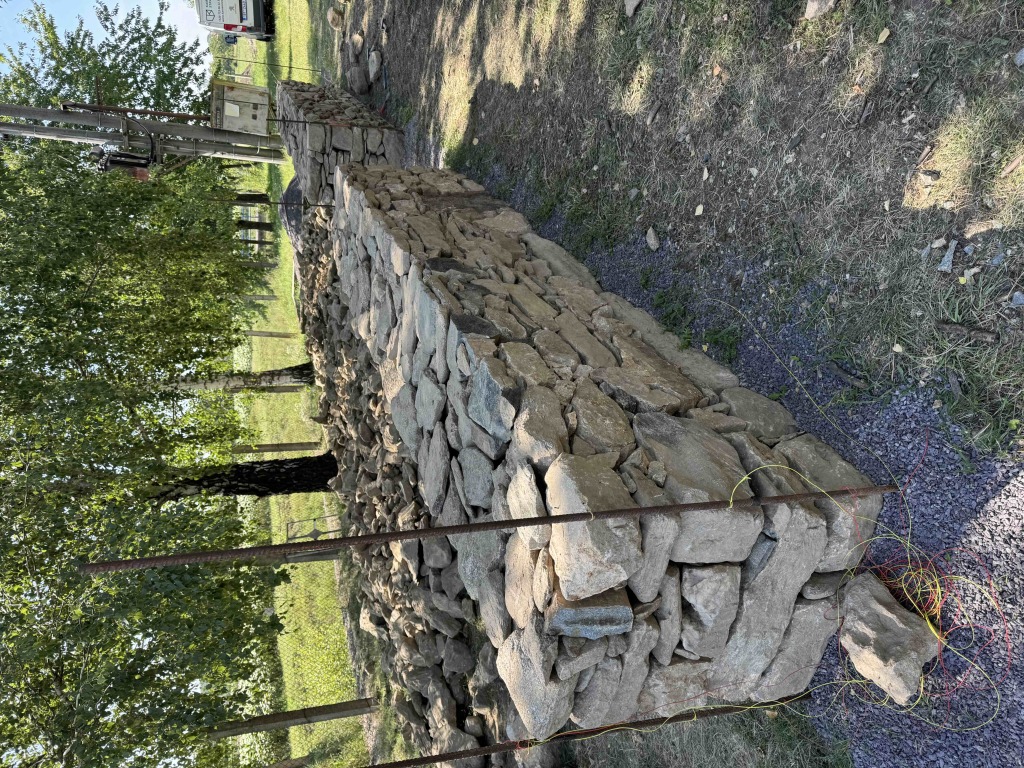
What We Built During the Course
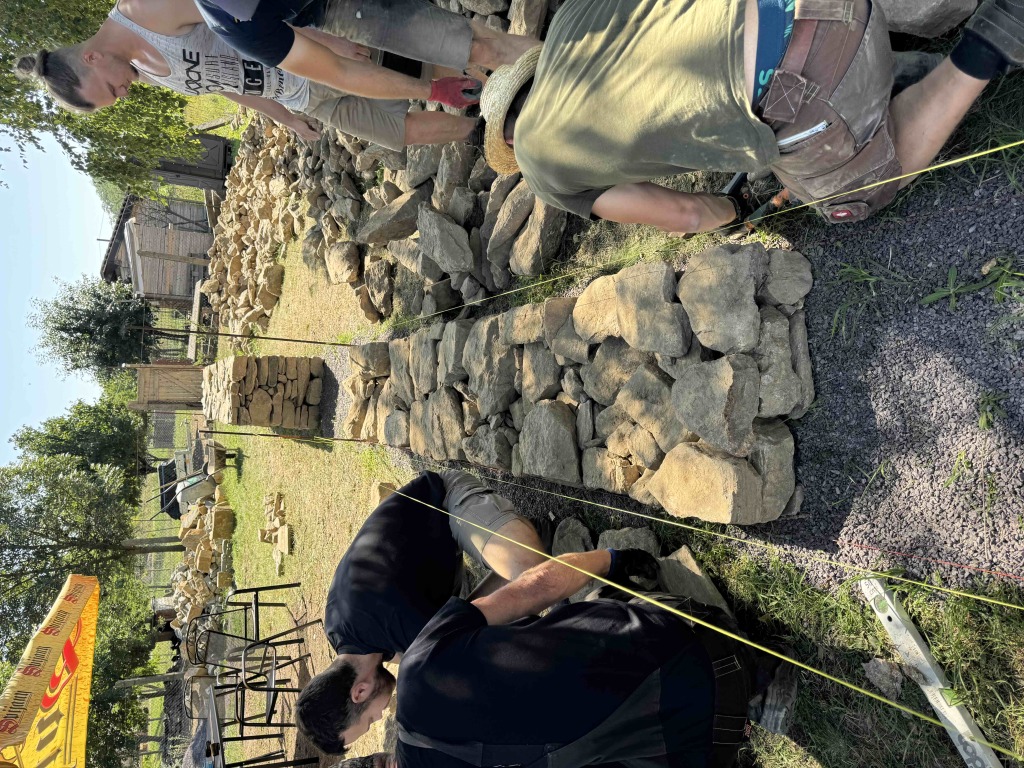
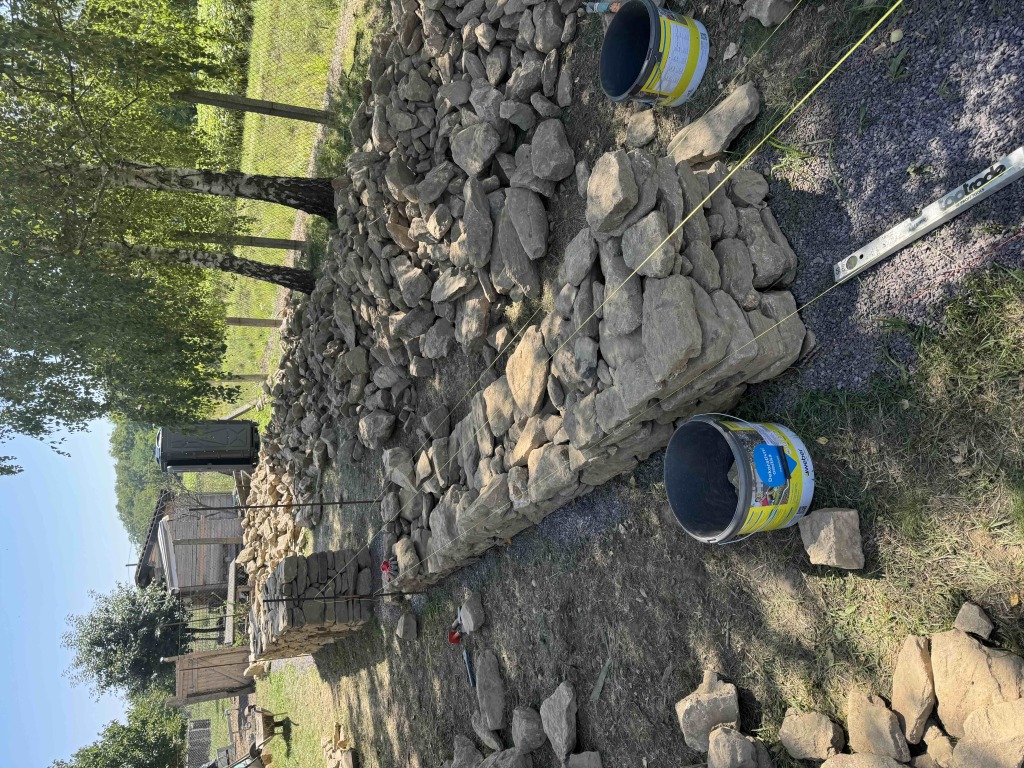
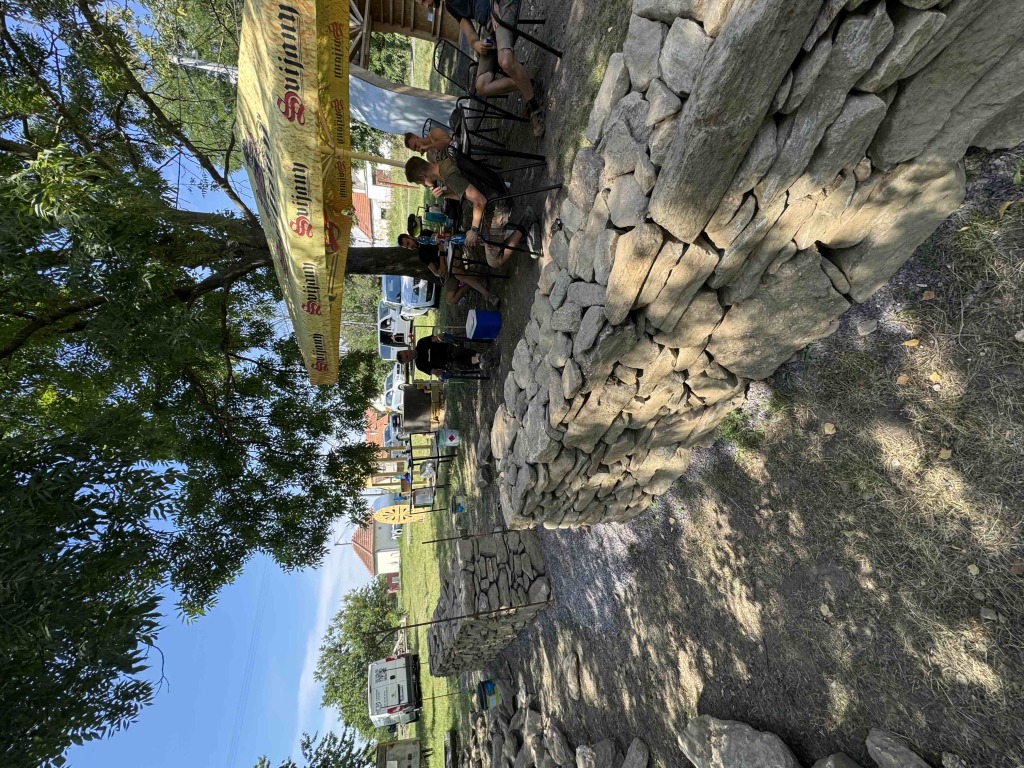
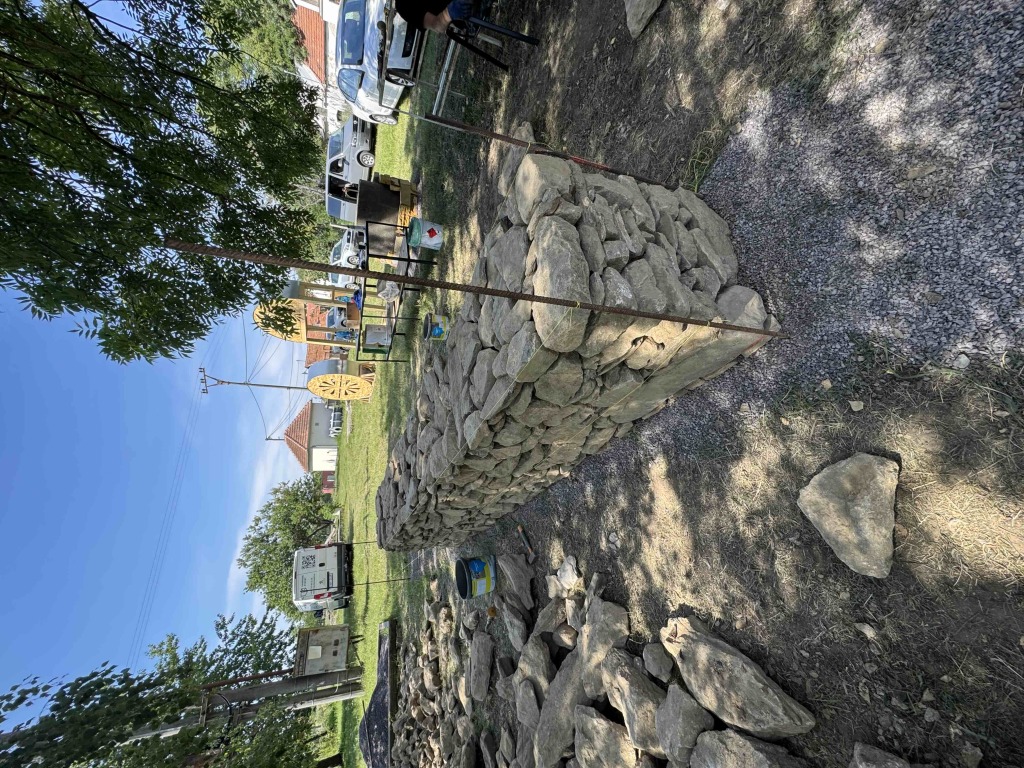
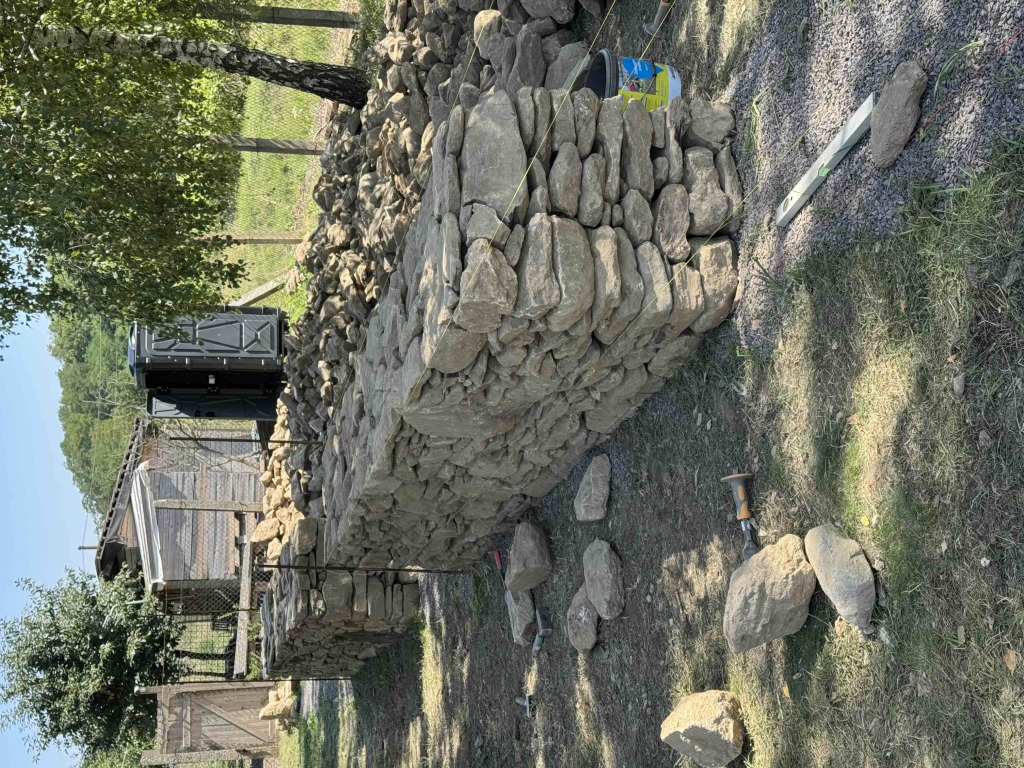
During the day, the group built several metres of visible dry stone wall using local weathered granite.
We also discussed the structural differences between a retaining dry stone wall and a freestanding or garden wall, how irregular stones can be incorporated into the structure and why stability is achieved through correct stone selection, gravity, friction and bonding rather than mortar or concrete.
A well-built dry stone wall can remain stable for decades. The finished section also demonstrated how much progress complete beginners can make in a single day when they understand the basic structural principles and work under experienced guidance.
Who Attended the Course – and Why?
One of the interesting things about practical stonework courses is the variety of people they attract. This group was a good example:
- A physiotherapist wanted to step away from his usual working environment, experience physical work with stone and gain skills that he could later use in his own garden.
- The owner of two old barns wanted to understand how stone recovered from the buildings could be reused rather than discarded or left unused.
- An experienced gardener wanted to expand his practical knowledge and potentially incorporate natural stone walls and other stone features into garden projects for clients.
- A service manager joined out of curiosity and wanted to experience a traditional craft and understand what working with natural stone actually involves.
The group therefore included both people planning their own projects and someone interested in using stonework knowledge professionally. The construction principles, however, remain the same regardless of why someone comes to the course.
What Participants Learn from Working with Real Stone
Working with natural stone is physically demanding, but it is also highly analytical. Every stone is different, so there is no single pattern that can simply be repeated across the entire wall.
Participants gradually learn to look at each stone differently: which face should remain visible, where its weight should be supported, how it interacts with neighbouring stones and whether it belongs in the face, inside the wall or somewhere else entirely.
This is one of the main reasons why our courses are based on hands-on practice rather than classroom theory. Understanding dry stone construction comes from repeatedly selecting, placing and sometimes removing stones until the structural principles begin to make sense.
Course Atmosphere and Practical Experience
The second course once again showed that stonework is about more than physical effort. It requires concentration, patience and cooperation. At the same time, the result is immediately visible – every correctly placed stone becomes part of a structure that the group has built together.
By the end of the day, all four participants had a much clearer understanding of why dry stone walls have been built for centuries and why the same basic structural principles still apply today.
What the Second Course Confirmed
Our second dry stone walling course confirmed that traditional stonework appeals to people from very different professions. Some participants want to build a wall in their own garden, some want to reuse old stone, and others want to add stonework to their professional skills.
What they have in common is the desire to understand the material rather than simply copy a construction detail. Once you understand how stone should be selected, bonded and supported, building with natural stone becomes much more logical.
👉 Would you like to learn the same principles yourself? Explore our Dry Stone Walling Course or see all practical stonework courses and available dates.
Who Is Behind This Article