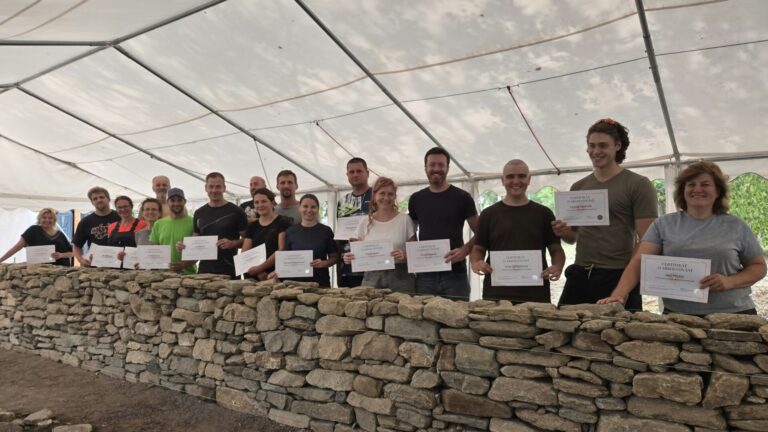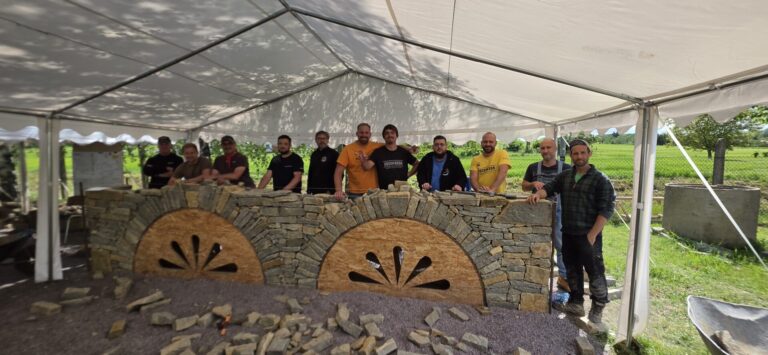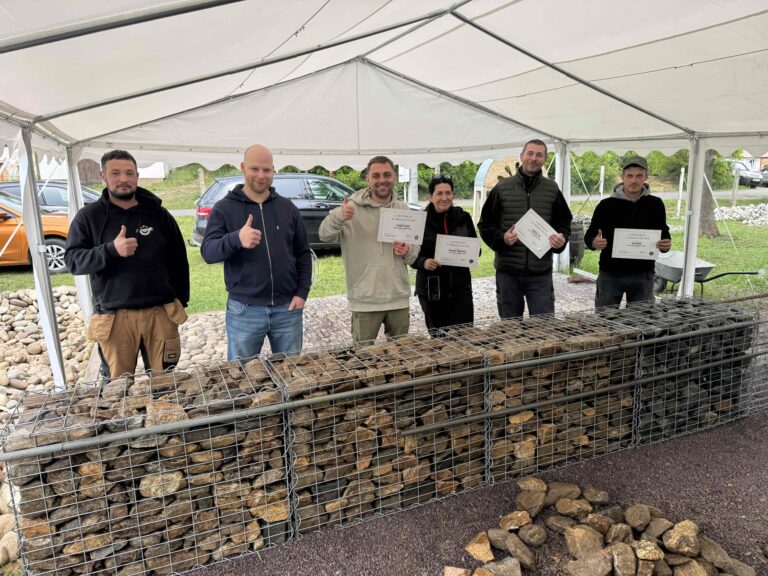


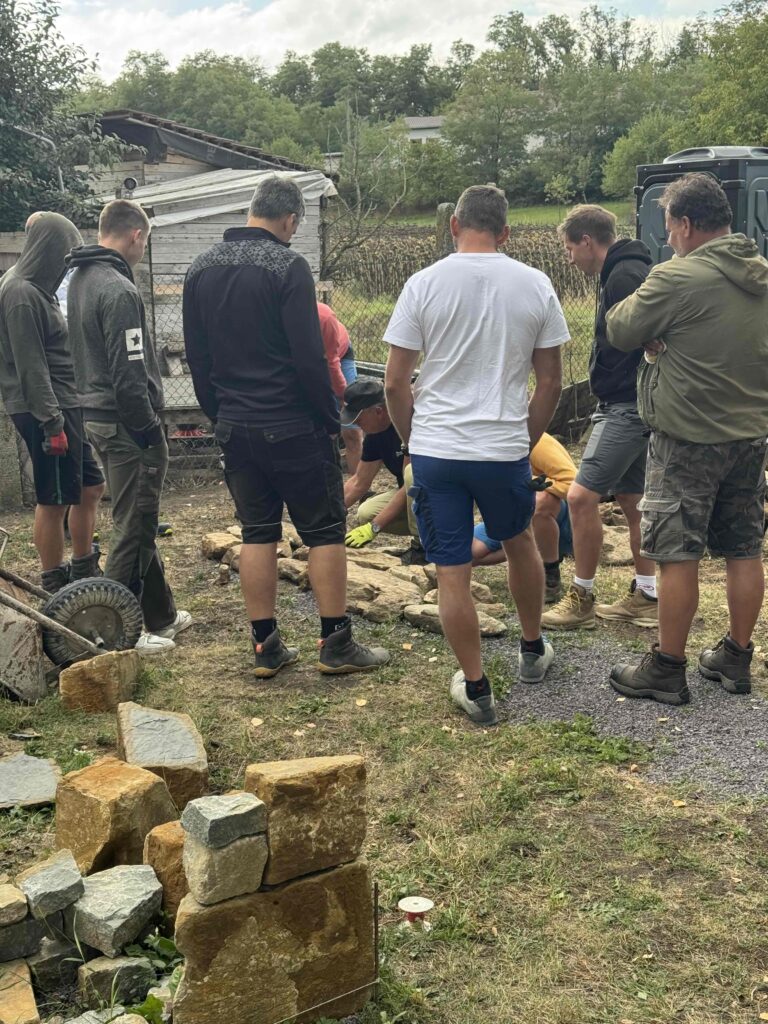
Our sixth dry stone walling course took place on 6 September 2025 in Novosedly, South Moravia, Czech Republic. The course once again demonstrated a fundamental principle of traditional dry stone construction: a stable stone wall does not need concrete or mortar when the structure is designed and built correctly.
The group again came from very different backgrounds. It included an excavator operator, the owner of a graphic design and marketing studio and a complete beginner who later returned to attend another course.
Their professional experience was different, but their goal was the same: to understand how to build a dry stone wall that remains stable without relying on mortar.
What We Covered during the Course
The day focused on the practical decisions that determine whether a dry stone wall will work as a complete structure.
- how to build a dry stone wall step by step,
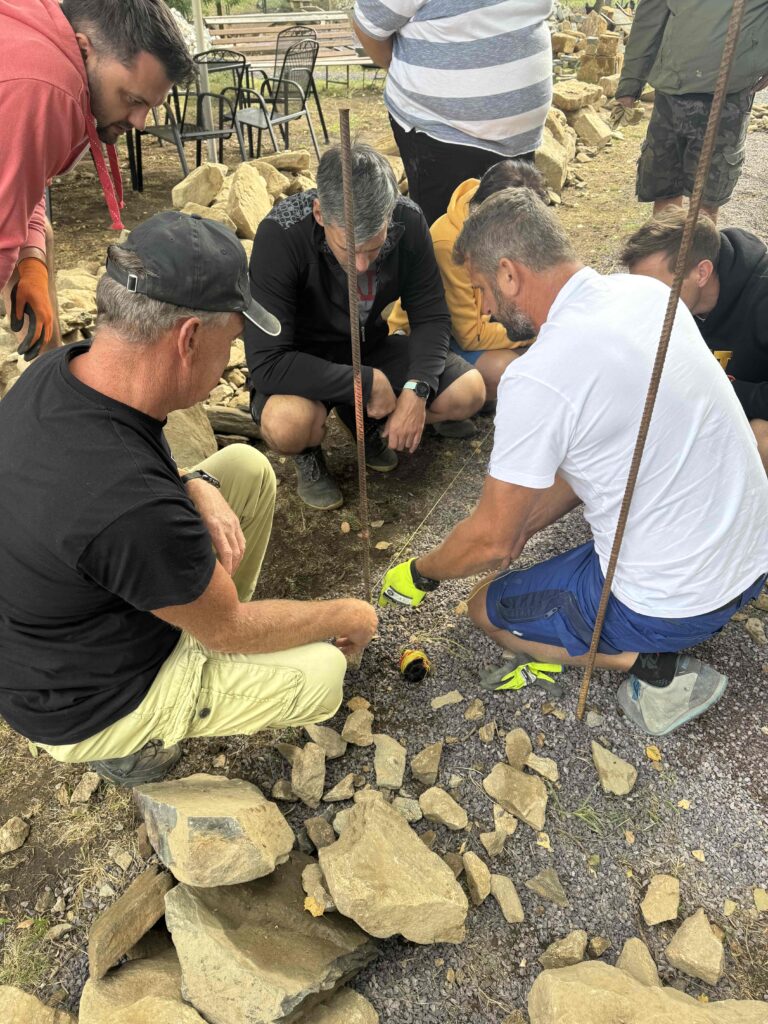
- foundation preparation and establishing the first course,
- building a stone wall on a slope and understanding pressure from the soil behind it,
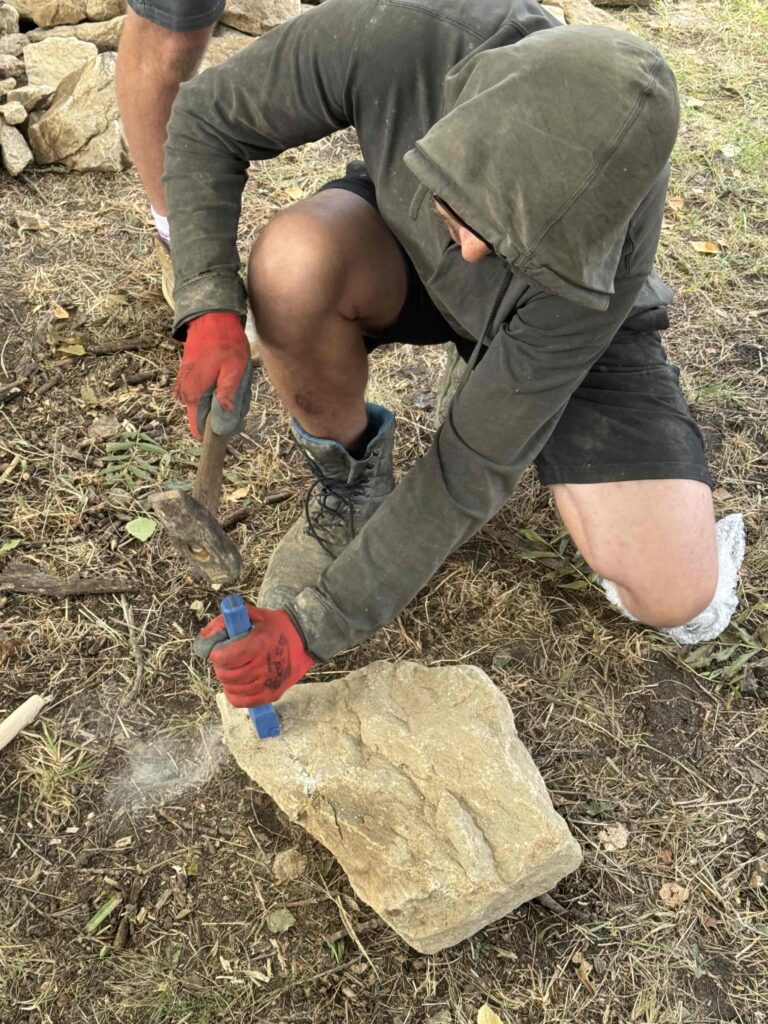
- selecting and sorting stone for traditional stone masonry,
- stone bonding, wedging and creating stability without mortar,
- the difference between a decorative garden wall and a retaining wall.
Participants Brought Their Own Stone Wall Projects
A significant part of the group arrived with their own planned stonework projects. These included garden renovations, landscaping work and stone retaining walls on sloping ground.
That made it possible to discuss real situations directly beside the training wall. Instead of separating theory from practice, participants could compare the principles being demonstrated with the conditions they expected to face on their own properties.
Photographs, dimensions and site conditions can reveal important questions before construction begins: how the ground should be prepared, whether the wall will retain soil, where drainage may be required and how the available stone can be used effectively.
Foundations Come before the Visible Stonework
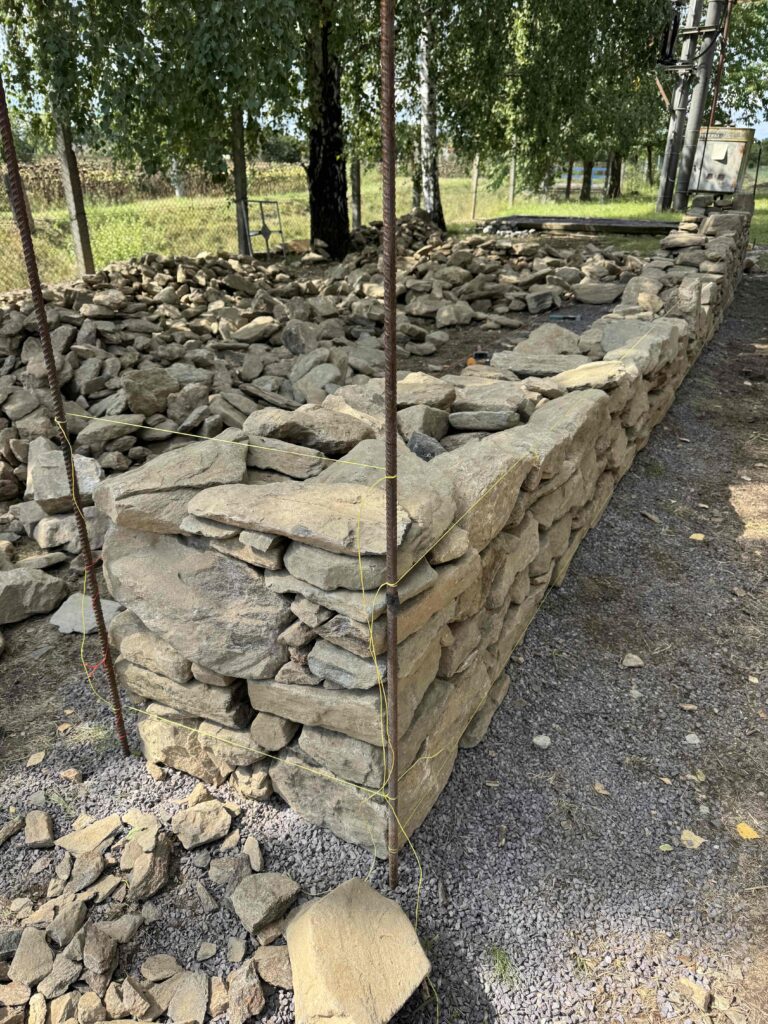
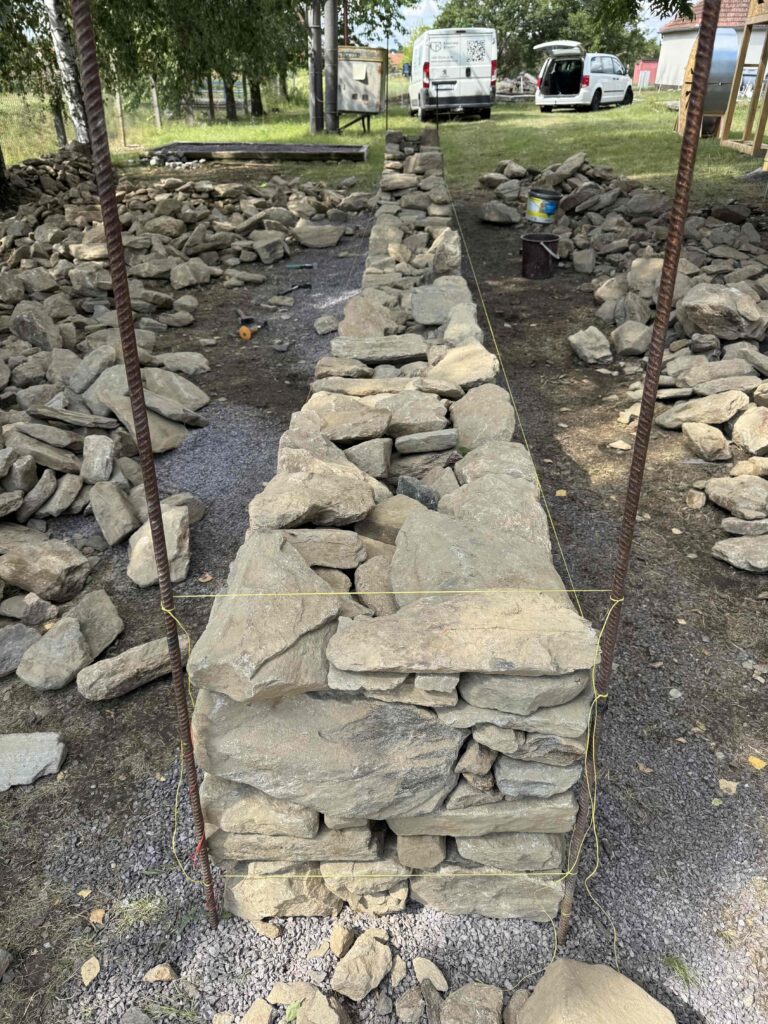
The visible face of a dry stone wall is only part of the finished structure. Stability begins lower down, with the preparation of the ground and the first courses of stone.
If the base is poorly prepared, later courses cannot simply compensate for it. The position, size and stability of the first stones influence everything that follows above them.
This is particularly important for retaining walls, where the structure also has to respond to the pressure of the soil behind it.
Building a Dry Stone Wall on a Slope
Several participant projects involved sloping ground, so part of the course focused on how retaining situations differ from a simple freestanding garden wall.
A retaining wall has to be considered together with the terrain behind it. Its geometry, foundation, drainage and internal structure all influence how effectively it can resist pressure from the retained ground.
The wall therefore cannot be treated simply as an attractive vertical surface. It has to function as a complete construction.
Stone Selection, Bonding and Wedging
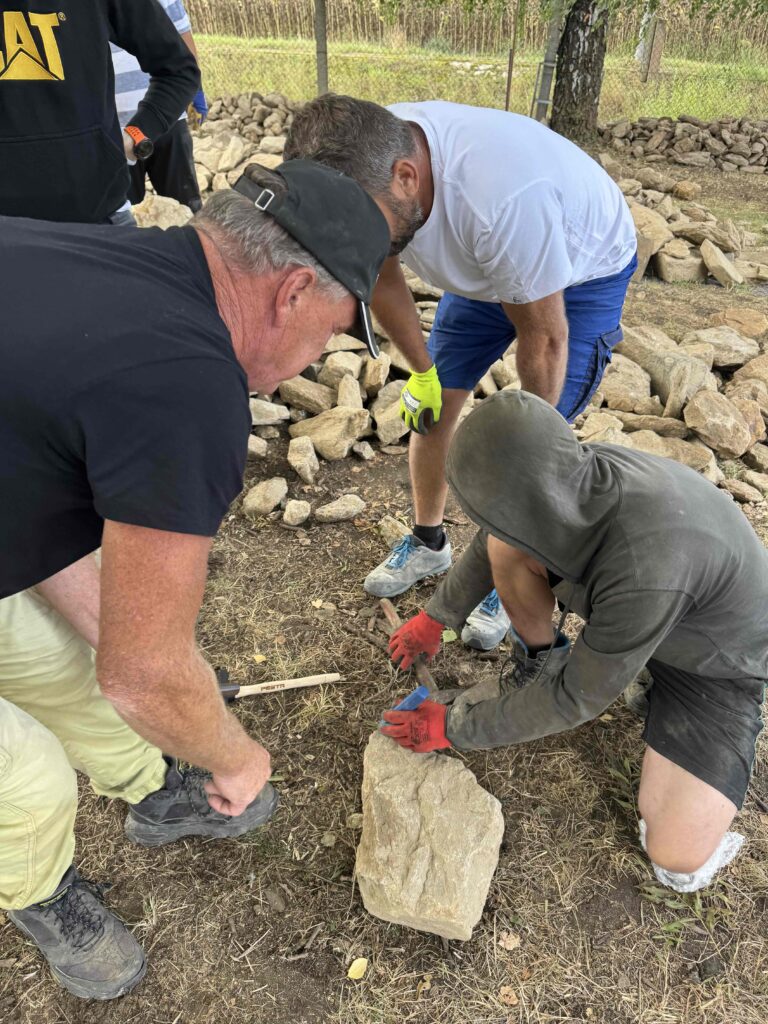
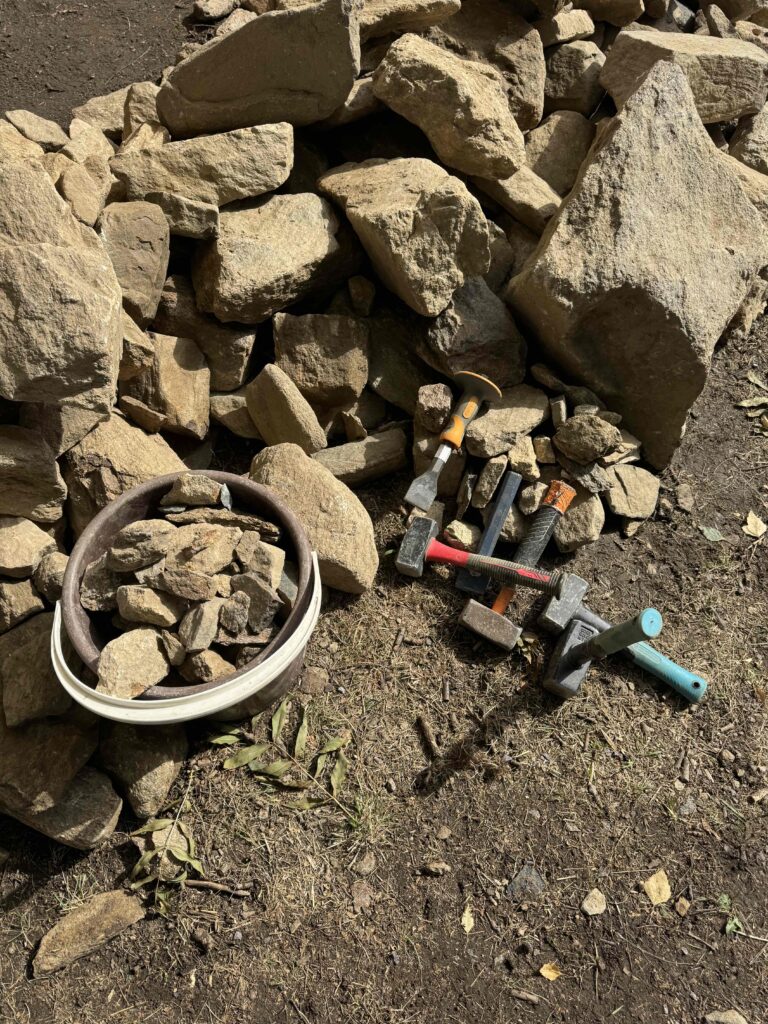
Natural stone is irregular, which means that building a wall involves constant selection. Participants learned to assess individual stones according to their size, shape, usable faces and possible position within the structure.
Good stone placement is not only about appearance. The individual pieces need to sit securely and bond with the surrounding masonry rather than behaving as isolated stones.
Smaller stones and wedges can help stabilise individual pieces, but they cannot replace the correct selection and placement of the main stones themselves.
A Wall Stable Enough to Walk On
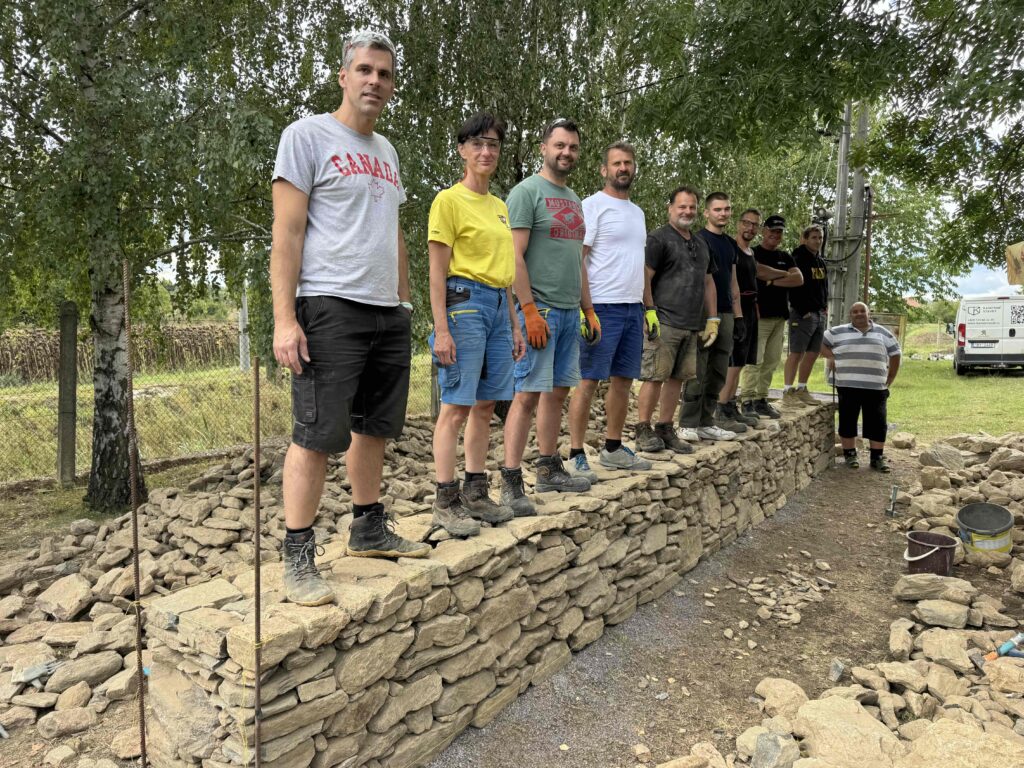
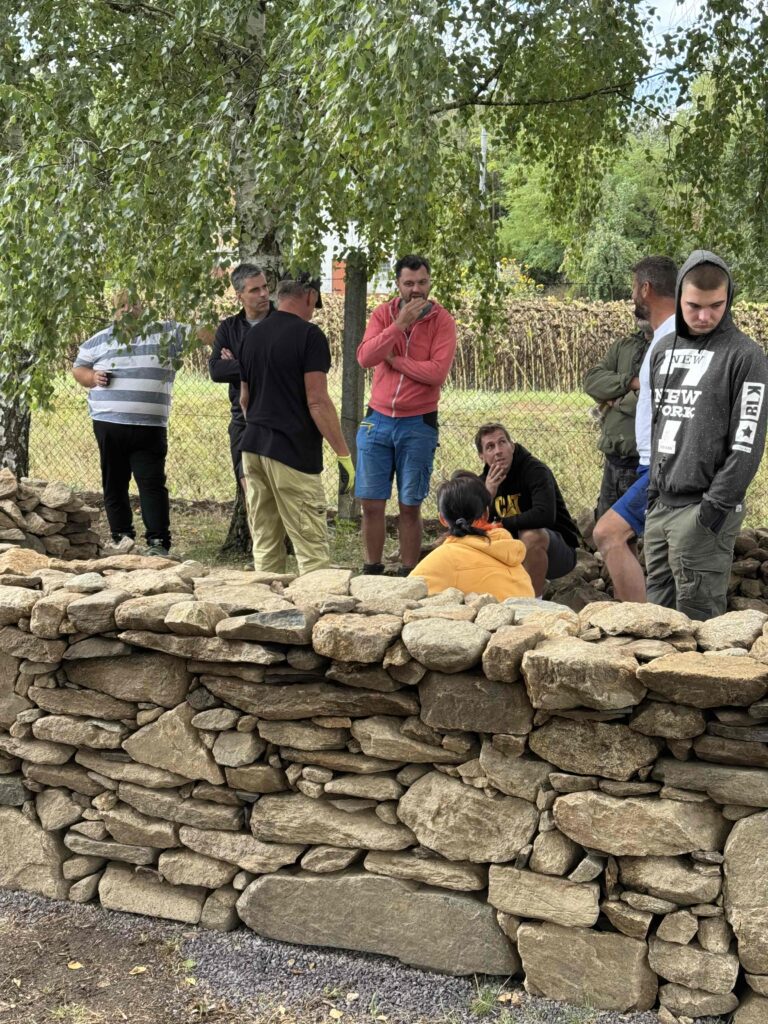
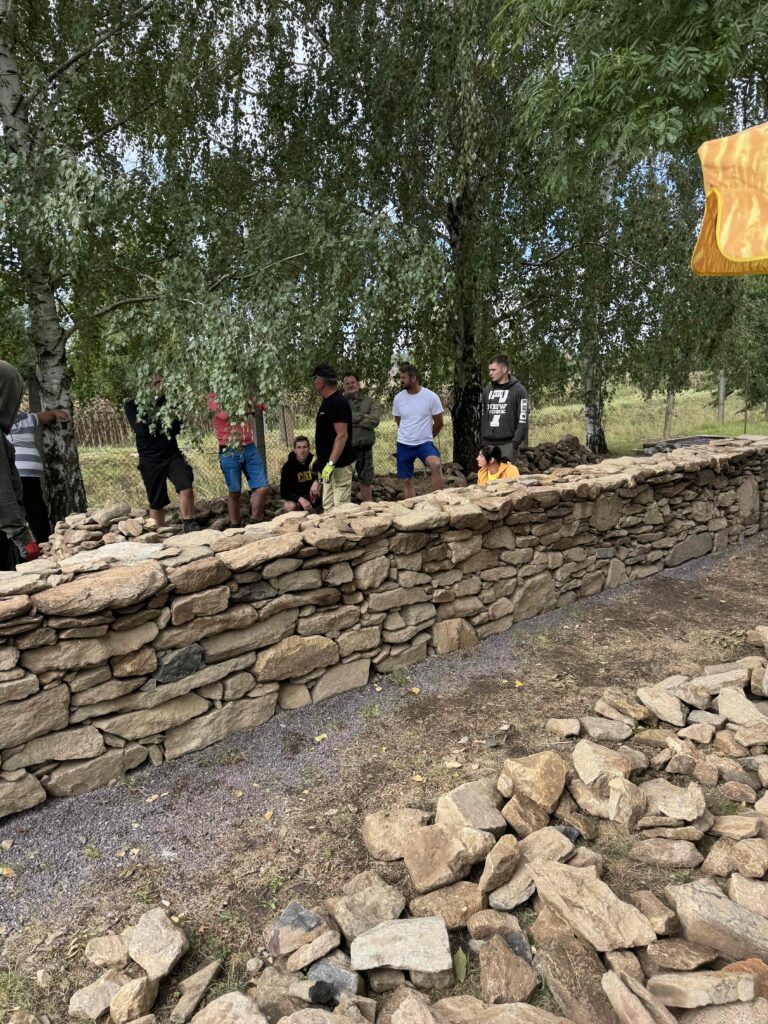
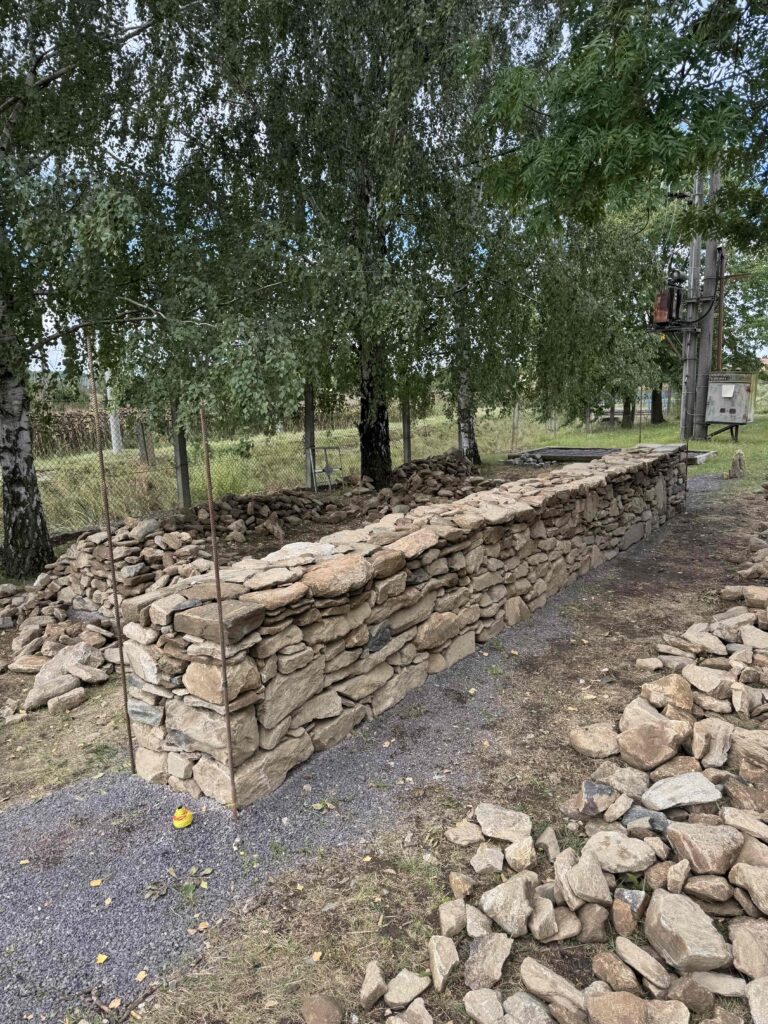
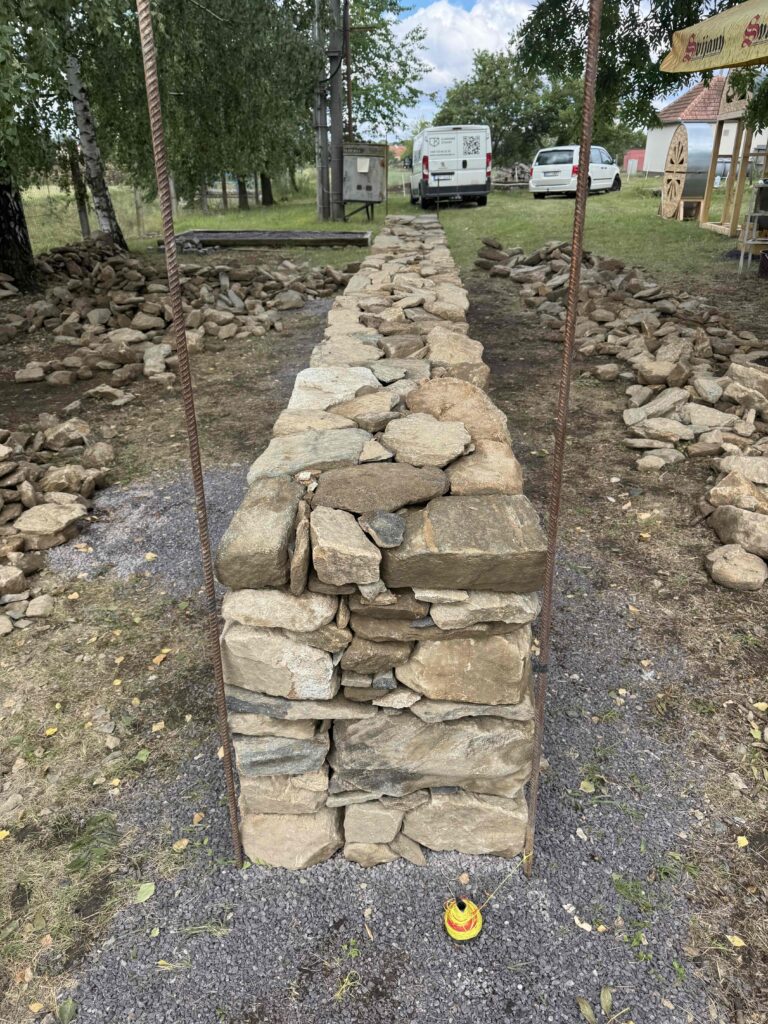
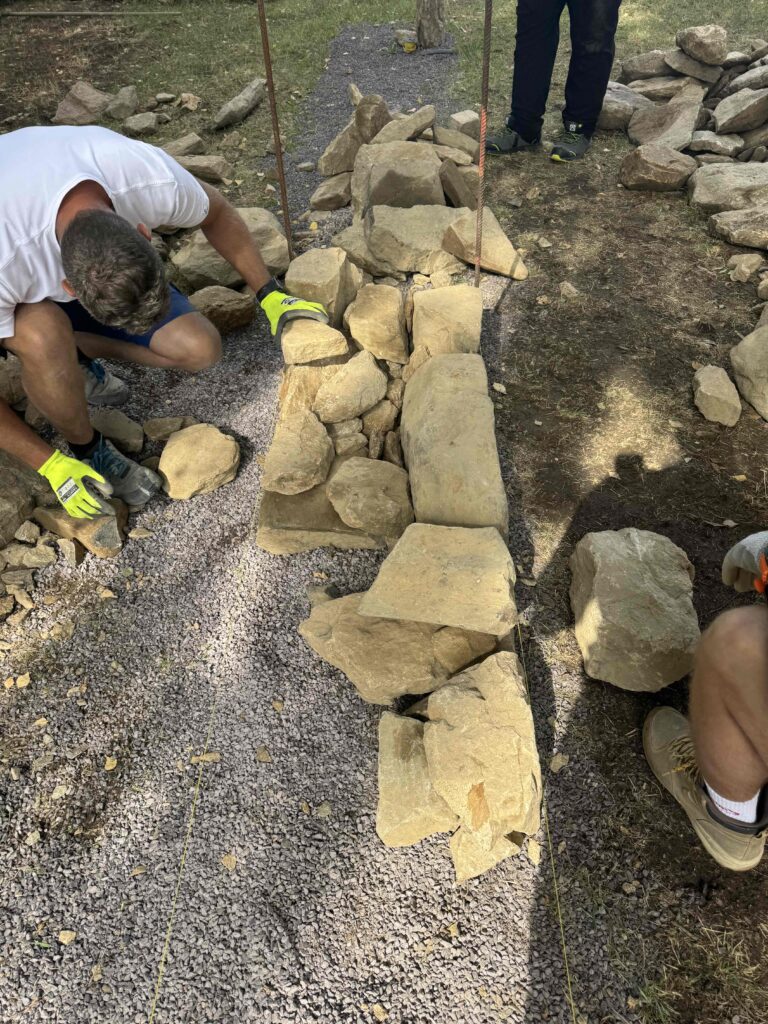
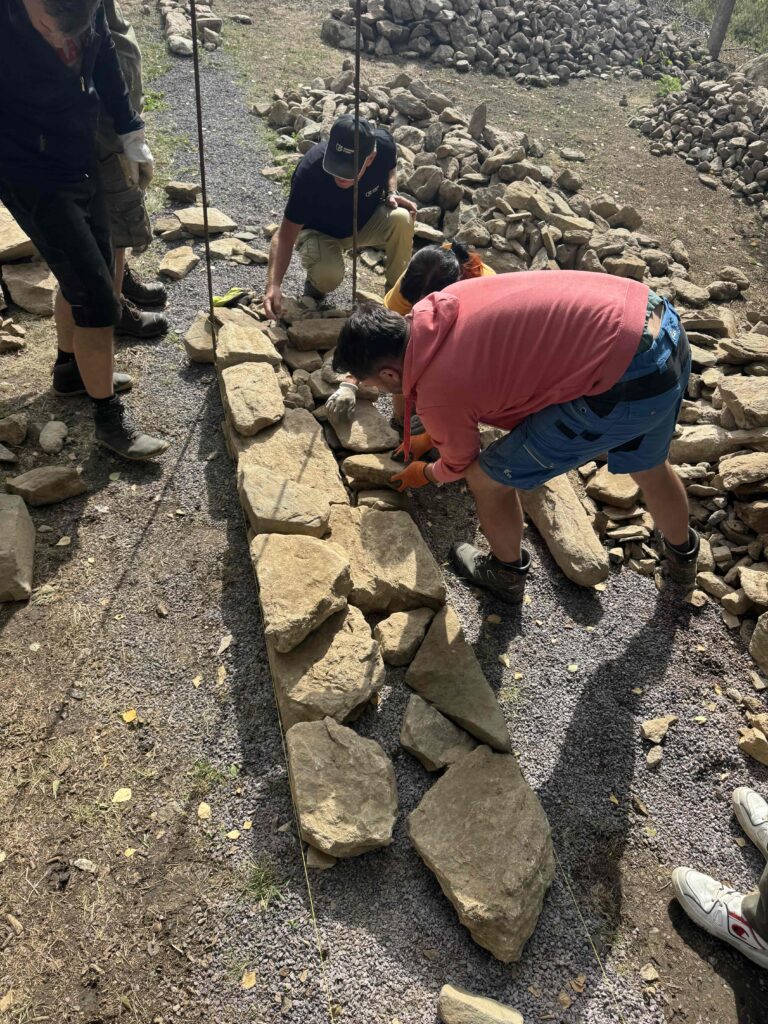
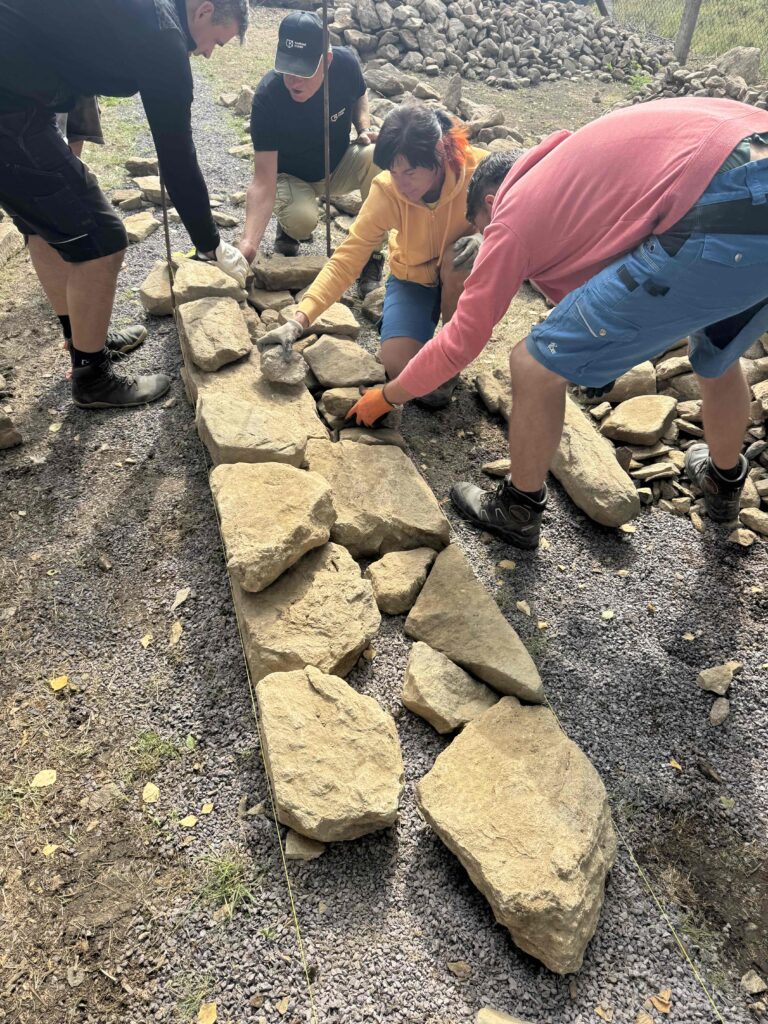
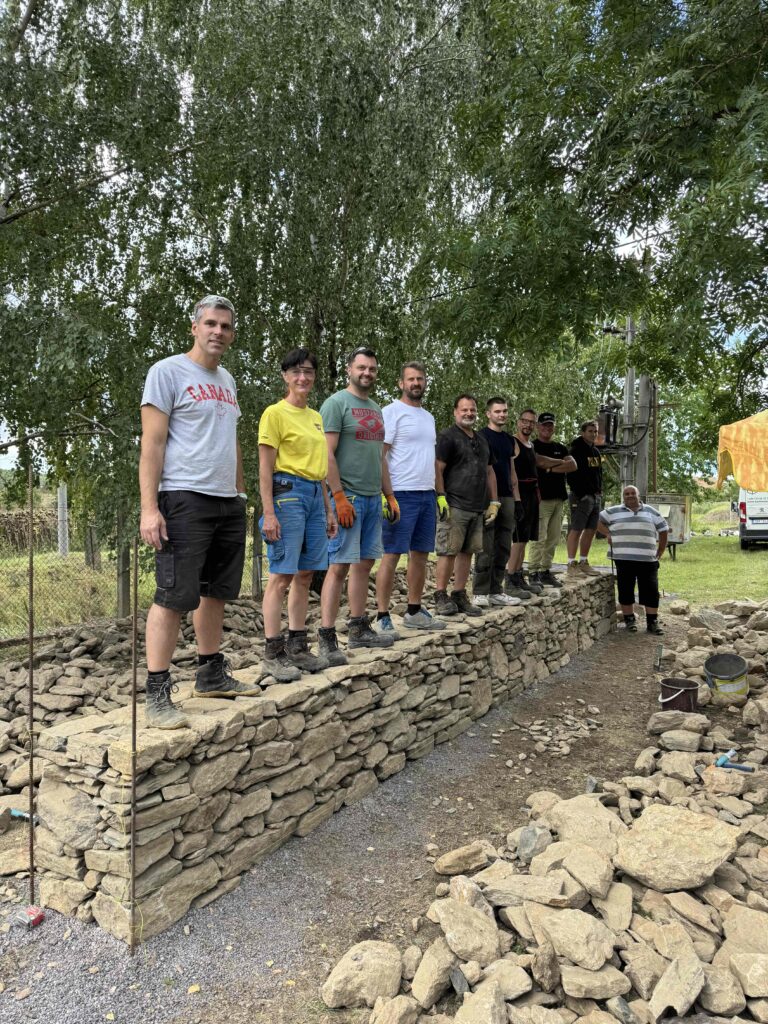
By the end of the day, the group had built another section of dry stone wall that was sufficiently stable to walk along carefully.
This provides an immediate demonstration of an important principle. A properly built dry stone wall achieves its stability through stone selection, placement, bonding, geometry and the relationship between individual pieces rather than through concrete or mortar holding everything together.
The purpose is not to build a wall for people to walk on, but the test makes instability very easy to recognise. Loose or poorly seated stones quickly reveal themselves under load.
Learning the Principles Instead of Relying on Trial and Error
People often search for instructions on how to build a dry stone wall, how to construct a garden stone wall or how to deal with a stone retaining wall on a slope.
The course focuses on exactly these practical principles, but participants learn them with real stone in their hands. Instead of relying only on trial and error, they can see why one solution works and another does not while the wall is being built.
Learn Dry Stone Walling Hands-On
Our practical courses take place in Novosedly, South Moravia, Czech Republic. Participants learn foundation preparation, stone selection, bonding, wall structure and other fundamental principles directly through hands-on construction.
Find out more about the Dry Stone Walling Course or view all practical stonework courses and available dates.
Who Is Behind This Article