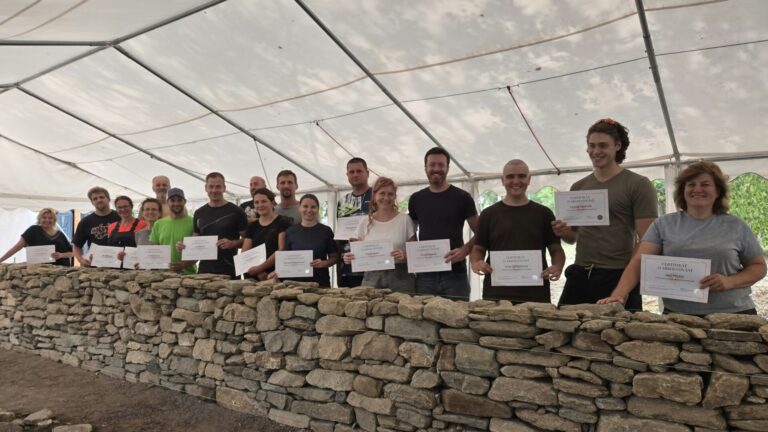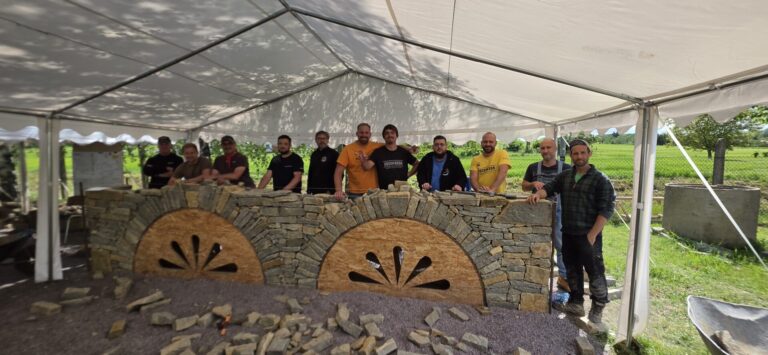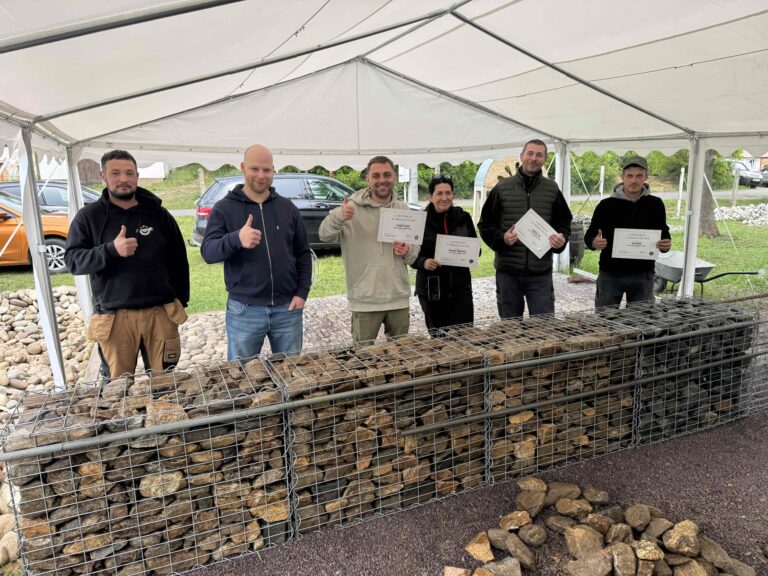


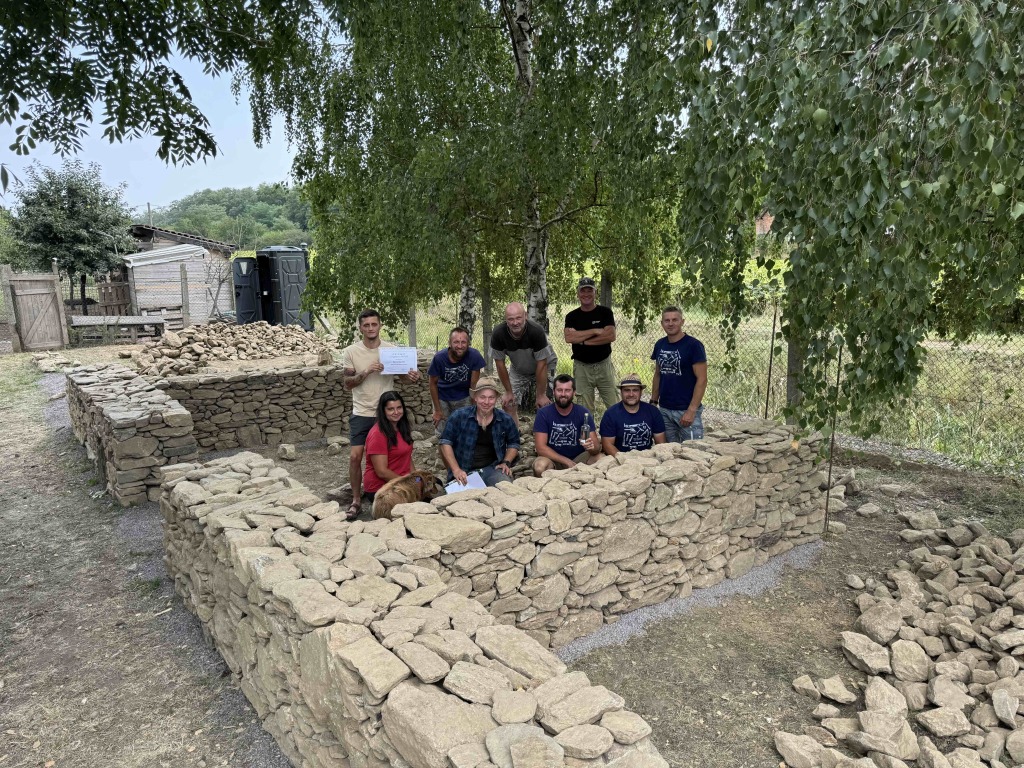
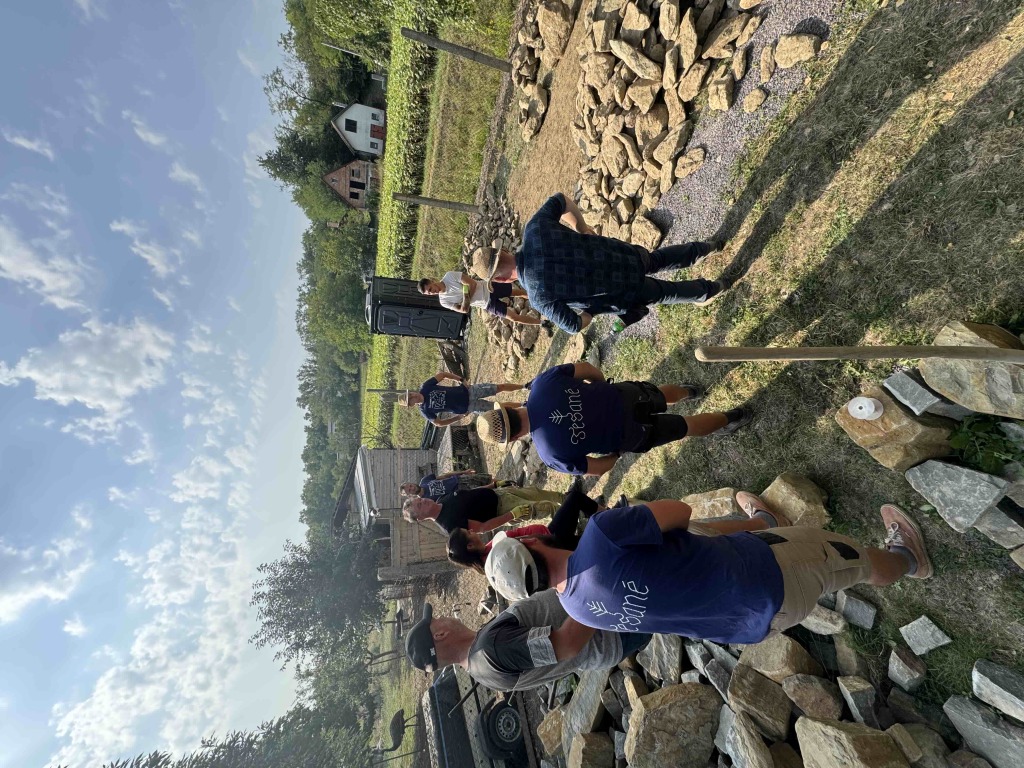
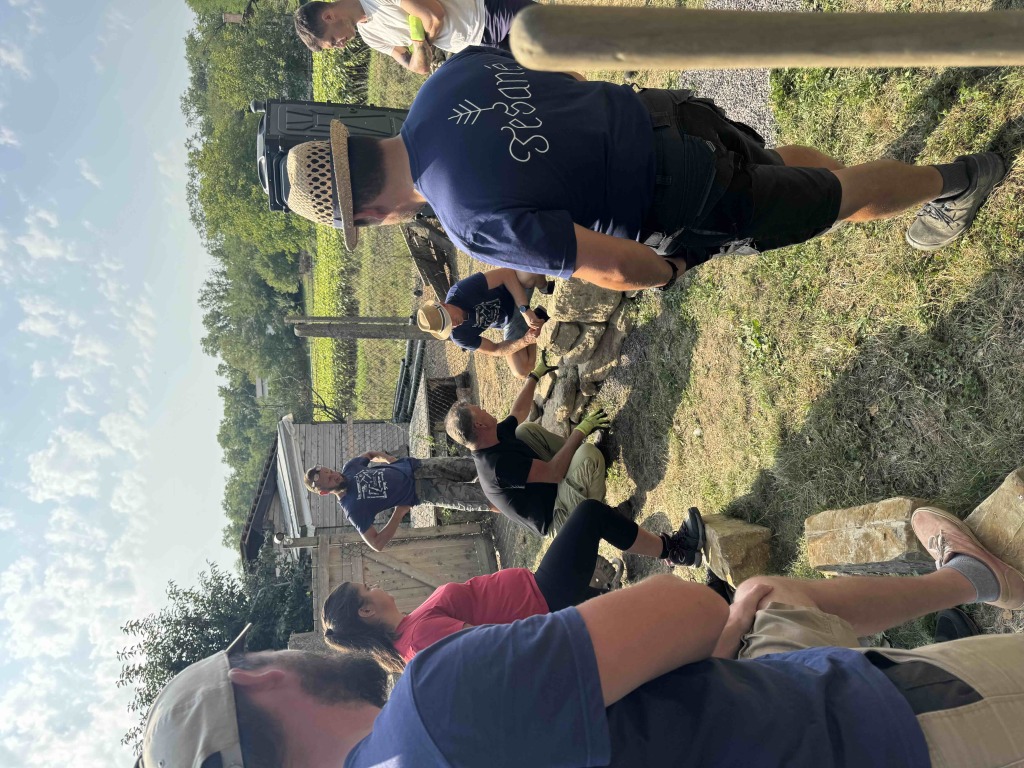
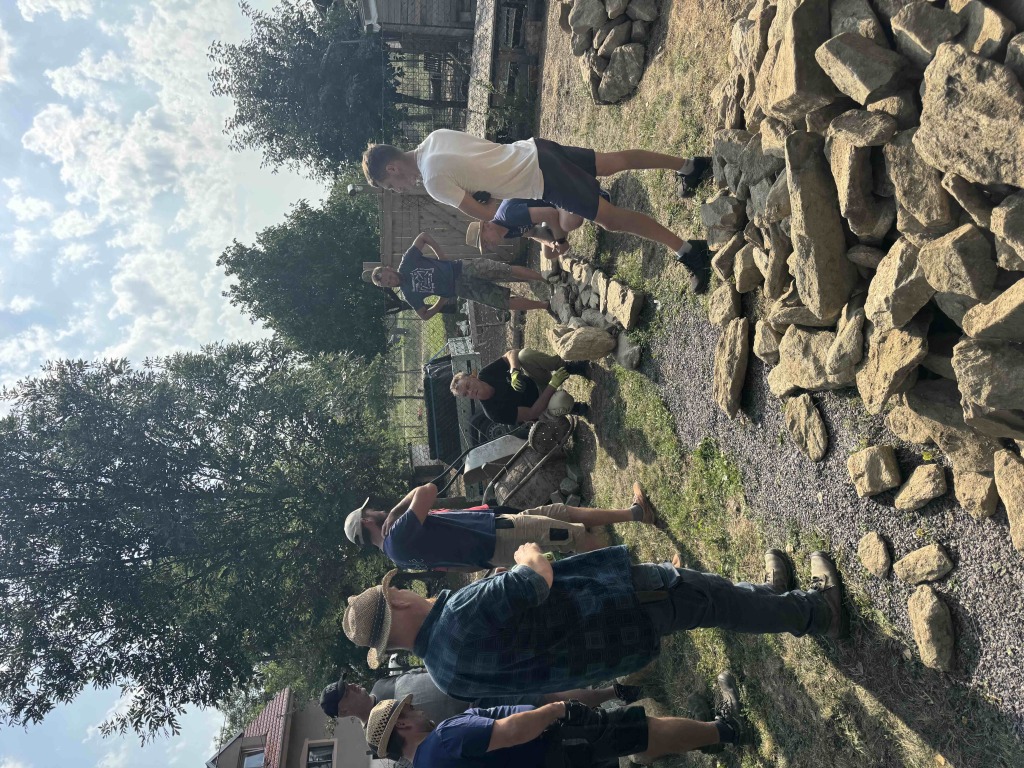
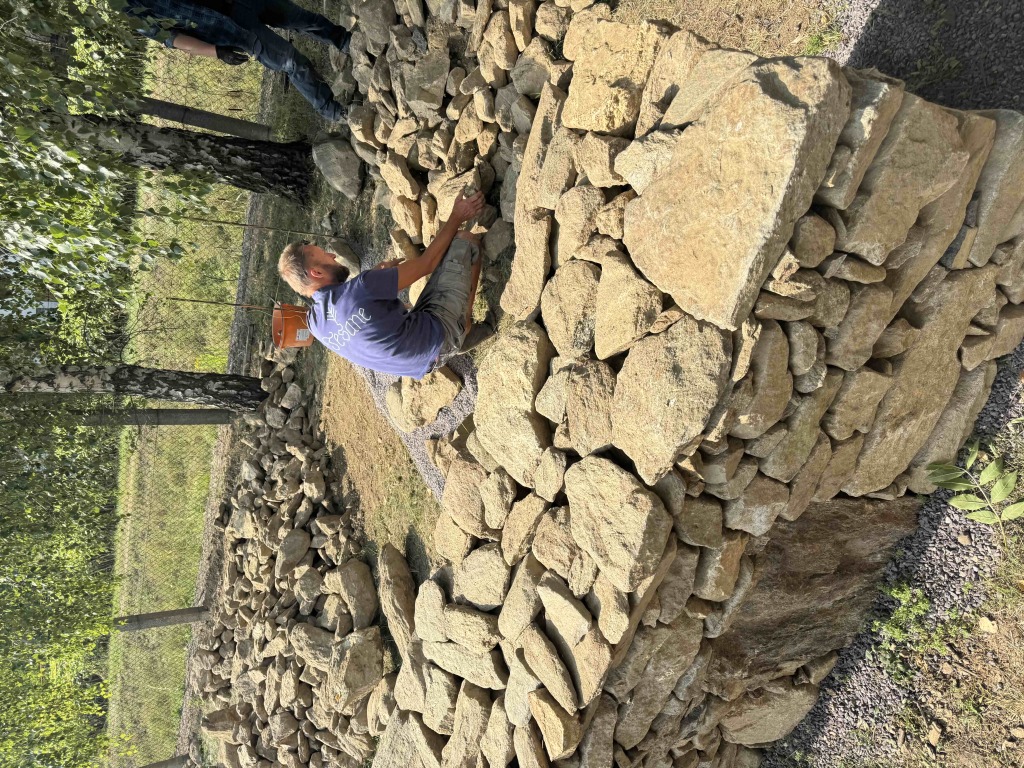
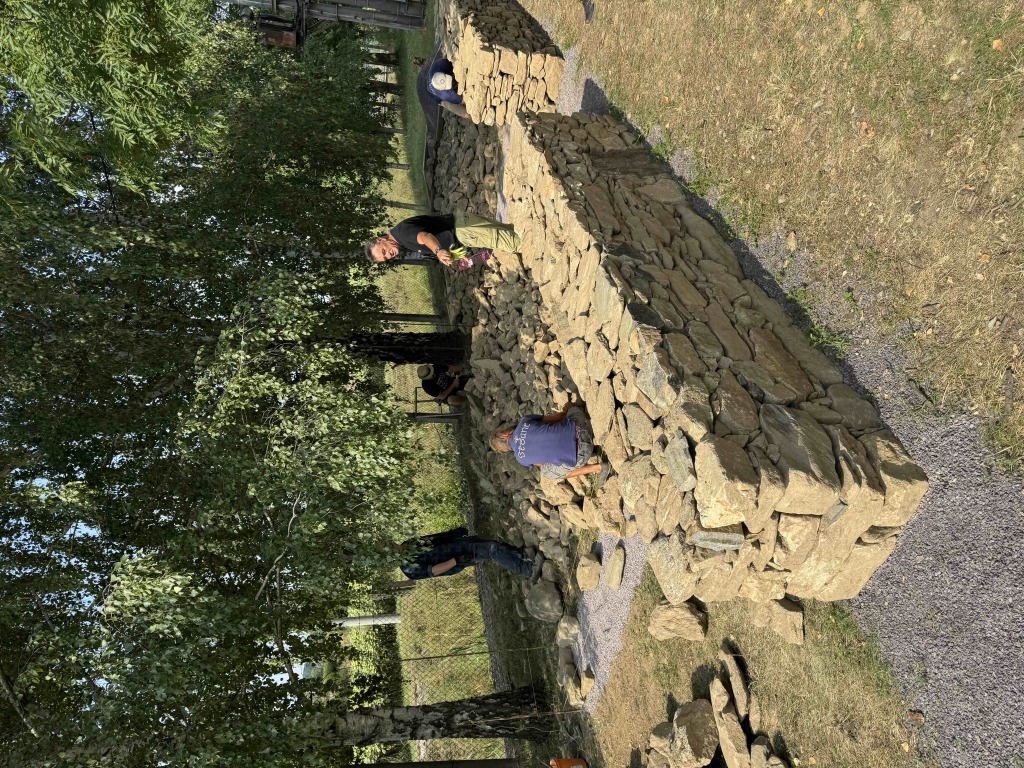
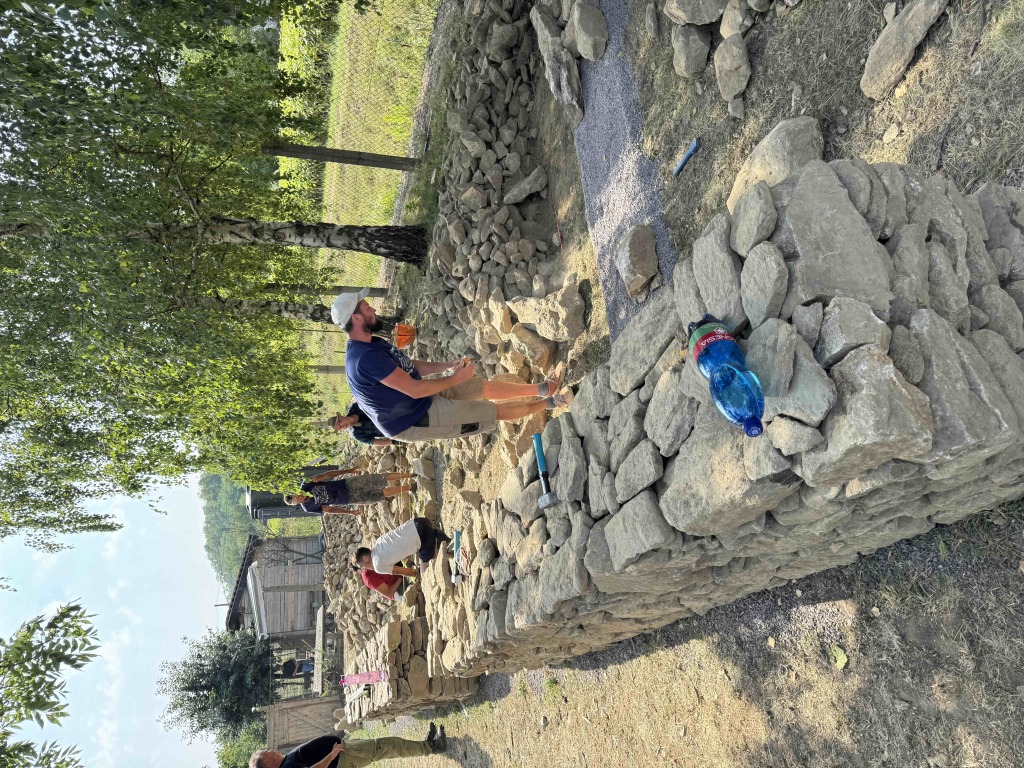
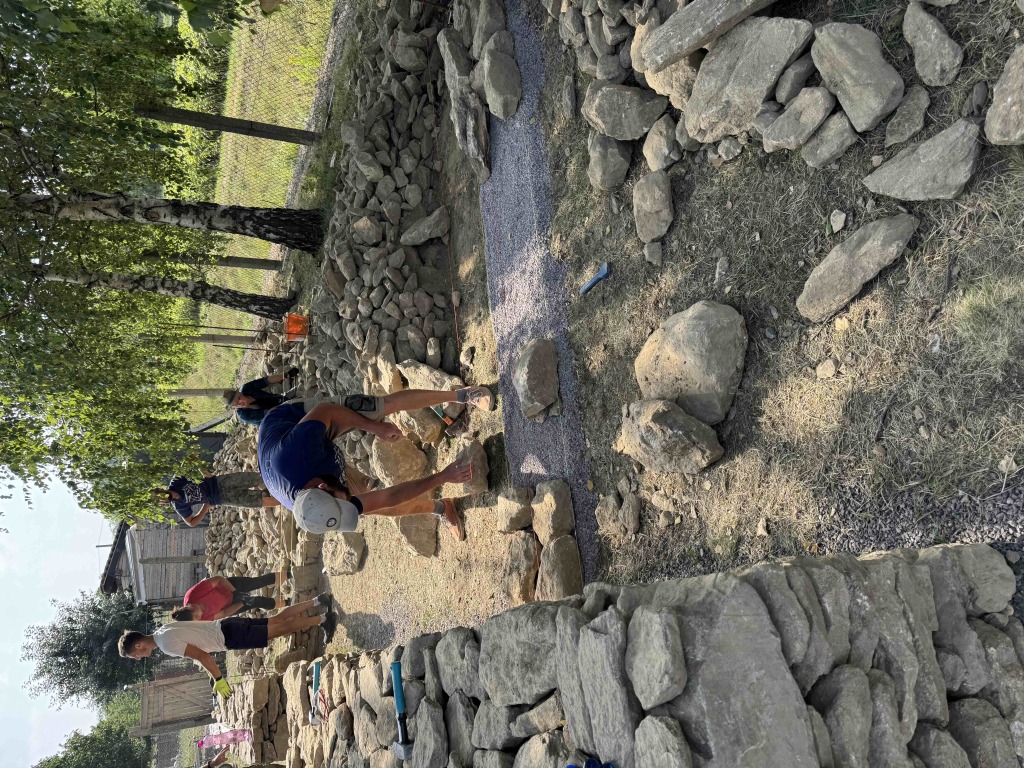
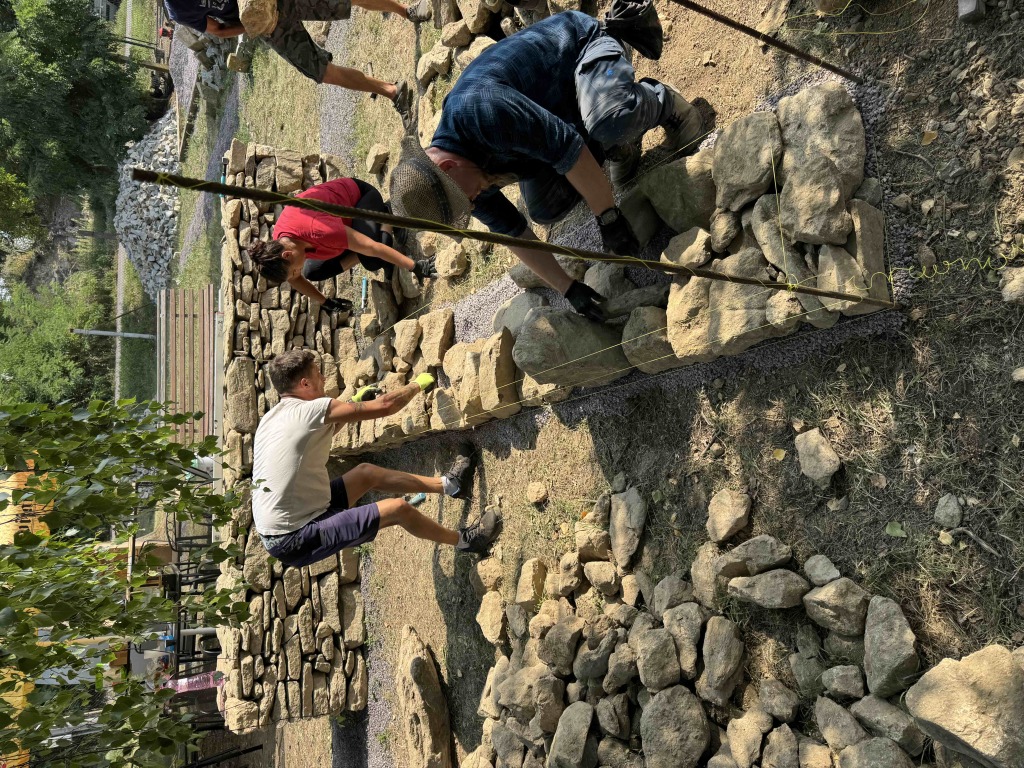
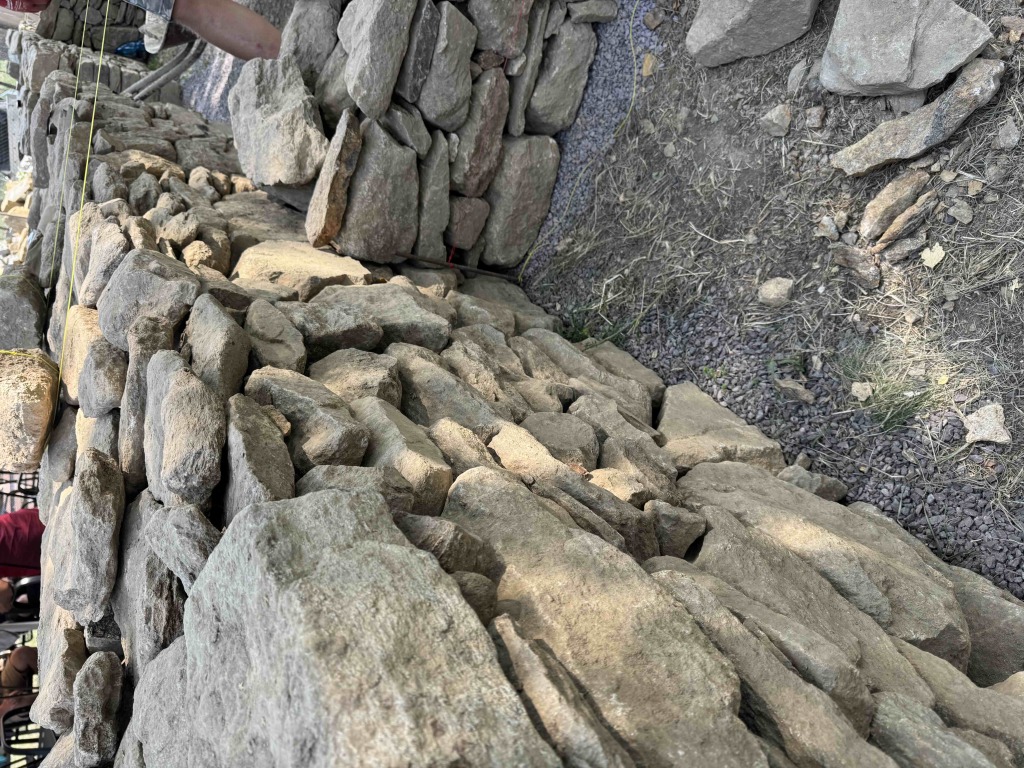
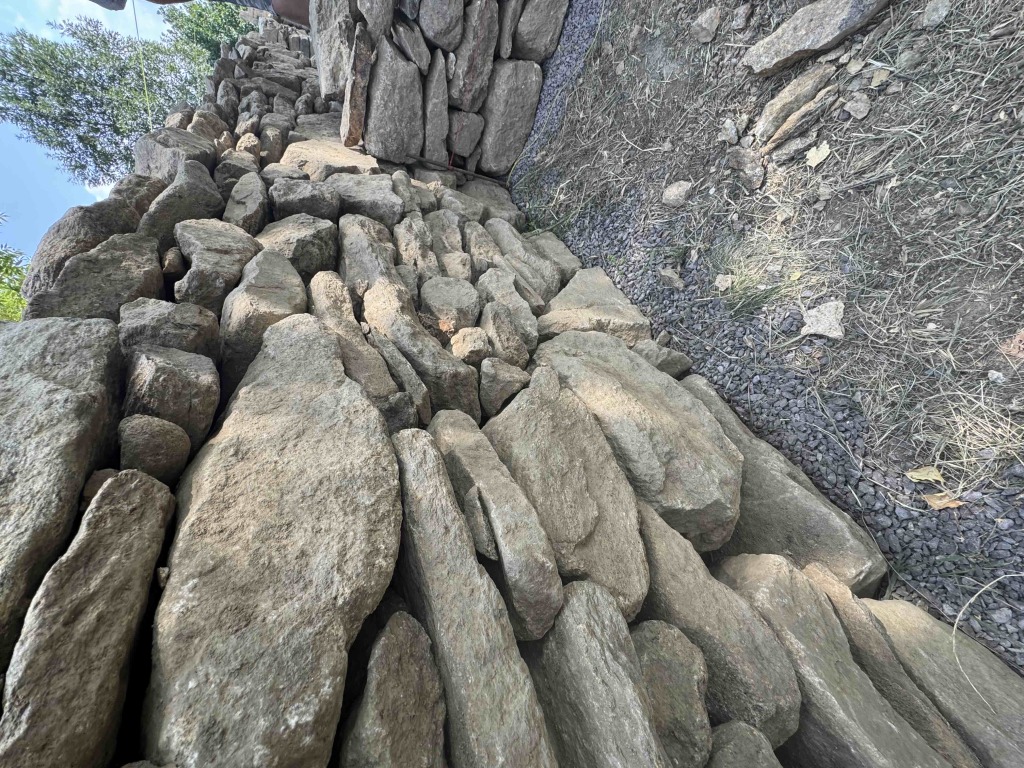
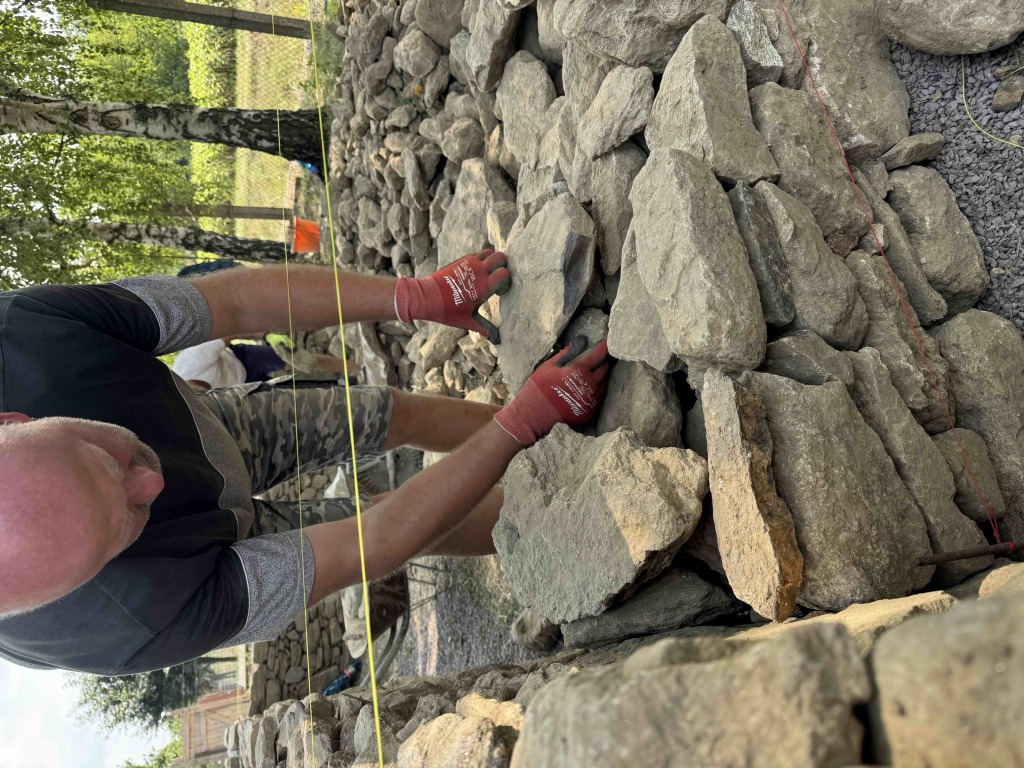
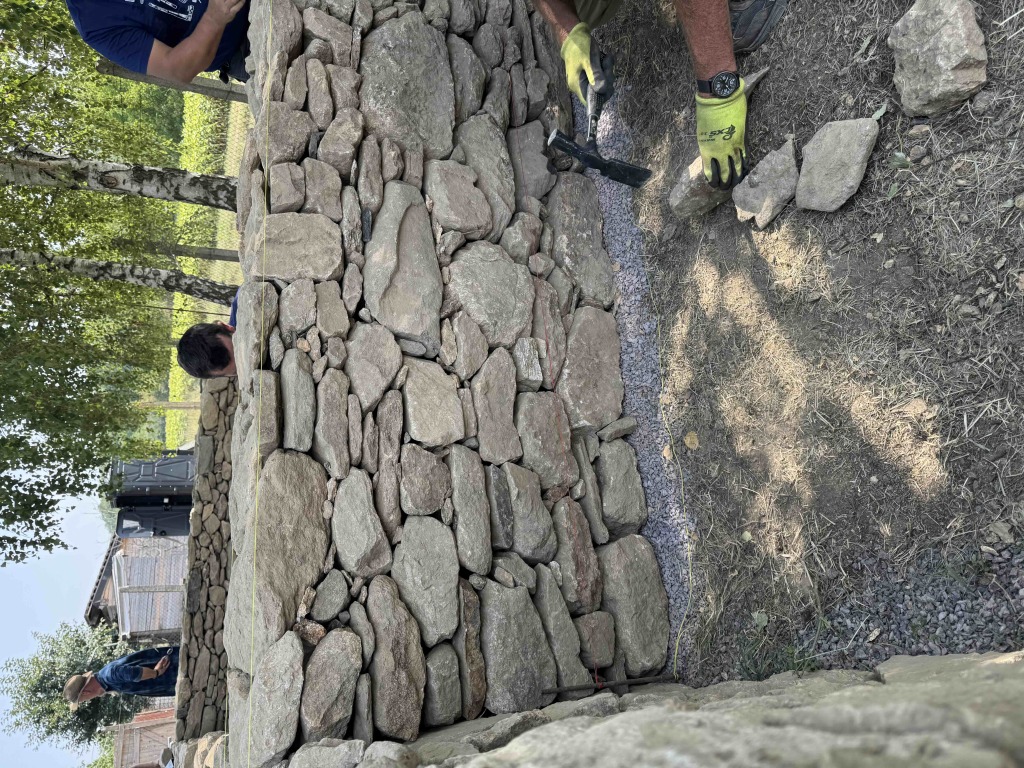
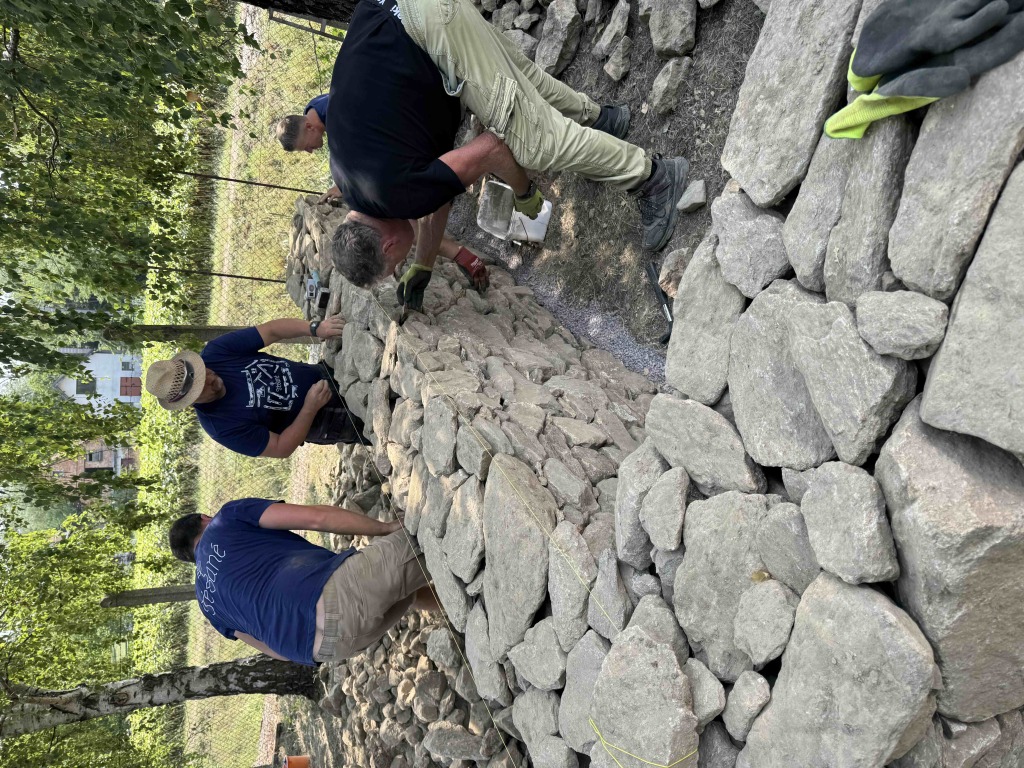
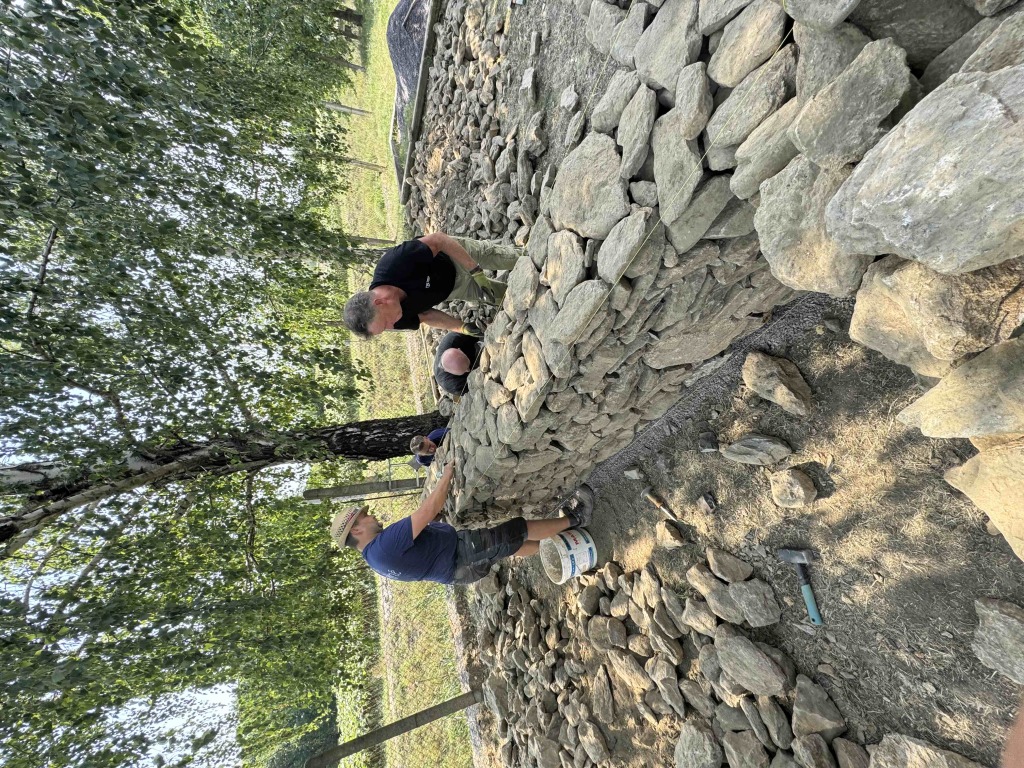
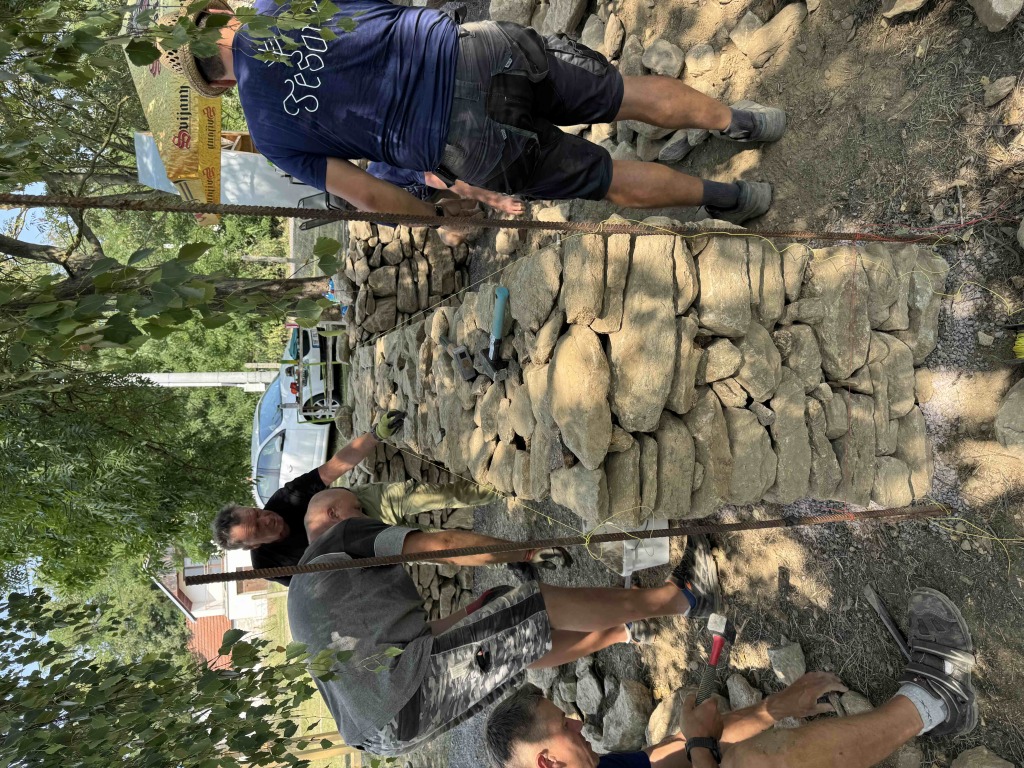
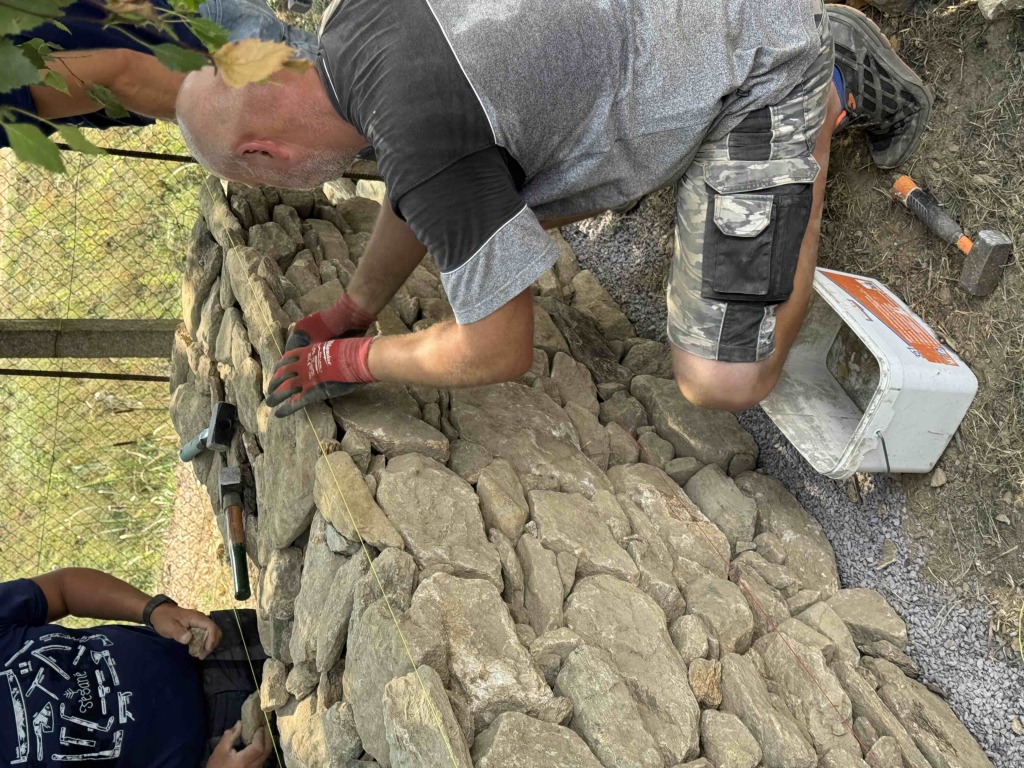
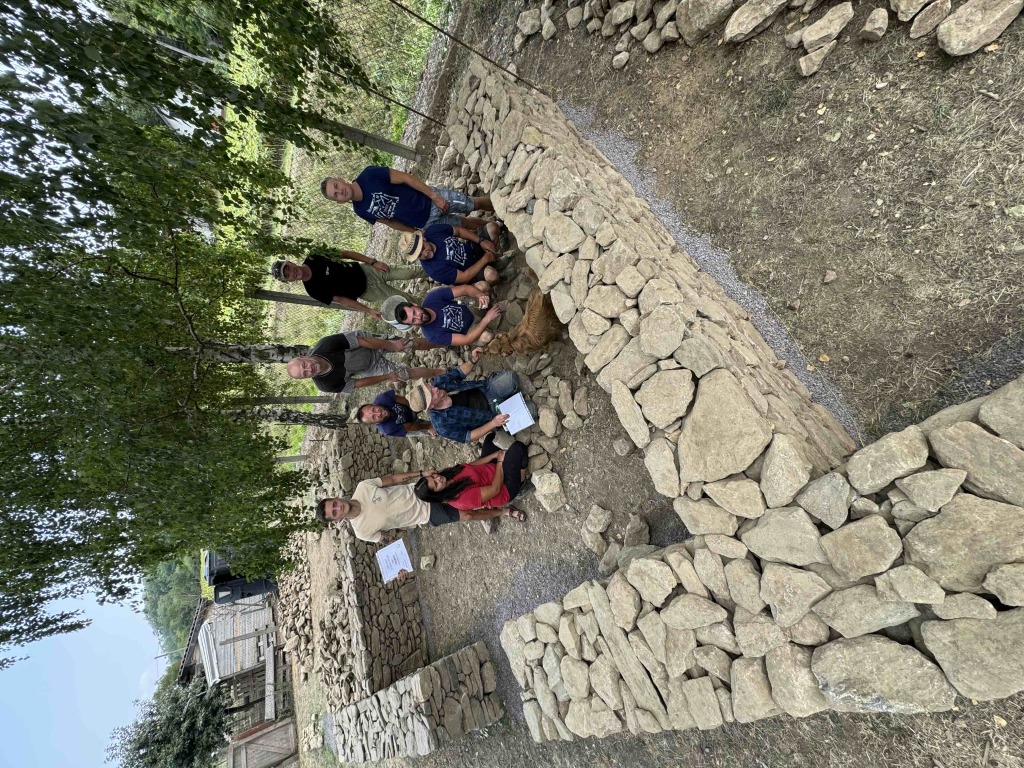
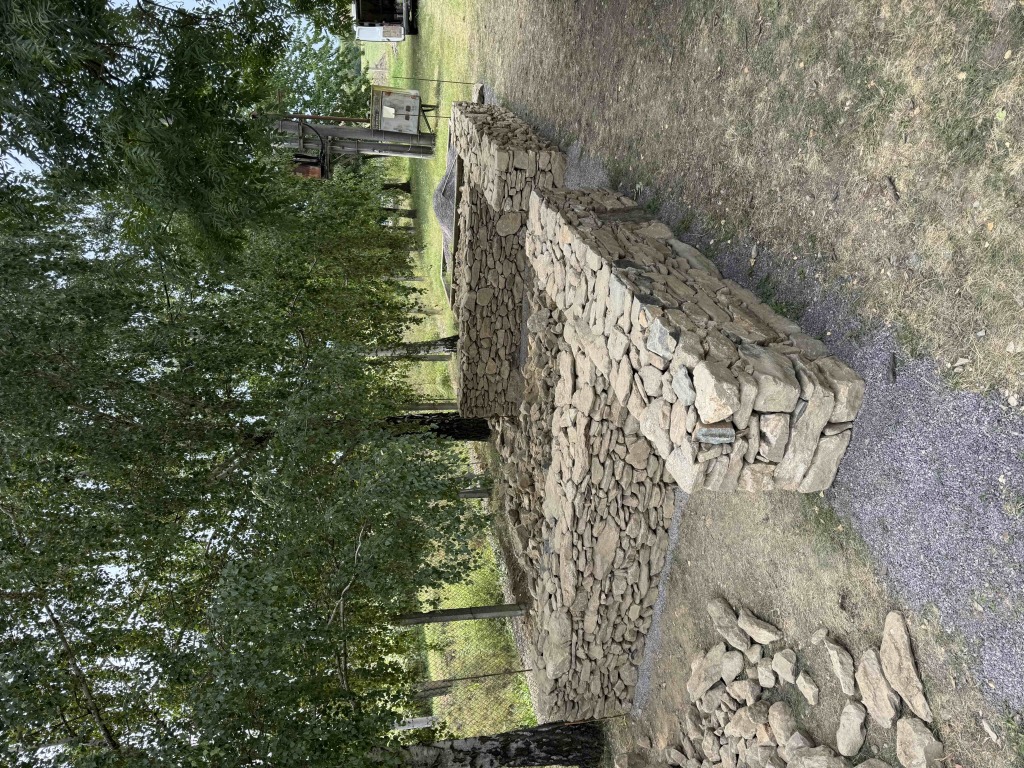
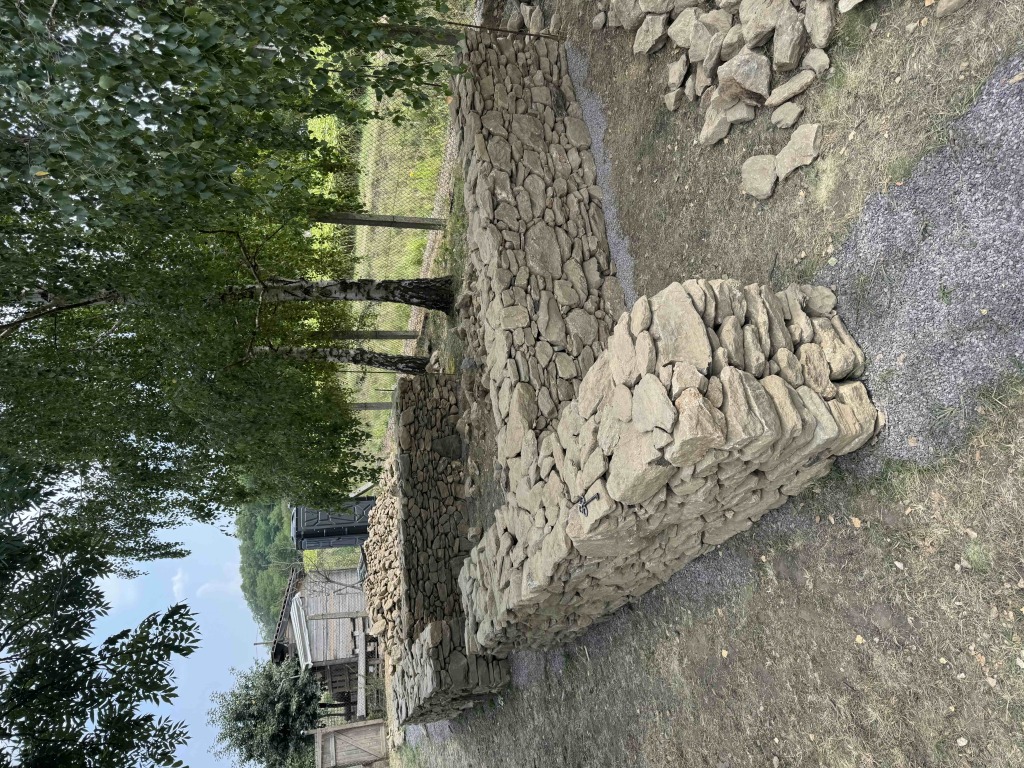
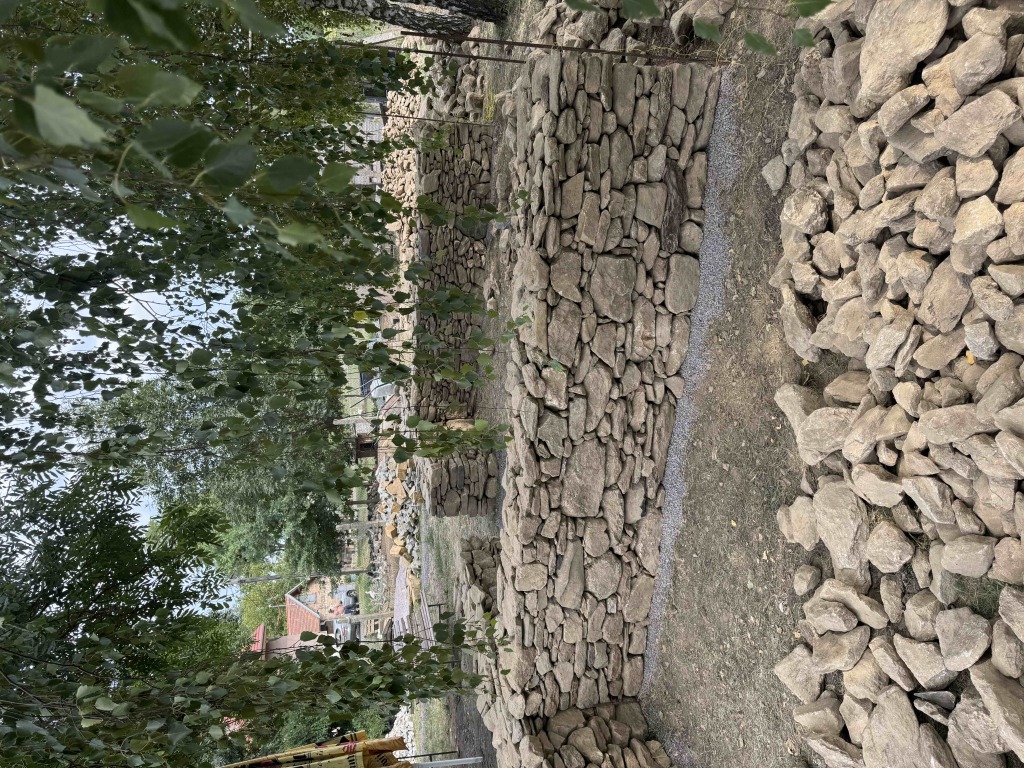
On 16 August 2025, we held our third dry stone walling course in Novosedly, South Moravia, Czech Republic. This group was particularly interesting because it brought together people with very different levels of experience and very different reasons for learning traditional stonework.
Among the participants were a team of professional carpenters, an experienced stonemason who had already been building stone walls for more than ten years, and a gardener interested in learning how natural stone could become part of her own work.
The day therefore became more than an introduction to building a wall. It showed how the same fundamental principles of dry stone construction can be useful in professional building work, garden design, reconstruction and completely independent personal projects.
Why a Team of Carpenters Came to Learn Stonework
A group of professional carpenters attended the course because they had encountered a very practical problem on one of their projects. They needed to create and work around an opening in a stone wall where a timber roof structure would connect with the masonry, but they did not have an experienced stonemason available.
Rather than relying entirely on external help, they decided to understand the principles themselves.
During the course, they focused particularly on:
- how natural stone should be selected and positioned within a wall,
- how stones should bond through the structure,
- how to maintain stability around openings and structural interruptions,
- how stone masonry interacts with adjoining timber construction,
- why loads should be transferred through the structure rather than concentrated on individual poorly supported stones.
Their reason for attending is a good example of why practical craft training can be useful even for experienced tradespeople. Knowing another material does not replace a specialist, but it makes it much easier to understand how different construction trades should meet and work together.
From Carpentry Courses to a Stonework Course
There was another interesting connection within the group. Several members of the team had originally met through different practical carpentry courses before later working together professionally.
It was a good reminder that hands-on courses are not only about learning an isolated technique. They can also bring together people who are genuinely interested in traditional crafts, create professional connections and lead to further cooperation long after the course itself has finished.
An Experienced Stonemason Joined the Course
One participant had already been building stone walls professionally for more than ten years. He had followed our work for some time and decided to come in person to see how we approach natural stone and practical teaching.
For us, this created an opportunity for professional discussion rather than one-way instruction. Different stonemasons often develop slightly different approaches according to the stone available locally, the type of structures they build and the experience they have gained on site.
Comparing techniques, discussing individual stones and explaining why a particular solution works is valuable even for someone who already has significant practical experience.
Is Dry Stone Walling Suitable for Women?
A gardener attending the course wanted to find out whether building dry stone walls was realistically manageable for women as well.
The answer is yes. Stonework is physical, but good dry stone construction is not based on brute strength alone. Much of the work depends on technique, patience, stone selection and understanding where a particular stone belongs.
Larger stones naturally require appropriate handling, but many of the most important decisions happen before a stone is ever lifted: reading its shape, identifying its strongest face, choosing its position and understanding how it will interact with the stones around it.
This makes the course suitable for both women and men who are comfortable with practical outdoor work and want to learn the craft step by step.
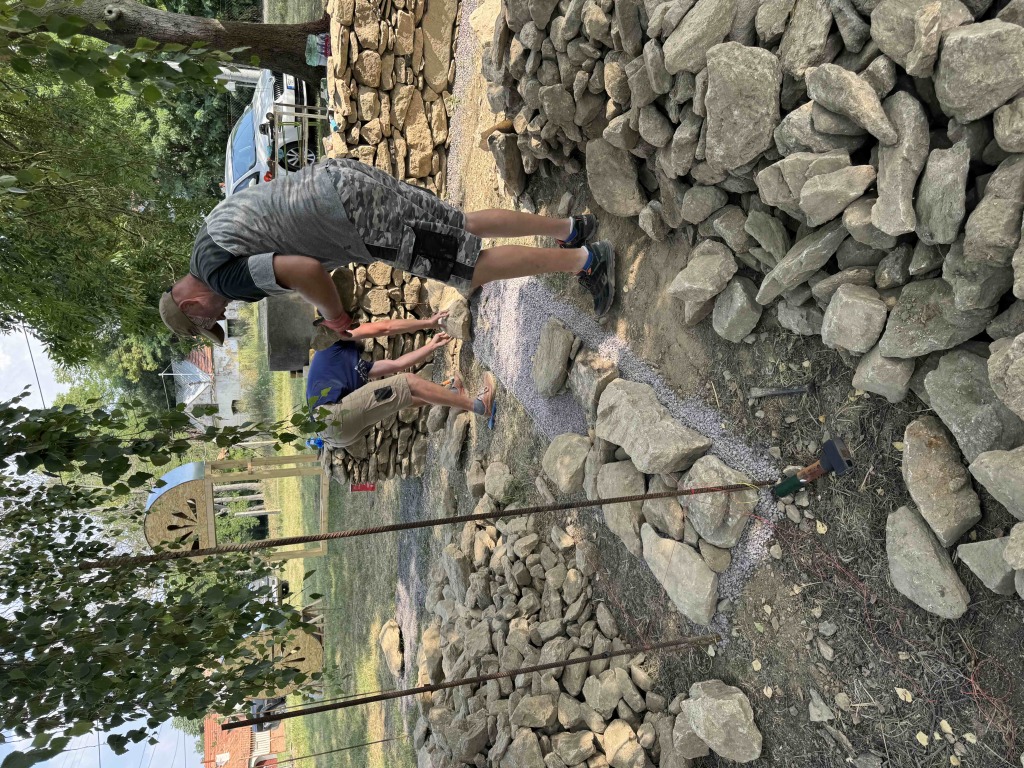
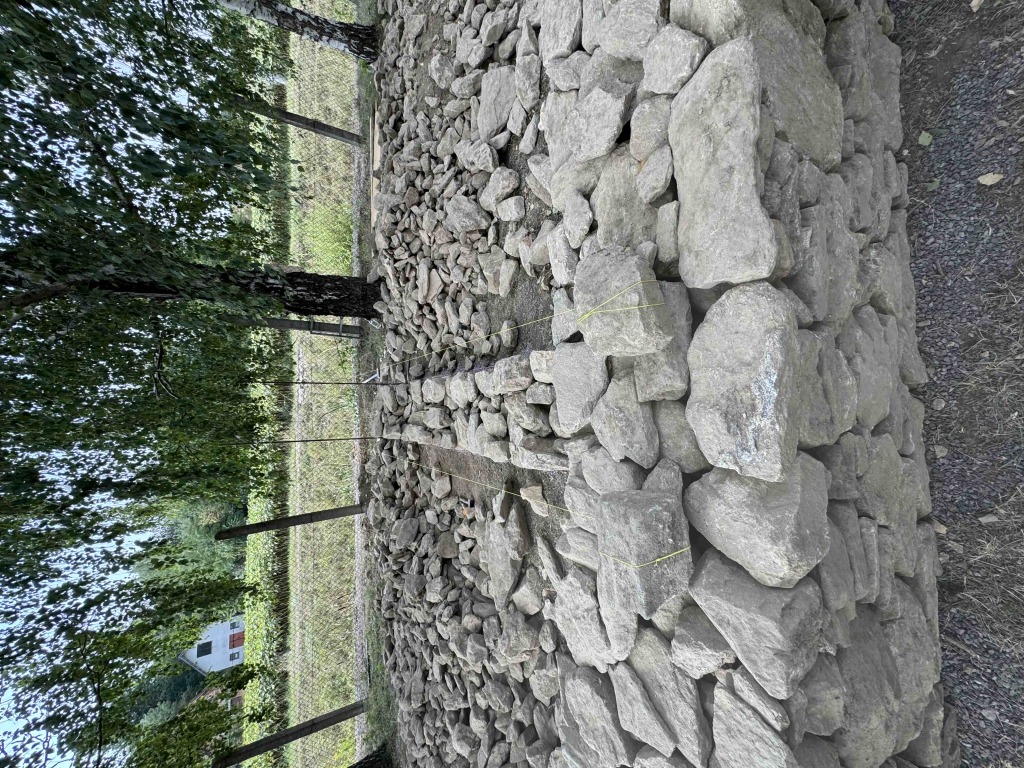
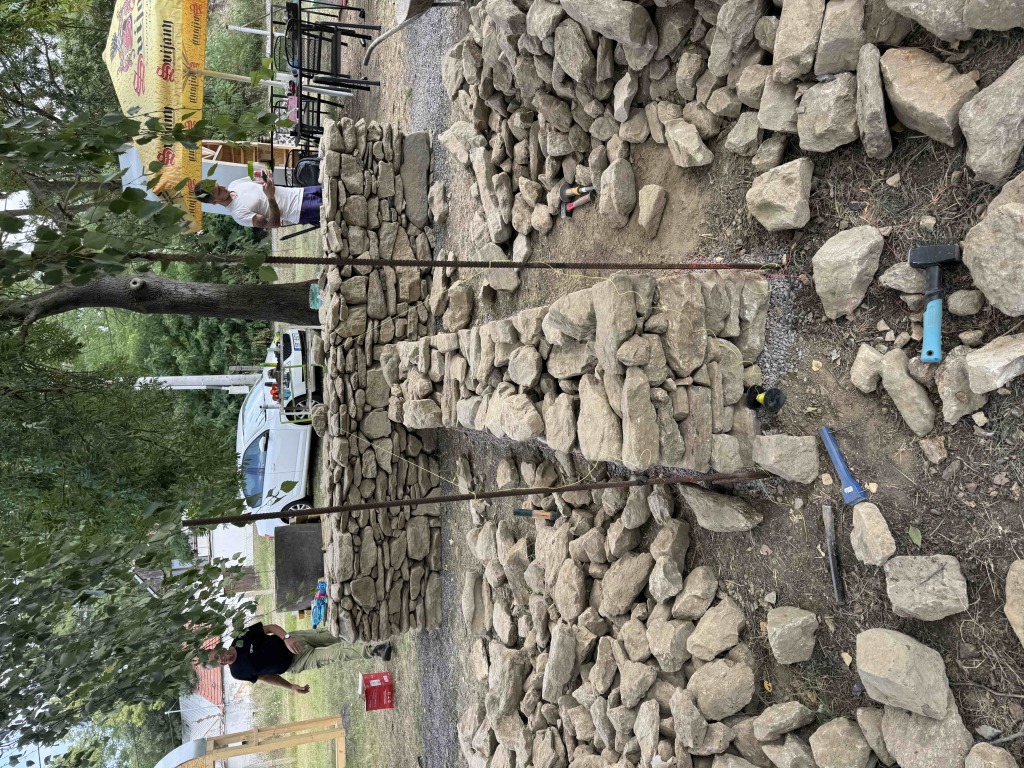
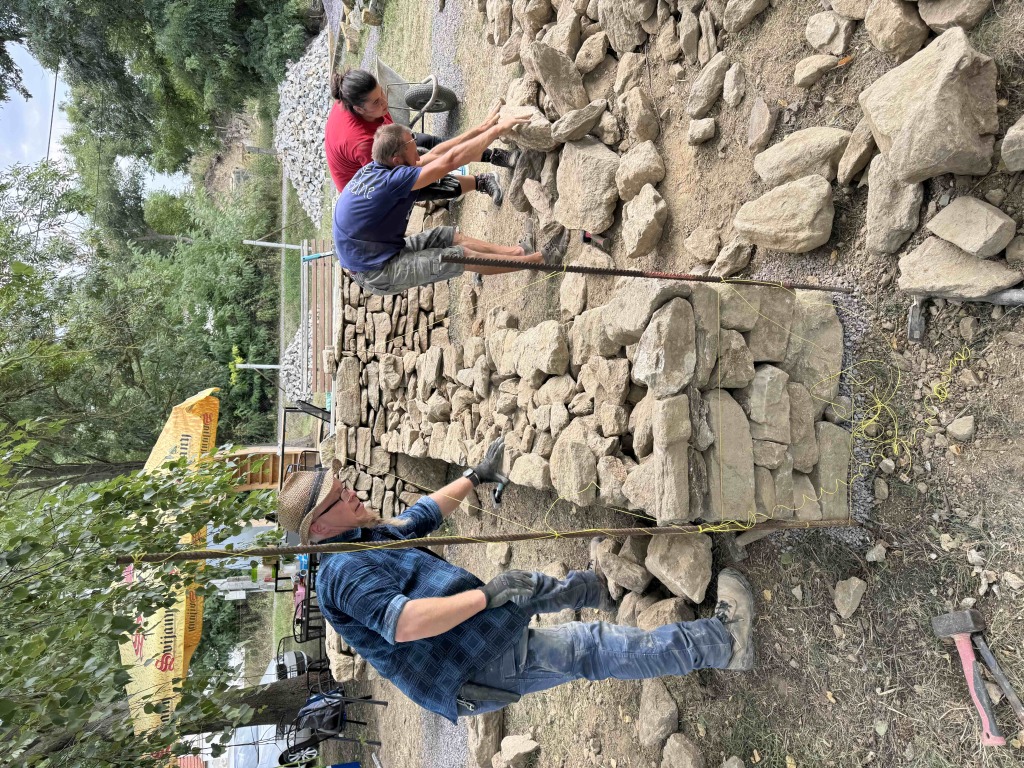
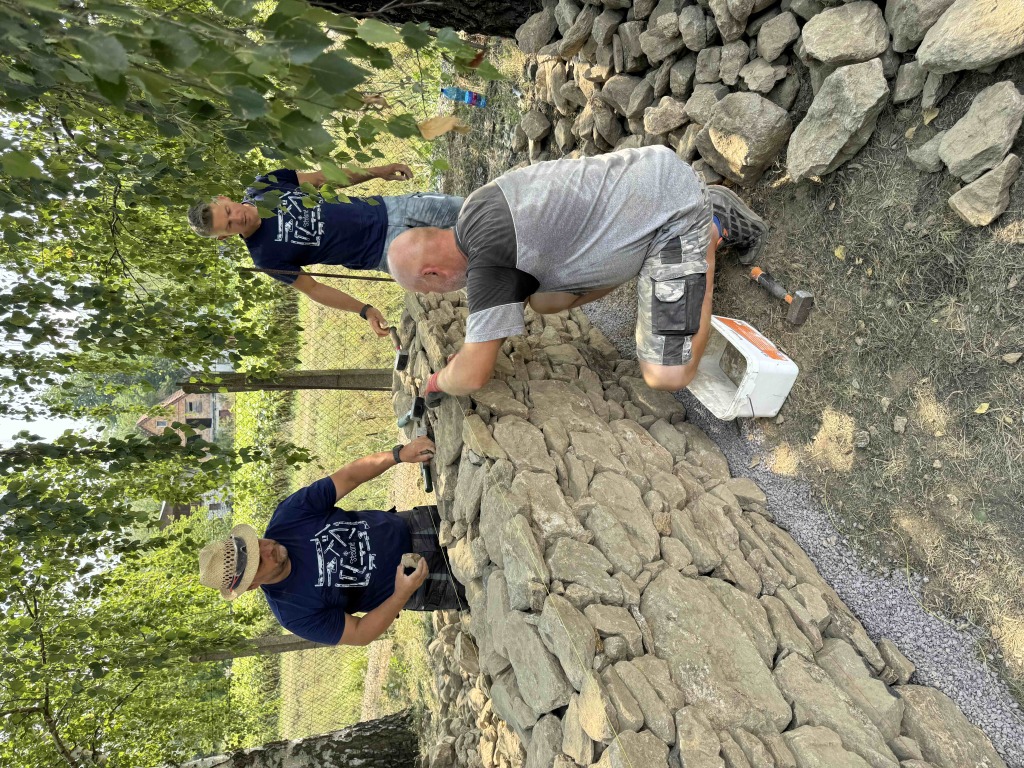
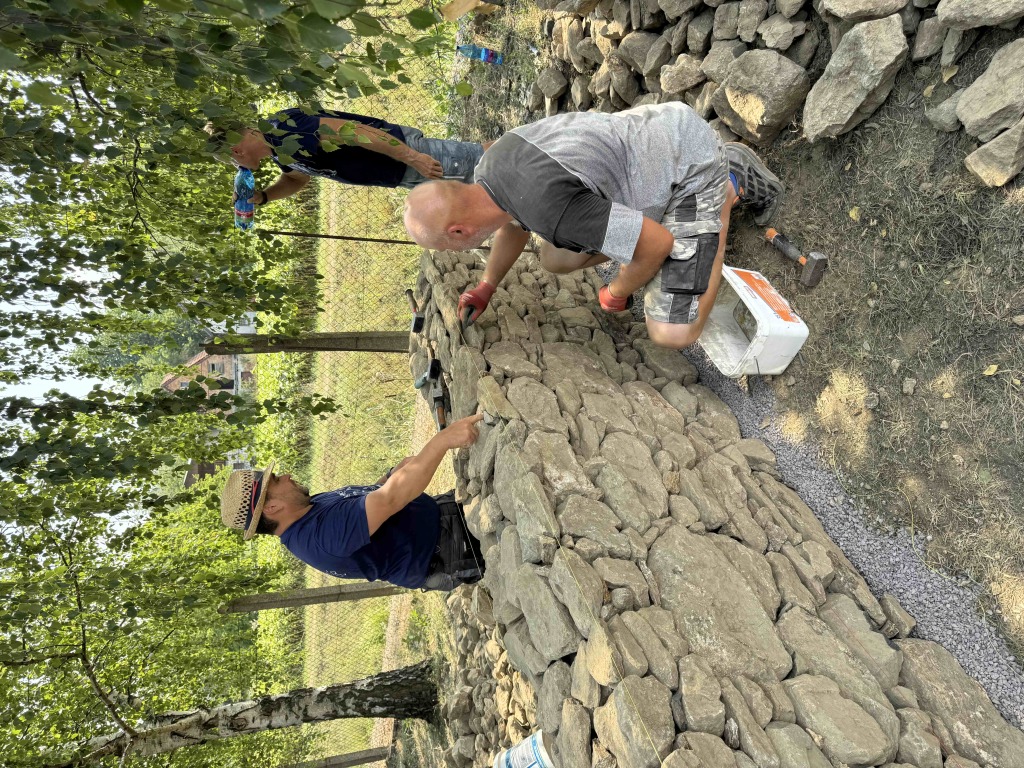
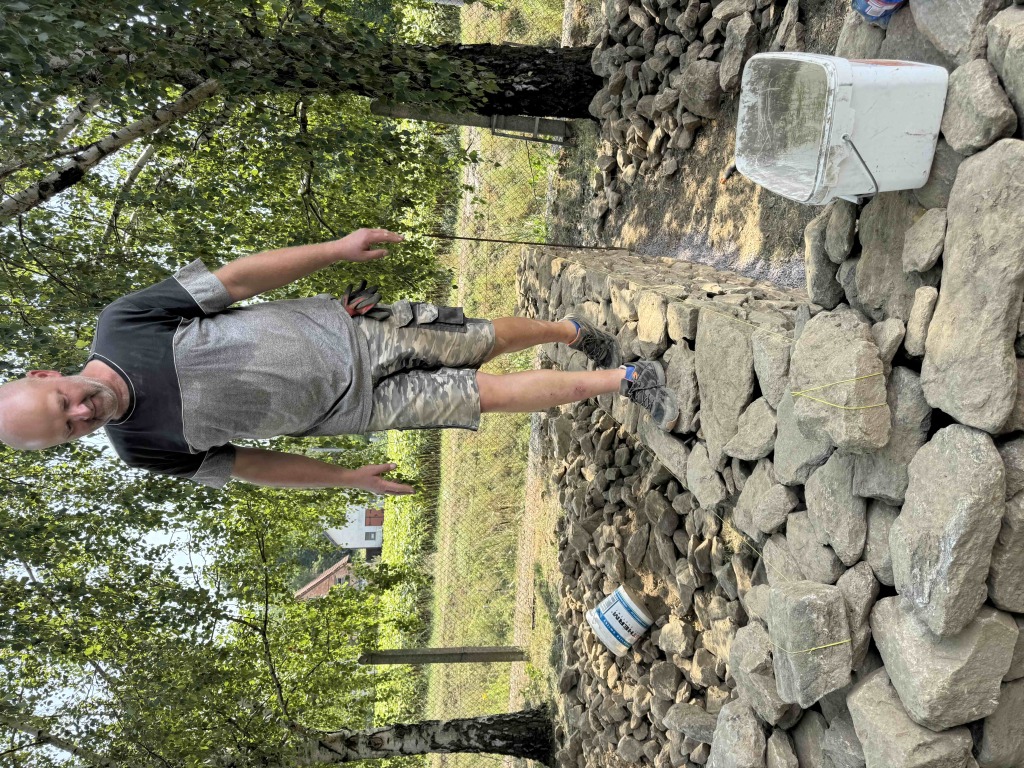
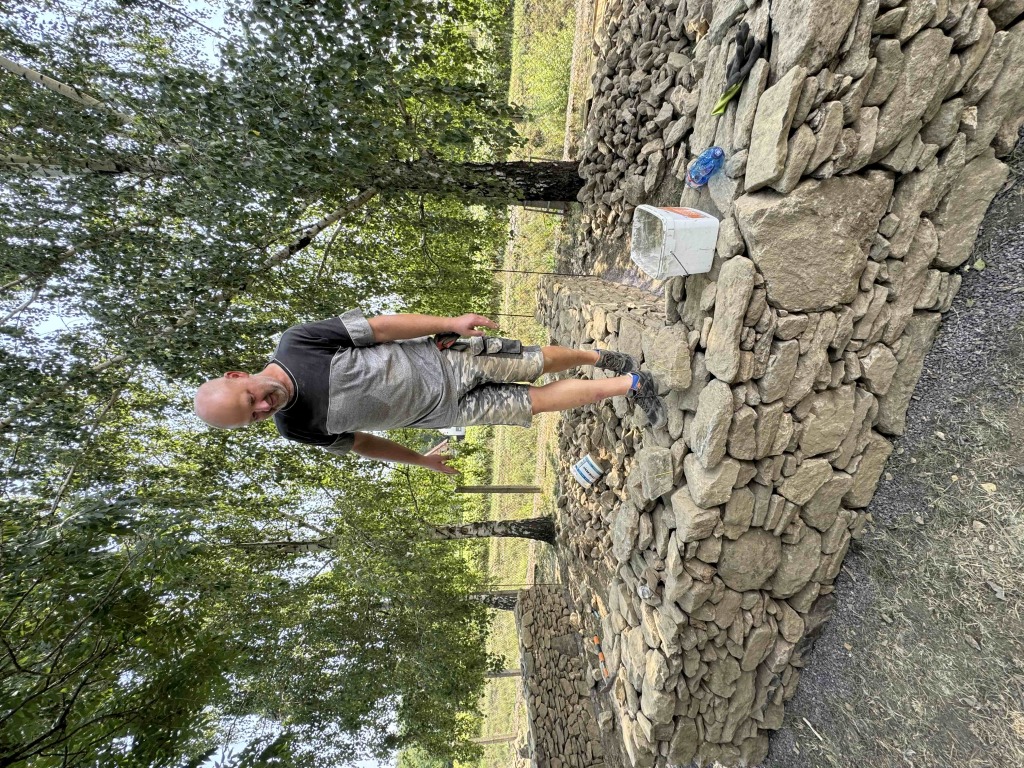
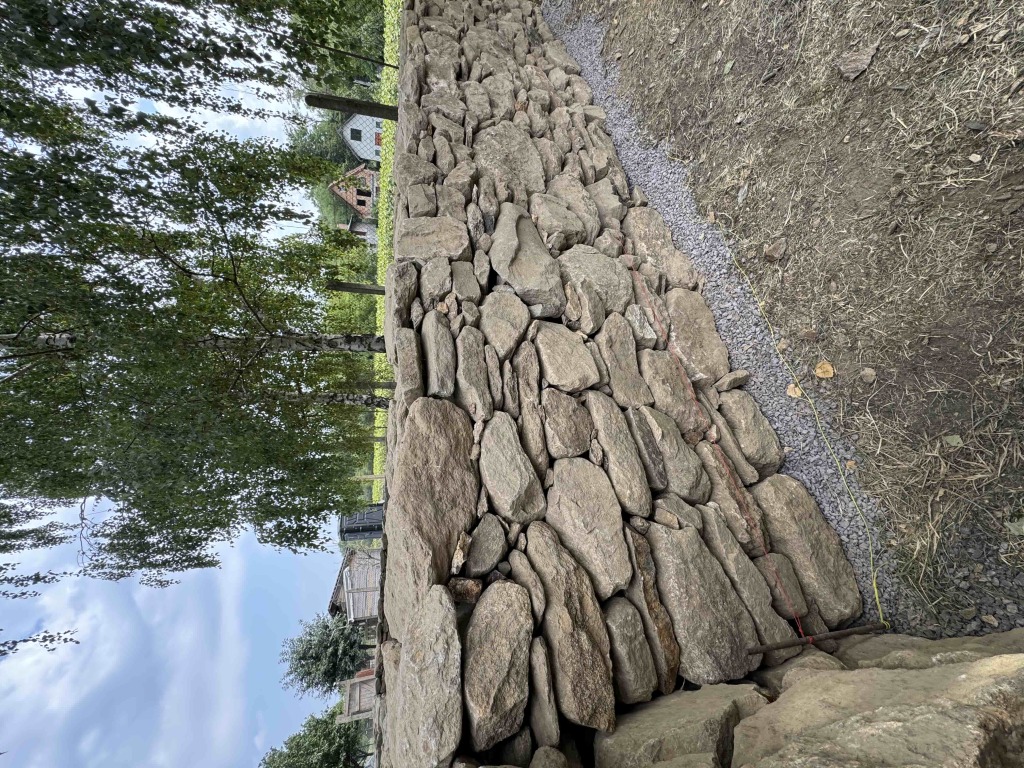
What This Course Demonstrated
The third course demonstrated how widely the principles of dry stone walling can be applied. They are relevant to garden walls and landscaping, but also to reconstruction work and projects where stone masonry needs to connect with other traditional building materials such as timber.
The group ranged from experienced professionals to someone exploring stonework from a completely different field. That mixture made the course especially valuable because questions were not theoretical – they came directly from real projects and practical experience.
Whether someone is a carpenter, gardener, experienced stonemason or complete beginner, the same basic principle applies: before you can build well with natural stone, you have to learn how to read the stone and understand the structure.
👉 Learn the principles yourself on our Dry Stone Walling Course, or view all practical stonework courses and available dates.
Who Is Behind This Article