


Home › Stonework Tips & Techniques › Marlstone (Opuka): Properties, Uses, Stoneworking and Masonry
Marlstone (Opuka): Properties, Uses, Stoneworking and Masonry
Not all opuka behaves the same. Stone from different locations can vary considerably in hardness, bedding, durability and workability, which is why successful masonry begins with assessing the individual stone rather than relying on the rock name alone.
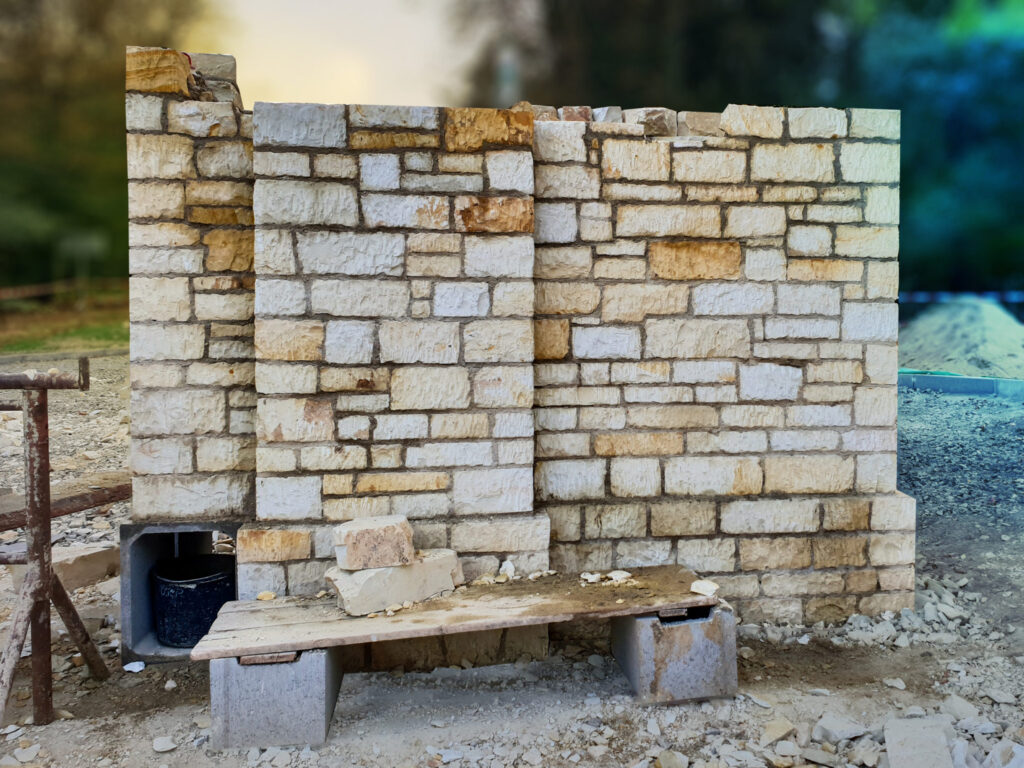
Marlstone, traditionally known in the Czech Republic as opuka, has been used as a building stone for centuries. Its hardness, structure, water absorption and workability can vary significantly depending on the quarry and geological origin. For that reason, it is not enough to know that a stone is “opuka” – the individual material should be assessed before deciding how and where it can be used.
In practice, marlstone can be found in old masonry, historic buildings, exposed stone walls and restoration work. In this guide, we look at what opuka is, how it behaves, how it can be worked by hand, how it should be placed in masonry and which common mistakes should be avoided.
What Is Marlstone (Opuka)?
Opuka is a fine-grained sedimentary rock. Its composition can include clay and silt-sized material, calcium carbonate, quartz and biogenic silica, including material derived from microscopic marine organisms.
It should not be treated as a stone with one universal set of properties. Marlstone from different locations can behave very differently. Some varieties are relatively easy to shape, while others may be harder, more strongly bedded or more sensitive to water and frost.
| Property | What It Means in Practice |
|---|---|
| Rock type | Fine-grained sedimentary rock |
| Colour | Often grey, light grey, beige or yellowish depending on origin |
| Structure | Can be fine, layered and variable in cohesion |
| Workability | Some varieties are very workable, but the behaviour of the individual stone must always be assessed |
| Traditional uses | Stone masonry, historic buildings, architectural details, restoration and stone carving |
| Outdoor use | The quality and condition of the individual stone need to be assessed rather than relying only on the name “opuka” |
How Did Opuka Form?
The material that eventually became opuka was deposited on an ancient seabed. Fine mineral particles mixed with calcareous and siliceous material and with the remains of marine organisms.
As these sediments consolidated, they formed the rock now known in the Czech lands as opuka.
The differences in composition and depositional conditions are one reason why its properties vary from one locality to another. For practical stonework, it is therefore often more important to read the individual stone than to rely only on the geological name.
Where Has Opuka Been Used?
Opuka has a long history in Czech construction, particularly in regions where suitable stone was available from local quarries.
One of its best-known historic uses is in Prague, where marlstone was an important building material during the Romanesque period.
The Czech Geological Survey also records an opuka quarry at Přední Kopanina, where the locally known Bílá Hora marlstone was historically used as an important building stone.
Opuka as a Building Stone
Marlstone can be found in houses, churches, urban buildings, fortifications and agricultural structures. Local availability and, in suitable varieties, good workability made it an important regional building material.
Opuka in Stone Carving
Finer and sufficiently cohesive varieties of opuka were also used for architectural details and stone carving.
Not every piece behaves in the same way, however. Before fine shaping begins, it is useful to understand how the stone reacts to impact and in which direction it naturally tends to split.
Is Marlstone Suitable for a Stone Wall?
Yes. Good-quality marlstone can be a very useful building stone. Its suitability depends on the individual material, its condition, the type of construction and the way it is placed.
Stone removed from a dry interior wall presents a different situation from material that has spent decades exposed to water and frost and already shows surface deterioration.
It is therefore not appropriate to assume that every piece of opuka is equally suitable for every outdoor application.
What to Check before Reusing or Building with Opuka
- whether the stone is crumbling or separating along layers,
- whether it has a usable natural bed,
- how it reacts to hand working,
- whether it is significantly weathered or degraded,
- what type of construction it will be used in,
- how much water and weather exposure the finished structure will receive.
How to Build Masonry with Marlstone
The same fundamental principles apply to marlstone as to other types of rubble stone masonry: each stone needs to sit securely, the stones need to bond with one another and the wall must work as one complete structure.
A common beginner mistake is to concentrate only on the visible face. A stone can look excellent from the front while being poorly positioned inside the wall. An attractive face alone cannot compensate for weak internal construction.
1. Examine the Stone before Shaping It
Before reaching for a hammer, turn the stone and inspect it from several sides. Look for a surface on which it can sit securely, a suitable visible face and sufficient depth to engage properly with the wall.
2. Look for a Natural Bedding Surface
A stone should not balance on only a few unstable points. Position it so that it has secure bearing and does not rock under load.
3. Break Up Vertical Joints
Vertical joints should not continue unnecessarily through several courses. Individual stones should help connect neighbouring parts of the masonry and create effective bonding.
4. Think about the Full Depth of the Wall
A stone wall is not stone cladding. Stones visible on the face should also be part of the structure, and the wall needs to be correctly assembled behind the visible surface.
5. Shape Only What Needs Shaping
The aim is not to turn every natural stone into a regular block.
First try to use the stone’s natural shape. Hand working should come later, when a projection needs to be removed, a bearing surface improved or a more suitable visible face created.
Want to Learn How to Work with Natural Stone?
On our practical Dry Stone Walling Course, participants work directly with irregular natural stone. You learn how to read the shape of a stone, find a stable bedding surface, create proper bonding and shape the material only where it is actually necessary.
Dry Stone Walling with Opuka
If the individual stones have suitable quality and shape, marlstone can also be used in dry stone masonry built without mortar.
In a dry stone wall, mortar cannot compensate for poor stone placement. Stability comes from the way the stones are seated and bonded, their mass and the geometry of the complete structure.
Building Marlstone Masonry with Mortar
Opuka has also traditionally been used in mortared stone masonry.
Here again, a large quantity of mortar should not be used to compensate for badly positioned stone.
The stone should first be correctly seated and bonded within the masonry. The mortar then fills the joints and contributes to the behaviour of the wall according to the particular masonry system.
When repairing older masonry, the choice of mortar should also take the existing stone, construction and original masonry character into account rather than being based only on the fact that the wall is built from opuka.
How Do You Work Marlstone by Hand?
Workable varieties of marlstone can allow relatively precise manual shaping. The result still depends on the structure of the individual stone, the direction of its bedding and the experience of the person working it.
Common tools for shaping building stone include stonemasonry hammers, mallets and different types of stone chisels. The tool is selected according to whether the aim is to make a rough adjustment, remove a projection or refine a particular surface.
Read the Stone First, Cut It Second
This principle saves a considerable amount of time when working with natural stone.
A beginner may select the first available stone and try to force it into the required shape. A more efficient approach is the opposite: first find a stone that naturally suits the position and then make only the adjustments that are genuinely necessary.
Common Mistakes When Building with Opuka
| Mistake | Consequence | Better Approach |
|---|---|---|
| Choosing stone only according to the visible face | Unstable placement inside the wall | Assess the complete shape of the stone |
| Long continuous vertical joints | Weaker bonding through the masonry | Break up joints between courses |
| Using too many small packing stones | More complicated construction and potentially poorer stability | Prioritise well-selected main stones |
| Compensating for a poor stone with excessive mortar | Mortar replaces correct stone placement | Adjust or replace the stone first |
| Shaping every stone unnecessarily | Extra work and unnecessary waste | Use the natural shape wherever possible |
| Ignoring the condition of reclaimed opuka | Degraded stone may be reused in an unsuitable location | Inspect each stone before reuse |
Repairing Old Marlstone Masonry
When repairing an old opuka wall, do not automatically begin by removing all of the existing mortar joints.
First determine the condition of the stone itself and how the wall was originally constructed.
- check whether stone surfaces are flaking or separating,
- look for loose or moving stones,
- assess the depth and extent of mortar deterioration,
- check whether water is entering the construction,
- only then decide how much repointing or rebuilding is actually necessary.
With historically important masonry or more extensive deterioration, the repair method should not be determined only from the appearance of the surface. The complete condition of the structure needs to be considered.
When Should an Old Opuka Wall Be Professionally Assessed?
DIY repair is most appropriate for local and structurally straightforward work where the construction and the cause of deterioration are understood.
Professional assessment becomes more important when the wall is leaning, significantly cracked, individual stones are moving, the problem appears to involve foundations or water, or the building has historic value.
In these situations, simply applying new mortar to the joints does not address the underlying cause.
Types of Marlstone Masonry
Different masonry characters can be created according to the shape of the stone and the amount of working it receives. Traditional construction can include rubble masonry, more regularly coursed masonry, dressed blocks and other specific arrangements.
For practical construction, however, the terminology is less important than good bonding, stable stone placement and an appropriate structural solution.
Marlstone (Opuka) at a Glance
- Opuka is a sedimentary rock with a long tradition of use in Czech construction.
- Its properties can vary significantly according to origin.
- Suitable varieties can offer good workability.
- Correct stone placement and bonding matter more than the appearance of the visible face alone.
- Marlstone can be used in mortared masonry and, where the material is suitable, in dry stone construction.
- Before repairing old masonry, assess the condition of the stone, mortar and the underlying cause of deterioration.
Frequently Asked Questions about Opuka
What is opuka?
Opuka is a fine-grained sedimentary building stone containing clayey, calcareous and siliceous components. It has been used for centuries in the Czech lands. Its exact properties vary according to its geological origin.
Is opuka suitable for an exterior stone wall?
It can be, but suitability cannot be determined from the rock name alone. The quality and condition of the particular stone, the way it will be placed and the amount of weather exposure all need to be considered.
Can opuka be used for a dry stone wall?
Yes, if the individual stones have suitable quality and shape. In dry stone construction, stability comes from stone placement, bonding, weight and the geometry of the wall rather than from mortar.
Is marlstone easy to shape?
Many varieties of opuka can be relatively workable, but this varies between sources and even individual pieces. Before extensive shaping, it is important to understand the stone’s structure and the direction in which it naturally tends to split or separate.
What mortar should be used for opuka masonry?
There is no single universal mortar that can be specified simply because the wall is built from opuka. The correct choice depends on the construction, the properties of the stone and, in historic masonry, the character of the original wall and mortar.
Learn to Work with Natural Stone at the Wall
We have been working with natural stone since 1998. On our practical Dry Stone Walling Course, you can practise stone selection, stable placement, masonry bonding and basic hand shaping directly with real natural stone.
Who Is Behind This Article

Expert review
Luděk Komoň Sr.
Stone builder and stonework instructor
He has worked with natural stone since 1998. His experience includes stone walls, paving, cellars, arches and historic reconstruction, and he also passes on his practical stonework knowledge through hands-on courses.
Stonework since 1998
Dozens of projects
Hands-on teaching
More about his experience
→
Related Articles
 Stonework Tips & Techniques
Repointing a Stone Wall with Lime Mortar: Step-by-Step Guide
→
Stonework Tips & Techniques
Repointing a Stone Wall with Lime Mortar: Step-by-Step Guide
→
 Stonework Tips & Techniques
How to Lay Natural Stone Paving: Base, Drainage Fall & Step-by-Step Guide
→
Stonework Tips & Techniques
How to Lay Natural Stone Paving: Base, Drainage Fall & Step-by-Step Guide
→
 Stonework Tips & Techniques
How to Build a Gabion Fence Yourself: Base, Baskets, Stone & Common Mistakes
→
Stonework Tips & Techniques
How to Build a Gabion Fence Yourself: Base, Baskets, Stone & Common Mistakes
→